
Reviewed · WORKSHOPS
Tbilisi: 1.5-Hour Ceramic Workshop Experience
A ceramic workshop in Tbilisi is interesting because you are not just watching art happen, you are making a real object with your own hands, then the studio fires it into something you can keep. I really like the small group limit (8 people), because you get real attention, and I also like that you design your own ceramic piece instead of copying a sample. The one drawback is that you will need to wait a few days for drying and firing, so plan for pickup or consider optional shipping.
In practice, that hands-on coaching matters. In one recent session, an instructor named Sandro was patient and helped turn shaky first attempts into a finished vase you were proud to show. Just keep in mind that this is a studio activity, not a long sightseeing day, so come with time to focus for a short stretch and you will get the best result.
Key things I’d prioritize before you go
- Rustaveli Metro Station is your anchor point, and the host meets you right in front of it.
- You make something one-of-a-kind, using your own design choices for shape and color.
- Colors are your decision, from bold shades to more quiet tones.
- The studio handles firing and drying, which is a big part of the value.
- Small group format means less waiting around and more hands-on guidance.
- Pickup takes a few days, with shipping available if you cannot stay in Tbilisi.
Where you start in Tbilisi, and why Rustaveli matters
The whole experience starts with a simple meet-up: you find the host waiting in front of Rustaveli Metro Station. That is genuinely useful if you are doing Tbilisi on foot plus metro. Rustaveli is easy to orient around, and it removes the stress of figuring out a hidden address while you are still adjusting to a new city.
From there, you head to a charming studio. The point is not a grand tour bus style transfer. It is a quick move into a workshop setting where you can settle down, roll up your sleeves, and focus on making.
If you are arriving by taxi, you are usually better off using Rustaveli as your landmark. One family reported that a taxi made it straightforward to reach the studio, which matches how I would plan it: get your bearings first, then let the short ride handle the rest.
A few more Tbilisi days worth putting side by side
- Tbilisi: Georgian Cooking Class with Khinkali and Khachapuri
★ 4.7 · 1,146 reviews - Small-Group Khinkali and Khachapuri Cooking Class in Tbilisi
★ 4.5 · 224 reviews - Tbilisi: Cooking Class with a Local Family
★ 5.0 · 104 reviews
The hands-on session: making your ceramic piece step by step
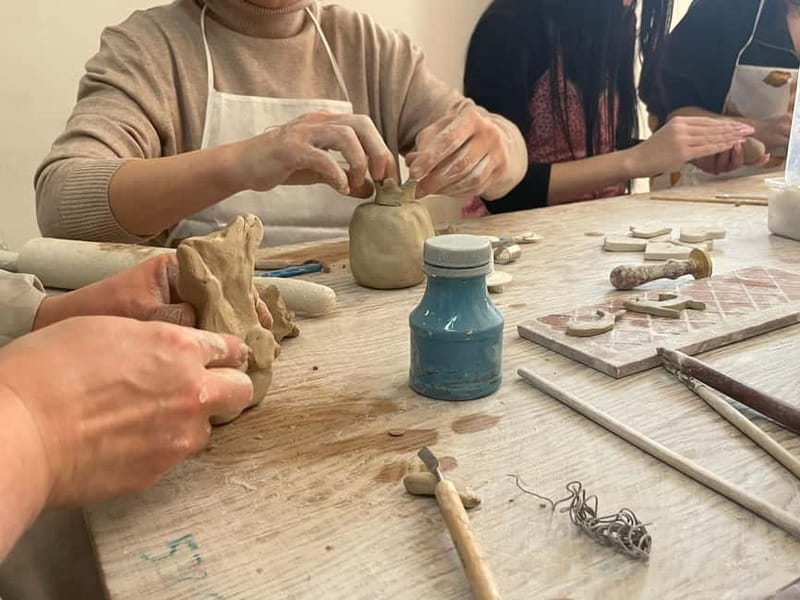
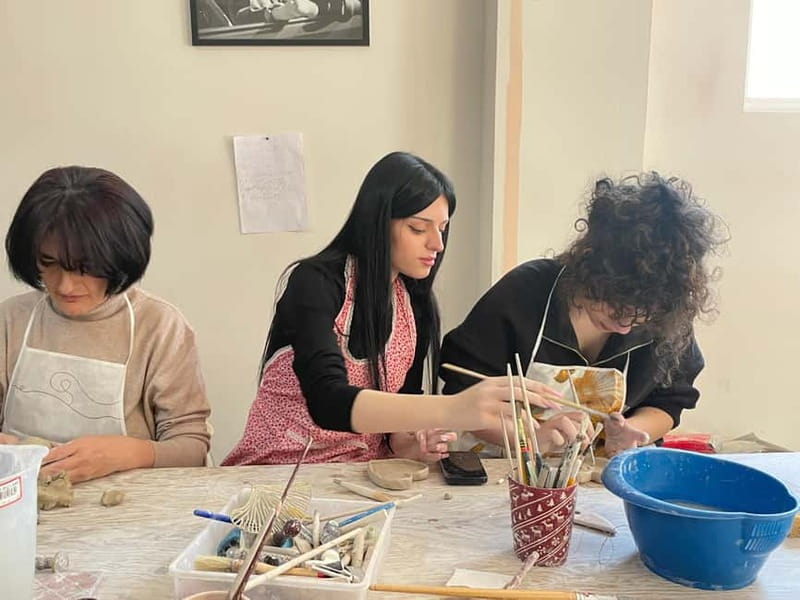
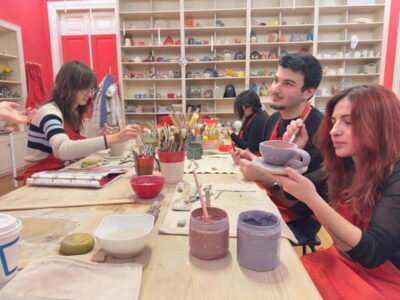
The hands-on workshop is short, about 1.5 hours, but it is not rushed in the way some classes feel. You still get the core steps that matter in ceramics: shaping, smoothing, and assembling your final form before color and finishing.
You will work with instructor guidance, in either English or Russian, and the group is limited to 8 participants. In a small group, it is easier for the instructor to notice when your piece needs support, when edges need extra smoothing, or when you are on the wrong track and would rather correct early than hope it works out later.
Shaping clay like it’s supposed to work
Expect to spend real time forming your piece by hand. One participant specifically described a handmade process for a vase, including rolling, gluing, and smoothing out edges and scratches. That detail tells me the workshop is aimed at true craft, not just decoration.
So what should you do as a first timer? Slow down. Look at the shape you are building, keep your hands steady, and don’t be afraid to ask for help before you move on. One of the strongest themes from the experience is confidence-building instruction. When you feel stuck, the instructor should correct mistakes and give enough reassurance that you can keep going.
Making design choices that actually change the outcome
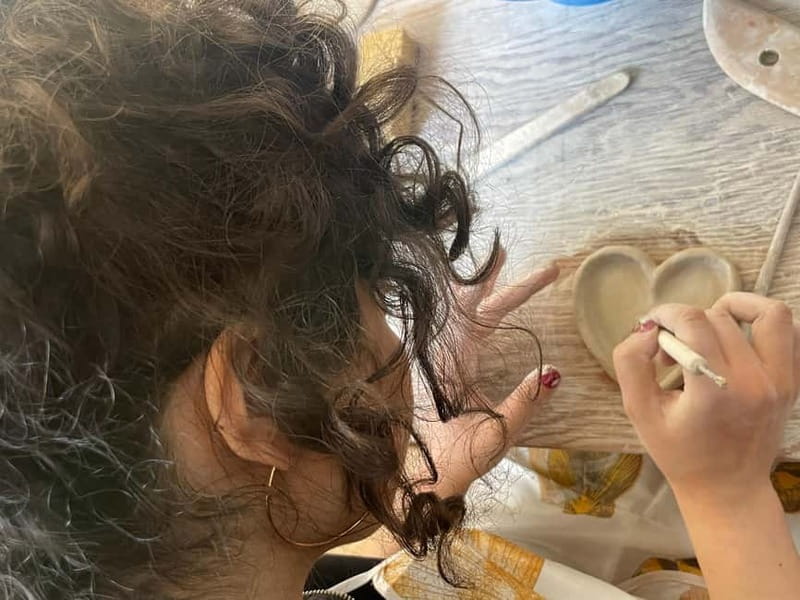
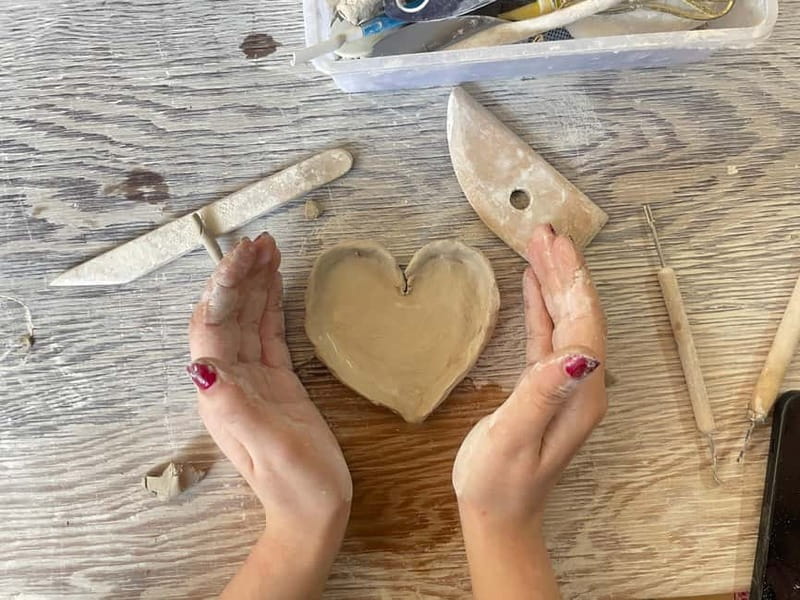
You get to personalize your piece. That means you are not limited to a single template look. You choose how you want your ceramic to feel and look, including options for color.
The colors are offered across a range from bold shades to more subtle tones. Translation: you can go playful and expressive, or you can make something calmer that will fit your home nicely. If you are traveling, that matters too. A quietly styled ceramic piece often looks good in lots of interiors, not just as a vacation souvenir.
A different sort of day out of Tbilisi:
- Tbilisi: Day Trip to Kazbegi, Gudauri, Gergeti, and Ananuri
★ 4.9 · 3,203 reviews - Day Trip to Kakheti Wine Region Including 9 Wine Tastings
★ 5.0 · 2,774 reviews - Highlights of Caucasus Mountains-Jinvali,Ananuri,Gudauri,Kazbegi(Group tour)
★ 5.0 · 2,682 reviews - From Tbilisi: Kakheti Wine Region Tour with 9 Wine Tastings
★ 4.9 · 2,541 reviews
Adding color: what you control and what the studio handles
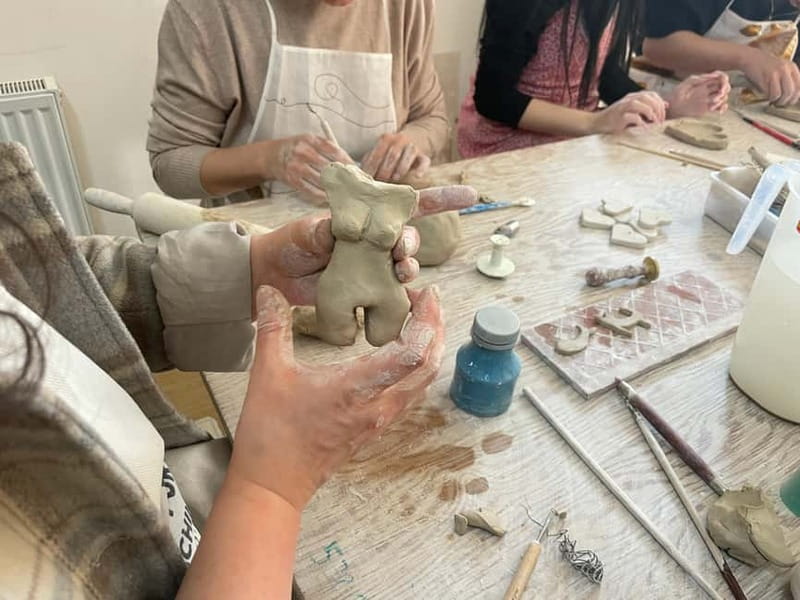
In your time at the studio, your job is to shape and decorate. After that, the studio handles the technical part that you cannot fake at home: drying and firing.
This is one of the smartest parts of the deal. A lot of art classes let you paint or glaze a surface, but the hard part is getting a durable ceramic finish after firing. Here, you are paying for a workflow that continues after your hands stop working.
Why that firing step is the real value
Ceramics only becomes ceramic after firing. That is when color locks in and the piece becomes strong enough to live on a shelf or use as a decorative object.
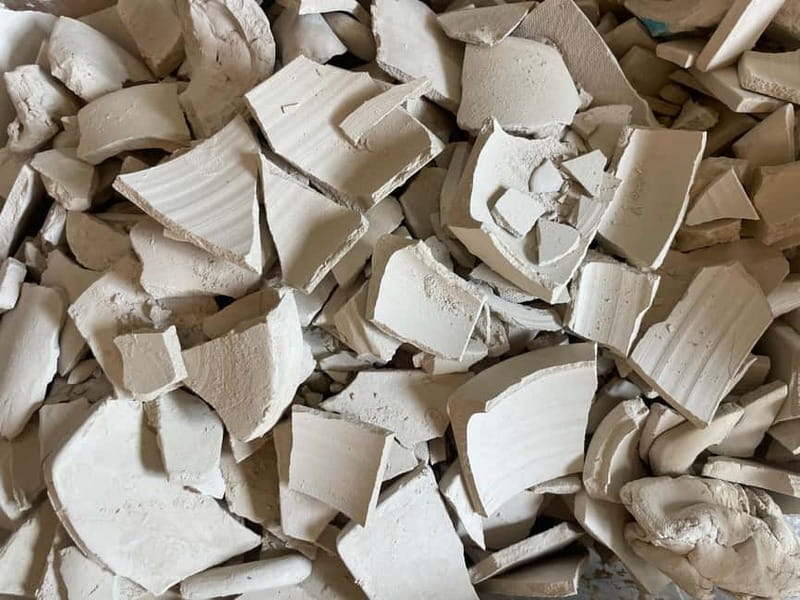
That is why pickup takes time. Your piece needs to dry and then be fired, which typically takes a few days. The staff takes care of drying and firing and will notify you when it is ready to pick up.
For you, the practical benefit is simple: you can focus on making during the workshop without worrying about kilns, schedules, or the risk of something going wrong.
Pickup in Tbilisi, or optional shipping if you need to leave
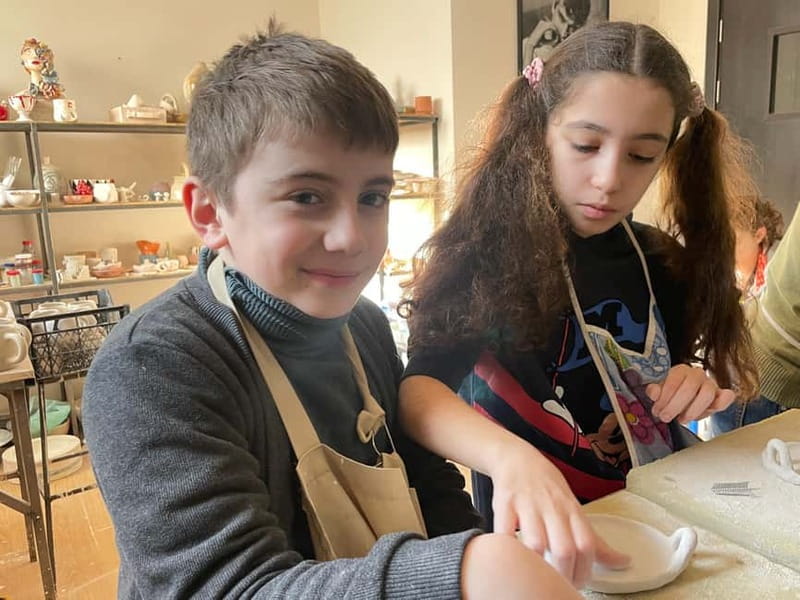
After the workshop, your piece becomes a studio project. Drying and firing take a few days, and then you can pick it up. Shipping is optional if you cannot stay in Tbilisi, but shipping is not included in the price.
So I’d think about this early. If you have a couple of extra days in the city, pickup is usually the easiest route. If your itinerary is tight and you are heading out soon, ask about shipping so you are not stuck carrying an awkward, fragile item through airports.
Also, treat your finished piece like what it is: fired ceramic. It is not something you want to improvise with cheap packing. If you go the pickup route, plan to protect it on the walk back and in your hotel bag.
Who this workshop is best for (and who might feel out of place)
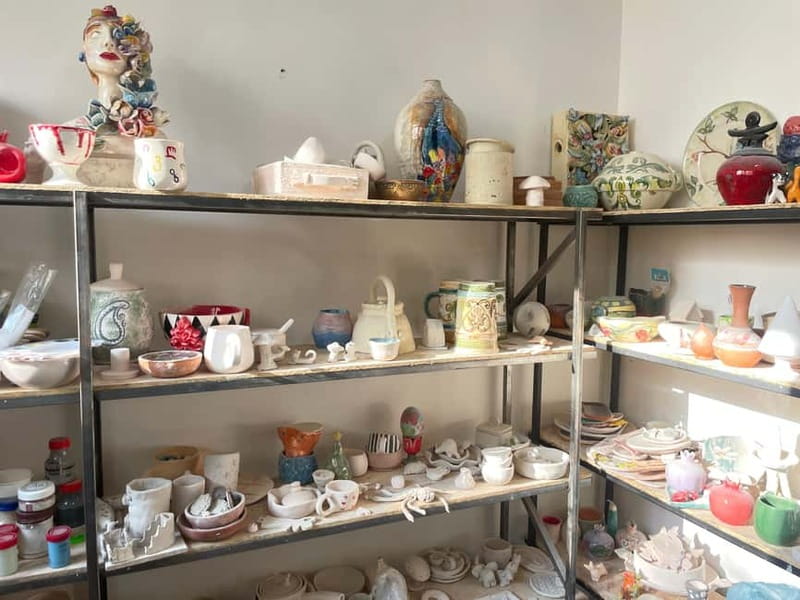
This is a workshop that is designed to work for different ages and experience levels. It is suitable for complete beginners, kids, and adults, and even people with prior experience.
Families and kids
One of the reviews highlighted that it was great for kids. That makes sense when you look at the structure: hands-on steps, guidance, and a short time window. Kids do well when an activity is active and the instructor can keep the pace moving.
Adults who want a meaningful souvenir
If you want a souvenir that feels more personal than a magnet, this is your match. You are making a one-of-a-kind ceramic item from your own choices, and you get it finished by the studio.
People who want a calmer, creative break
You will not get big-city sightseeing packed into this. You get quiet focus. If that sounds like a refreshing change from churches, viewpoints, and markets, you will likely enjoy it.
English and Russian instruction, plus what a small group changes
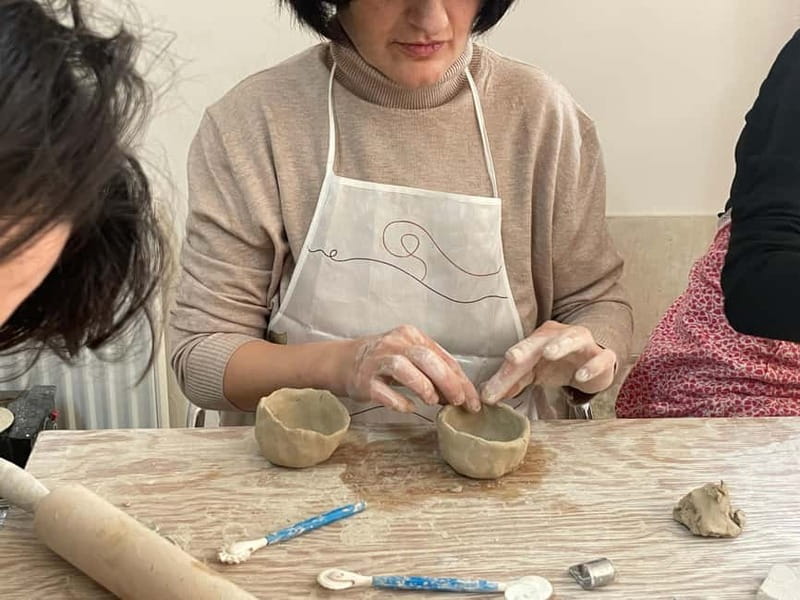
The workshop instructor speaks English and Russian, and the group size is limited to 8 participants. That combination matters more than it sounds.
In a larger group, you might spend a lot of time waiting your turn. Here, small group size means you can ask questions, get corrections, and keep moving. One participant described being afraid to mess up, then feeling confident again once the instructor corrected mistakes and explained techniques.
If you are traveling alone, that one-on-one feeling can be especially valuable. If you are traveling with a friend or family, it also means you are not competing for attention.
Time reality check: 1.5 hours of making, days of waiting
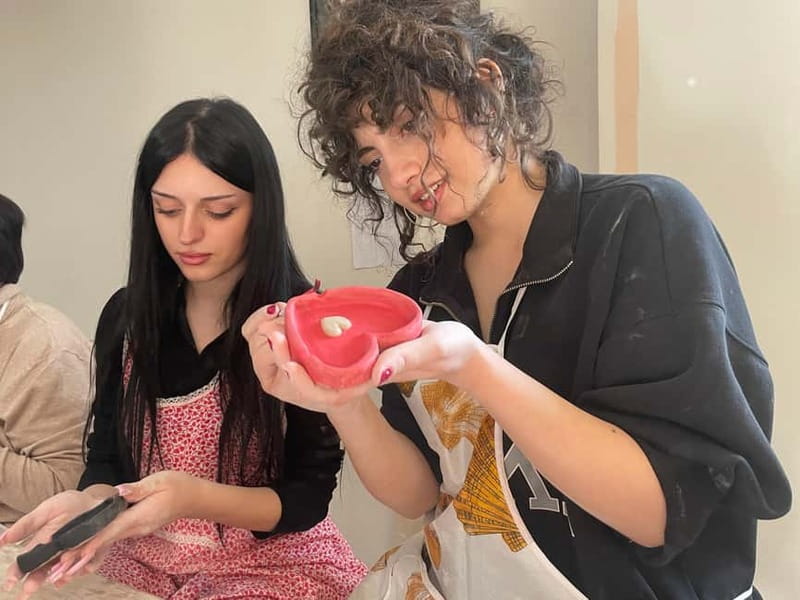
The workshop duration is listed as 1.5 hours, but the activity is also described as a longer ceramic-making workshop in the process sense, with drying and firing afterward. The takeaway is what you should plan around: the hands-on part is short, but the final piece takes a few days.
So build your schedule like this:
- Day of workshop: you make the piece and choose your decoration approach.
- Next few days: drying and firing.
- Later: pickup, or shipping if you need to leave.
If you are doing a tight Tbilisi itinerary, still doable, but you might want to schedule this earlier so you are not rushing at the end.
Price and value: is $69 a fair deal?
At $69 per person, this workshop is positioned as a creative activity that includes materials plus guidance and the heavy lift of firing and drying. That last part is the difference between a “paint a souvenir” class and a real ceramic experience.
If you compare it to a ceramics class where you pay extra for studio firing, the value here is clearer: you are not only paying for your time, you are paying for the finishing step that turns clay into a lasting object.
The main value trade-off is time. You spend less time on the day than some longer craft sessions, and you accept the waiting period for the fired result. If that works for your travel rhythm, the price feels fair.
What you might also experience beyond the clay
One participant described extra Georgian atmosphere in their session, including local wine and live music, plus singing and dancing elements. I cannot guarantee that will happen in every single workshop session, but it does signal that the studio may sometimes add local cultural flavor.
What I would do as a practical traveler: keep an open mind. Even if the core focus is ceramics, Tbilisi culture shows up in small ways when you are in a local studio environment instead of a generic tourist factory.
My quick decision guide: should you book this?
Book it if you want a real ceramic piece with a personalized design, especially if you like the idea that the studio handles firing and drying so your work becomes permanent. This is also a great fit for families and kids, thanks to the guided, small-group setup.
Skip it only if you need a finished item the same day, or if you hate waiting a few days for pickup or prefer an activity with zero post-workshop processing. Also, if you want lots of sightseeing during the same block of time, you may find this too focused and studio-based.
If your goal is to leave Tbilisi with something you made yourself, this hits the sweet spot between accessible and authentic craft.
Recently reviewed around Tbilisi
- Tbilisi City Tour★ 4.5 · 3 reviews
- Tbilisi City, Jvari Monastery, Uplistsikhe caves, Mtskheta city Private Day Trip★ 4.5 · 3 reviews
- Tbilisi City Tour with Street Photography★ 5.0 · 3 reviews
- Wild Georgia 4WD PACK Adventure through Kakheti and Kazbegi 2in1★ 5.0 · 3 reviews
- Private Trip to Tbilisi and Mtskheta – Cultural Capitals★ 5.0 · 3 reviews
- Tbilisi Airport to Gudauri, Bakuriani, Batumi, Tbilisi★ 5.0 · 3 reviews
- Private Adorable City Tour of Tbilisi★ 5.0 · 3 reviews
- Two Capitals in One Day: Tbilisi and Mtskheta Combo Tour★ 5.0 · 3 reviews
Workshops, compared.
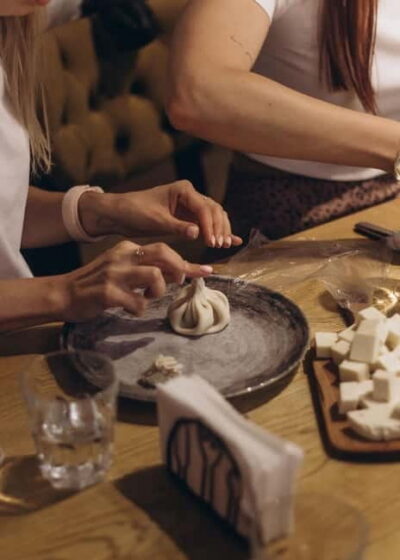
Georgian Cooking Class with Khinkali and Khachapuri
Read our review →
Small-Group Khinkali and Khachapuri Cooking Class in Tbilisi
Read our review →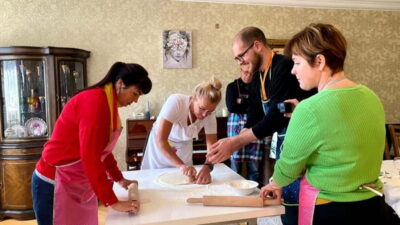

Taste of Kakheti: Wine Tour Bread Baking & Churchkhela Workshop
Read our review →
Join a Local for a Market Tour, Cooking Class and Meal in her Tbilisi Home
Read our review →

Batumi Khinkali: Hands-On Masterclass with a Local Master
Read our review →Browse the lists this tour appears in