
Reviewed · MTSKHETA ANCIENT CAPITAL
Mtskheta – Jvari + Gori – Uplistsikhe Tour
This tour is interesting because you get a four-stop story of Georgia in one day, from church views over river junctions to rock-cut caves and a Soviet-era museum in Gori. I love the hotel pickup and drop-off that removes all the day’s stress, and I also like having a driver-guide who can explain what you’re actually seeing, not just point at it. The main drawback to plan for is weather and walking intensity, especially at Uplistsikhe when it is cold, windy, or hot.
A big plus: you travel in comfort and you stay connected. In the car, you’ll have WiFi, and your group stays private, so you can ask questions and move at a pace that works for you. Guides like George and Gogi are repeatedly praised for making the stops feel clear and well-timed, even when the day gets a little chaotic outside.
Key highlights you should care about
- Easy door-to-door pickup anywhere in Tbilisi so you can focus on sights, not logistics
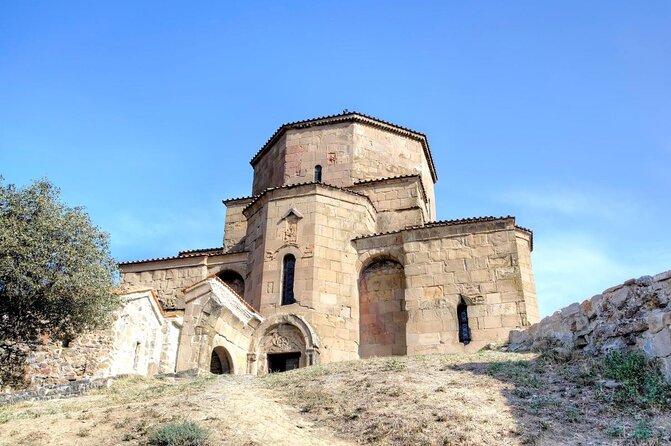
- Jvari Church viewpoint over the meeting of the Aragvi and Kura rivers
- Mtskheta center walk with traditional streets plus the sacred Svetitskhoveli Cathedral
- Gori’s Stalin House-Museum access to his birthplace and personal items
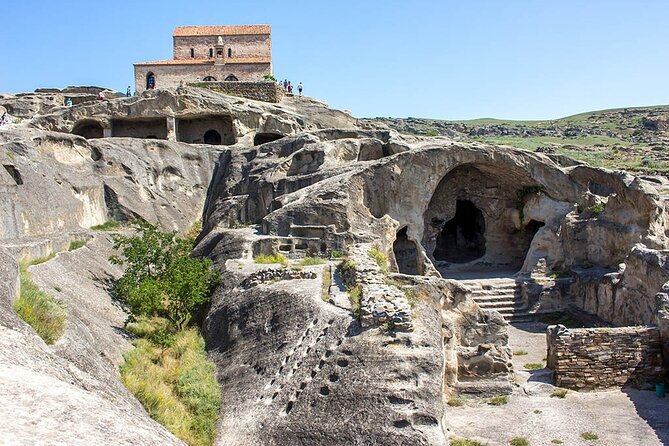
- Uplistsikhe cave city exploration with major rock-cut sights like the Sun Temple and Royal Hall of Queen Tamar
- Air-conditioned vehicle and in-car WiFi to make the long travel day feel lighter
A day-trip circuit that hits the big themes of Georgia
This is the kind of day trip I like when I want variety without juggling multiple transport options. You start in the hills for Jvari Church, then drop into Georgia’s ancient capital, then head to Gori for Soviet-era history, and finish at Uplistsikhe, a “Fortress of God” cave city carved into rock.
The schedule is built around four distinct moods. Early on, you get wide, dramatic views. Then the day shifts to sacred sites and old-town walking. After that, it turns into a museum-style stop in Gori. Finally, you get the physical, hands-on feeling of moving through caves, tunnels, and stone rooms at Uplistsikhe.
If your travel style is history plus real places, not just quick photo stops, this route makes sense. And because it’s private, you’re not trapped in a stampede rhythm.
More day trips to Gori:
- Tbilisi: Mtskheta, Jvari, Gori and Uplistsikhe Day Tour
★ 4.9 · 2,396 reviews - Day Trip to Mtskheta Gori and Uplistsikhe
★ 5.0 · 1,801 reviews - From Tbilisi : Mtskheta, Jvari, Gori & Uplistsikhe Day Trip
★ 4.8 · 432 reviews
Price and logistics: what you pay for, and what costs extra
The price is $54.07 per person, and that number matters because you’re not paying separately for the main transport piece. The tour includes hotel pickup and drop-off, private transportation in an air-conditioned vehicle, and a private group format.
Where costs can pop up is entrances. The Stalin House-Museum entrance is not included, and it is listed at $5.00 per person. The Uplistsikhe Cave Town entrance is also not included, at $5.00 per person. For most people, the simplest budgeting approach is to assume both paid sites will add about $10 total per person on top of the base price.
Good value tip: since Jvari and Mtskheta stops are listed as admission ticket free in the schedule, you’re not paying again for the early half of the day. That helps you feel like the money is going where it should, toward the longer drives and the two paid attractions that need dedicated tickets.
Finally, the in-car WiFi and English offering reduce friction. You can use the WiFi to keep your day smooth, and you won’t lose time when explanations happen on the move.
Jvari Church: 6th-century stone with big river views
Jvari Church is a classic “arrive and instantly understand why it’s famous” stop. You start near the ancient temple site, and the setting tells you the story before any explanation. It dates back to the 6th century, and it sits on top of a mountain near the former capital area of Mtskheta.
The location is tied to geography. From up there, you look toward the intersection of the Aragvi and Kura rivers. That confluence is exactly the kind of detail that turns a church visit into a landscape of meaning, even though the viewpoint is also just plain impressive.
A neat detail to watch for is the name: Jvari translates from Georgian as the cross. That simple point gives you a framework while you’re walking around. You’re not only scanning the building, you’re thinking about how it connects to Georgian Christian tradition.
Time on site is short, about 20 minutes. That’s enough for photos and a calm look around if you’re steady on your feet. If the weather is rough, the time limit actually helps, because you get your payoff without spending too long exposed.
Mtskheta old streets and Svetitskhoveli Cathedral, the sacred center
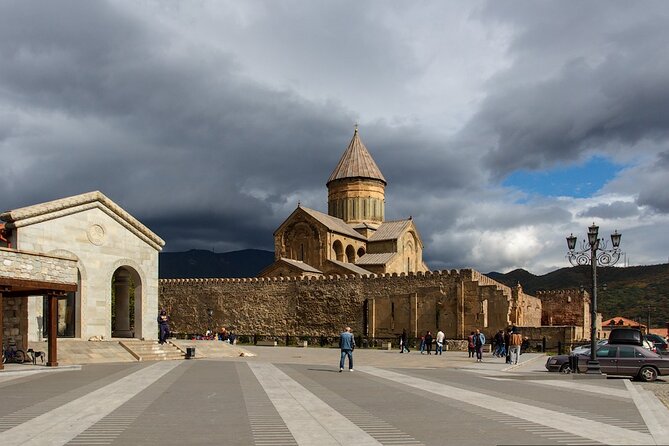
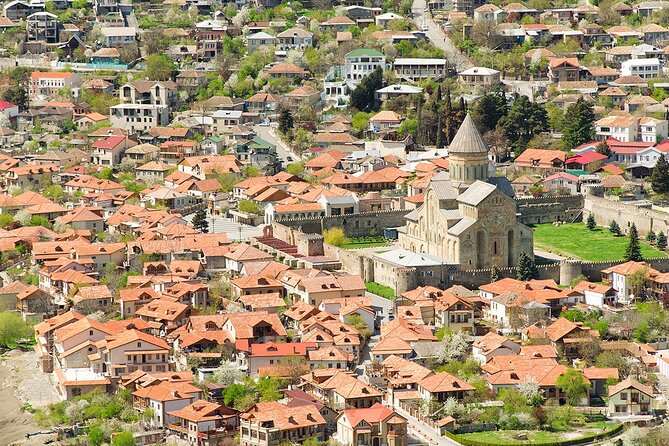
Next comes Mtskheta, the ancient capital. The schedule frames it as a place with serious age, inhabited for more than 2,600 years, and once serving as the capital of the early Georgian Kingdom of Iberia. That matters because Mtskheta is not just a pretty historic area. It’s a timeline.
You’ll park first, then walk toward the historical center. During that walk, you pass narrow streets that tend to include souvenir shops, wine tastings, and traditional Georgian sweets. I like this part because it gives you small breaks in between major monuments, and it’s the easiest way to feel like you’re in a real town, not just at an out-of-the-way “stop.”
The highlight is Svetitskhoveli Cathedral, and it’s treated as the most sacred draw on the route. It is described as the burial site of Christ’s Robe and one of Georgia’s most revered locations. When a site is that spiritually central, your visit works best when you slow down and let the place set the tone.
You typically get around 45 minutes here. That is a good length of time for walking the center area plus taking in the cathedral without feeling rushed. Also, because admission is listed as free for this stop, you can plan your budget without surprises.
More Uplistsikhe cave town visits:
- From Tbilisi: Mtskheta, Jvari, Gori, Uplistsikhe Guided Tour
★ 4.7 · 354 reviews - From Tbilisi: Mtskheta, Jvari, Gori & Uplistsikhe Cave Tour
★ 4.7 · 296 reviews - From Tbilisi: Mtskheta, Jvari, Gori & Uplistsikhe Day Trip
★ 4.8 · 153 reviews - Mtskheta-Gori-Uplistsikhe
★ 5.0 · 112 reviews
Gori and the Stalin House-Museum: history you feel right away
Gori is where the emotional temperature changes. This stop is tied to Joseph Stalin, and you visit the Stalin House-Museum, the hometown-linked site built around his life.
Expect a focused museum visit around the original house where he was born, plus the office and personal items like his pipe, cigars, and telephone. The museum also includes a railway carriage, and you’ll see more items beyond that. The point of the stop is not to debate politics on the spot. It’s to see how history shows up in physical objects and rooms, and to understand how the era shaped the country.
Time here is about 1 hour. That length works well because it’s long enough to absorb the story, but not so long that you feel museum fatigue before you hit the caves.
One practical consideration: if you are sensitive to heavy political history, you might treat this as a “view and reflect” hour rather than an interactive time. That keeps the day balanced instead of turning it into a single intense block.
Uplistsikhe cave town: the Fortress of God in 3,000-year-old rock
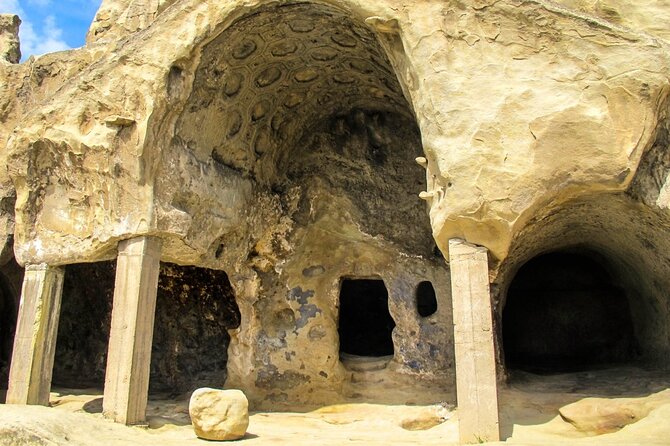
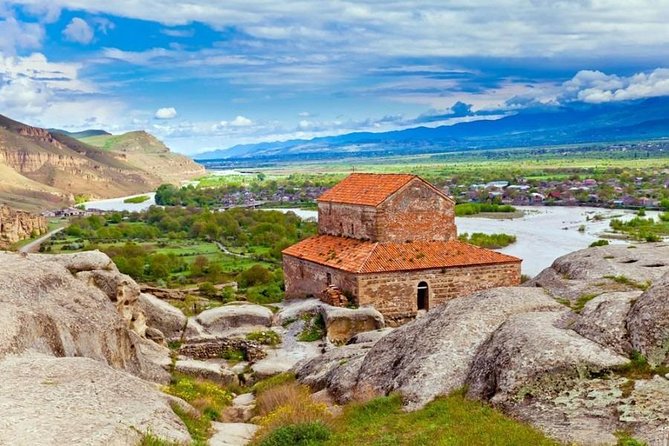
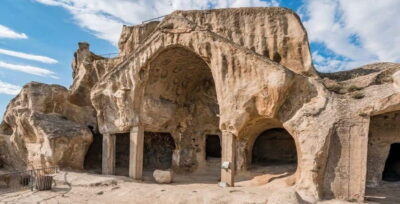
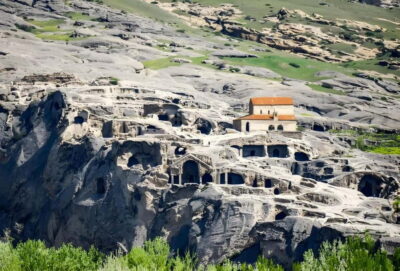
If Jvari and Mtskheta are about views and sacred space, Uplistsikhe is about physical place. Uplistsikhe is described as the Fortress of God, one of the oldest sites around, and a cave city carved into rock over 3,000 years ago.
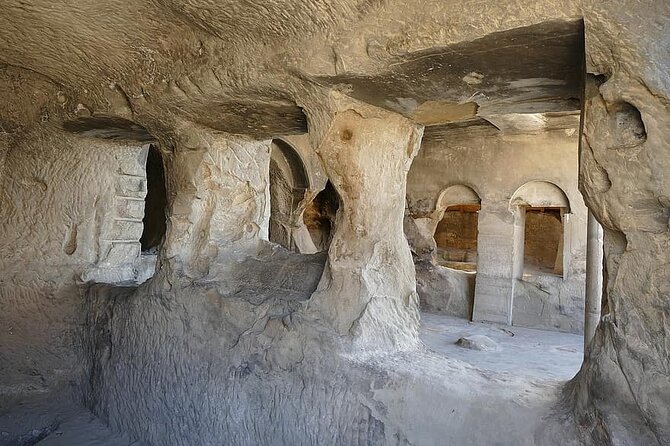
Here’s what makes it compelling for first-timers: it is not one single tunnel or one single room. It includes buildings from different eras, and about 150 caves remain. During your visit, you’re guided through some of the most interesting areas, including the tunnel, the Sun Temple, the Royal Hall of Queen Tamar, a winery, a 6th-century church, the old library, and even an ancient pharmacy carved in stone.
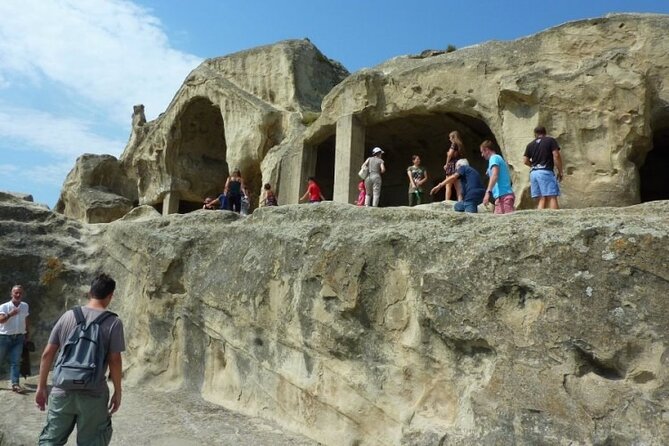
Time on site is listed as 1 hour, which is right on the edge. Uplistsikhe involves walking on uneven and sloped surfaces, and reviews point out that it can include strenuous uphill climbing depending on how far you want to go. So plan like it’s a real walking day, not a casual stroll.
Bring the right footwear. I’d treat this as a “good soles only” stop. One more big practical tip from experience-style feedback: water availability can be limited on site, so if the weather is hot you should come prepared. If it’s cold and windy, dress for that too, because you’ll be outside between cave sections.
If you want the most satisfying visit, don’t just chase the top areas for photos. Look for the different kinds of stone spaces: ceremonial areas like the Sun Temple, everyday-feeling spaces like the pharmacy, and the way passageways connect rooms.
Timing, pacing, and weather: why the day can feel totally different
This tour is built as an 8-hour round trip from Tbilisi, with set stop durations: about 20 minutes at Jvari, 45 minutes at Mtskheta, 1 hour in Gori, and about 1 hour at Uplistsikhe.
Those time blocks are helpful, but weather can still change how comfortable the day feels. Jvari is on a mountain top, and Mtskheta and Uplistsikhe still involve outdoor movement. In rainy, windy conditions, it can feel cold fast, especially if you’re waiting while explanations happen outside.
If you can choose timing, late-summer and early-fall often make sense. Feedback tied the best comfort to September and October, which usually means more stable conditions and less extremes between hot walking and cold wind.
Heat is the other issue. When it is hot, caves can feel like a cool pocket, but the approach and climbs can still be intense. That’s where water and pacing matter. A good guide can help you manage stops so you don’t burn out before Uplistsikhe.
Your driver-guide makes or breaks the experience
This is a private tour with a driver-guide, and that single choice pays off. Many people highlight how guides like George and Gogi give just the right amount of story at each stop, not a nonstop lecture and not a superficial overview.
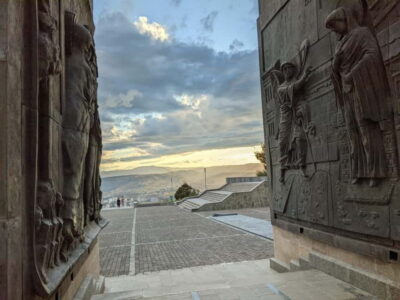
I like the way this format works for real sightseeing because you get context while you’re looking at the object. At Jvari, you hear the cross name meaning and the river intersection framing. In Mtskheta, the cathedral stops feel connected to the bigger age of the place. In Gori, you understand why the museum is built around specific rooms and personal objects. In Uplistsikhe, the list of carved spaces feels like a map, not random trivia.
You’ll also get practical help. Reviews include mentions of guide patience, including helping a child explore the caves. There are also comments about how the guide is attentive, helpful with photos, and keeps the day moving at a pace that feels fair.
A balanced caution from the same kind of feedback: Uplistsikhe is strenuous for some visitors, and signage can be tricky. Depending on how your day goes, you might find that the furthest uphill areas are harder to navigate without extra guidance. That’s not a reason to skip it, but it is a reason to be realistic about your stamina and to ask your guide what routes feel safest.
Comfort in the car, and how to use it well
The air-conditioned vehicle is a real advantage when you’re driving between four very different sites. You’ll be in the car long enough that comfort matters, and the tour includes in-car WiFi, which helps if you want to check directions, translate quickly, or just keep the day easy.
Because this is a private tour, you’re not forced into one rigid pace. You can ask for small adjustments, and the guide can tailor the rhythm a bit. Many reviews praise that sense of personalized attention, plus the feeling of moving with confidence.
One more practical detail: since you’re doing a lot of walking in a single day, the easiest way to make the most of the morning is to come ready. Hat or sunscreen for sun exposure, a light layer for cold wind, and shoes that handle uneven ground. That’s the boring advice that actually decides whether the day feels smooth.
What kind of traveler will love this most
This tour fits you if you like a day that mixes sacred sites, ancient rock-cut architecture, and a major history stop in a single loop from Tbilisi.
It is also a good choice if you want a guide who can explain meaning, not just describe what’s there. The repeated praise for story clarity and helpfulness points to a good match for first-timers who feel overwhelmed by too many monuments without context.
If your group includes kids, it can still work because the pacing is designed for enough time at each stop and guides are described as patient. Just remember that Uplistsikhe involves climbing and uneven terrain, so little legs may need extra breaks.
If you have mobility limits or strong concerns about uphill walking and slippery surfaces, treat Uplistsikhe as the risk point of the day. You can still enjoy the earlier stops, but the cave town part is where you should be most careful.
Should you book the Mtskheta-Jvari-Gori-Uplistsikhe tour?
Book it if you want a high-value private day that covers four major Georgia experiences efficiently, with hotel pickup, air-conditioned comfort, and a guide who connects the dots for you.
Hold off or plan more carefully if:
- You know you do not handle cold wind or rainy outdoor time well, since Jvari and the walking portions can be exposed.
- You are unsure about strenuous uphill walking. Uplistsikhe is part of what makes this tour special, but it can be demanding, and water availability may be limited on site.
- You’re budgeting tightly for entrances, since both the Stalin House-Museum and Uplistsikhe have ticket costs listed at $5 each.
If you’re ready for a full day with real variety and you pack for the weather, this route is an excellent way to see a lot of Georgia without the stress of separate transport plans.
More Mtskheta Tours from Tbilisi
- Mtskheta-Jvari-Uplistsike-Chronicle of Georgia, PRIVATE Trip
★ 5.0 · 105 reviews - Mtskheta: Ancient Capital of Georgia Half-Day Tour
★ 4.9 · 105 reviews - Tbilisi – Mtskheta – Jvari. Full City Tour on Hop On Hop Off Bus
★ 4.5 · 91 reviews - From Tbilisi: Half day tour, Mtskheta, Jvari & Samtavro
★ 4.7 · 81 reviews
More Trips Taking in Jvari Monastery
- Tbilisi: Mtskheta Jvari Bazaar, Chronicles of Georgia & Wine
★ 5.0 · 1,088 reviews - Tbilisi:Mtskheta,Jvari,Bazaar,wine tasting,Chronicles of Georgia
★ 5.0 · 730 reviews - Tbilisi: The Chronicles of Georgia, Jvari & Mtskheta Tour
★ 5.0 · 307 reviews - Mtskheta, Jvari, gori, uflistsikhe, history and panorama (group tours)
★ 4.5 · 107 reviews
Recently reviewed around Tbilisi
- Tbilisi City Tour★ 4.5 · 3 reviews
- Tbilisi City, Jvari Monastery, Uplistsikhe caves, Mtskheta city Private Day Trip★ 4.5 · 3 reviews
- Tbilisi City Tour with Street Photography★ 5.0 · 3 reviews
- Wild Georgia 4WD PACK Adventure through Kakheti and Kazbegi 2in1★ 5.0 · 3 reviews
- Private Trip to Tbilisi and Mtskheta – Cultural Capitals★ 5.0 · 3 reviews
- Tbilisi Airport to Gudauri, Bakuriani, Batumi, Tbilisi★ 5.0 · 3 reviews
- Private Adorable City Tour of Tbilisi★ 5.0 · 3 reviews
- Private Wine Tour In Kakheti Region with 7 Wines and Lunch★ 5.0 · 3 reviews
Mtskheta Ancient Capital, compared.
Mtskheta, Jvari, Gori and Uplistsikhe Day Tour
Read our review →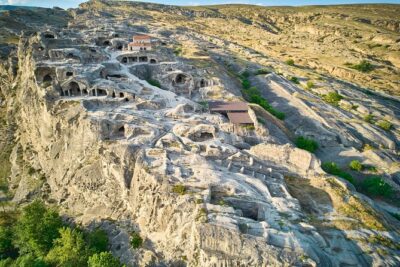
Mtskheta Jvari Bazaar, Chronicles of Georgia & Wine
Read our review →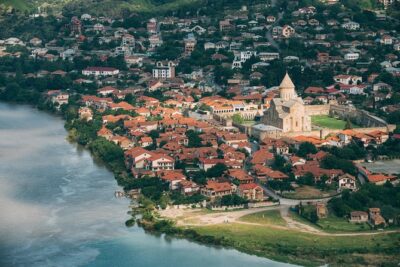
Mtskheta,Jvari,Bazaar,wine tasting,Chronicles of Georgia
Read our review →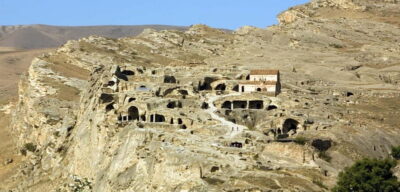
The Chronicles of Georgia, Jvari & Mtskheta Tour
Read our review →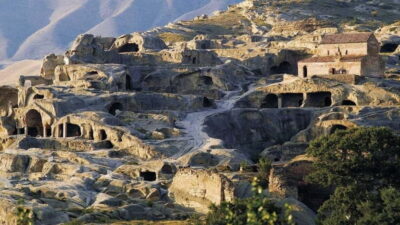
Browse the lists this tour appears in