
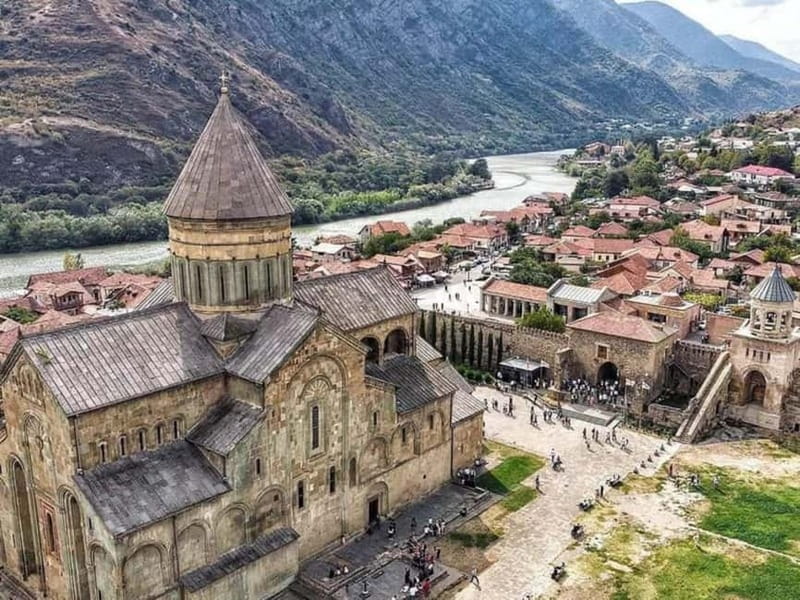
Reviewed · MTSKHETA ANCIENT CAPITAL
From Tbilisi: Half day tour, Mtskheta, Jvari & Samtavro
This half-day trip is interesting because it links three key sites in one smooth religious and historical route. You start in Mtskheta, Georgia’s ancient spiritual center, then move to Jvari’s hilltop viewpoint before ending in the calmer Samtavro complex.
I especially like the hands-on guided stops. When guides such as Mikhail, David, or Diana lead the conversation, you get story, context, and enough time to look around. I also like the focus on Georgia’s Christian heritage, from what Svetitskhoveli is said to contain to the St. Nino connections at Samtavro.
One thing to consider: this tour involves a moderate amount of walking on church grounds and hill viewpoints, and it is not suitable for wheelchair users or people with mobility impairments.
Key highlights worth your attention
- UNESCO World Heritage setting in Mtskheta, the ancient capital and spiritual heart of Georgia
- Svetitskhoveli Cathedral, an 11th-century site tied to Georgia’s most sacred traditions
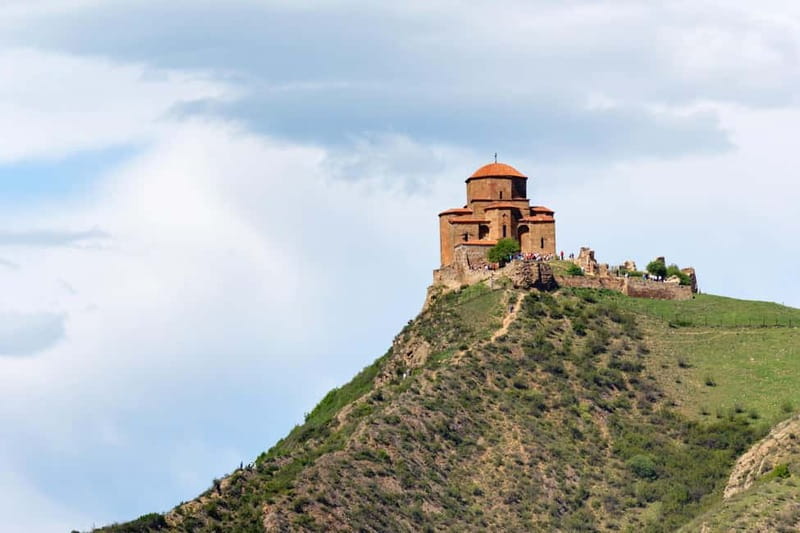
- Jvari Monastery on the hill, a classic early-Christian landmark with major symbolism
- Samtavro Monastery and St. Nino, focused on conversion history and a quieter atmosphere
- Guides who switch between Russian and English, so you are not left out
- Good pacing for only 4 hours, including photo stops and guided time inside
A half-day loop through Mtskheta’s sacred geography
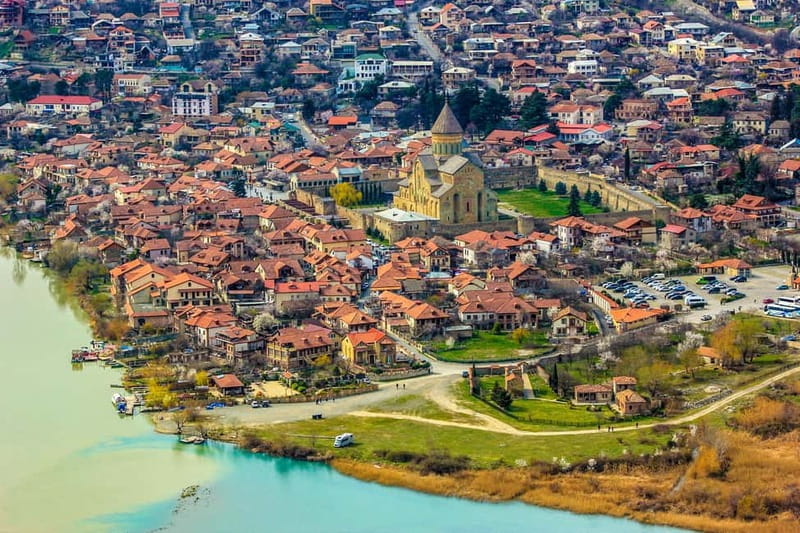
If you want real meaning, not just photos, this is a smart half-day format. In about four hours, you cover the “why” behind Georgia’s Christian identity, using three places that feel connected even when they are physically separate.
You begin in old Tbilisi at the central square of the Old Tbilisi area, Meidan. The meeting point is in front of the restaurant Machakhela, and from there you head out to Mtskheta, a UNESCO World Heritage site and one of the oldest cities in Georgia. Mtskheta was the ancient capital, so you are not just visiting churches, you are walking through the backdrop of political and cultural life too.
This tour is also built for people who have limited time. Four hours can fit into a day with museum visits, Sulfur baths, or a wine tasting. And because each stop includes a mix of guided explanation plus time to wander, you do not feel rushed into seeing everything as fast as possible.
More trips taking in Jvari Monastery:
- Tbilisi: Mtskheta, Jvari, Gori and Uplistsikhe Day Tour
★ 4.9 · 2,396 reviews - Tbilisi: Mtskheta Jvari Bazaar, Chronicles of Georgia & Wine
★ 5.0 · 1,088 reviews - Tbilisi:Mtskheta,Jvari,Bazaar,wine tasting,Chronicles of Georgia
★ 5.0 · 730 reviews
Getting there from Tbilisi, without turning the day into a bus ride
You are picked up at Meidan in Old Tbilisi, then transported to the Mtskheta area for the three-site route. The time on the road matters because it shapes the feel of the trip. In the best versions of this tour, you get quiet moments between stops, and the guide uses the ride to set the scene for what you will see next.
One practical detail that shows up in real-world experiences: sometimes a vehicle can have a technical issue, and the guide handles it quickly. That is reassuring, because the itinerary depends on reaching each religious site in order.
Duration is listed as 4 hours, and the tour structure supports that. You are doing one photo stop plus visit time at Jvari, then the longer cathedral stop, then a shorter but meaningful visit at Samtavro. That flow keeps the trip from turning into a marathon.
Jvari Monastery: a hilltop viewpoint with conversion-era symbolism
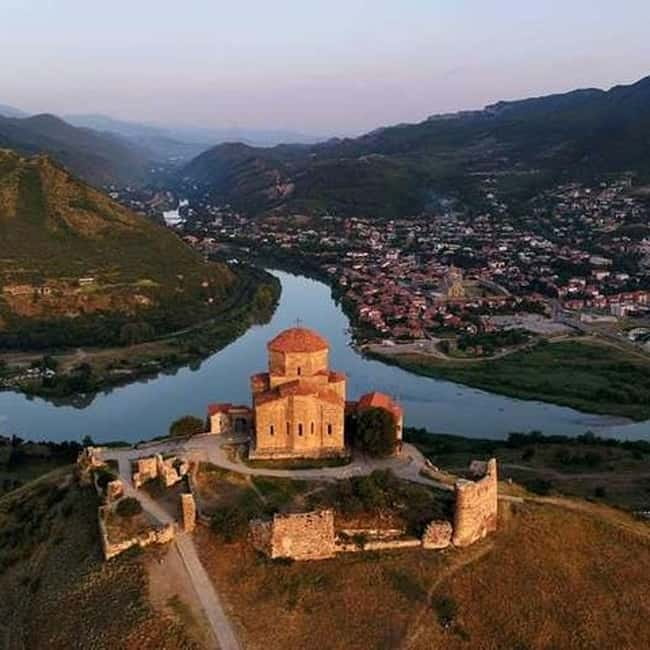
Jvari Monastery is the first major stop on your route, and it sets the mood immediately. You get a photo stop and then a guided visit of about 40 minutes. The monastery sits on a hill overlooking the town, so you are looking at Mtskheta as well as the spiritual message Jvari represents.
Jvari is often treated as a symbol, not just a building. It was built in the 6th century, and it is associated with early Christianity spreading in Georgia. One of the key stories here is King Mirian of Iberia, whose baptism in the 4th century marks the official conversion of Georgia to Christianity. You will hear that connection explained in a way that makes the stone feel tied to real turning points.
Practical tip: plan for uneven ground and steps around viewpoints. It is not extreme hiking, but it is enough that comfortable shoes matter. If you come expecting a flat stroll, you might underestimate the walking.
Svetitskhoveli Cathedral: why this 11th-century landmark matters
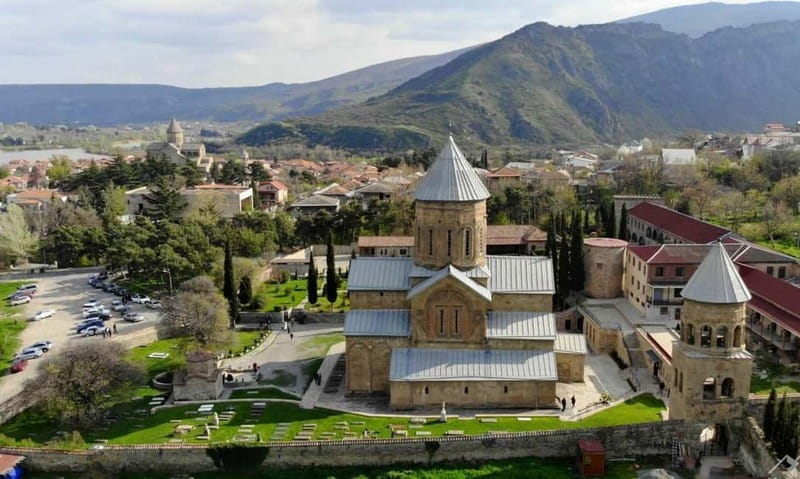
After Jvari, you move to Svetitskhoveli Cathedral, the largest and most dramatic stop in the loop. The scheduled time is about 80 minutes, including a photo stop, sightseeing, a walk, and guided time inside. This is the place where the tour becomes most emotionally and historically focused.
Svetitskhoveli dates back to the 11th century and is considered one of Georgia’s holiest sites. The big tradition tied to it is that it is said to be the burial place of Christ’s robe. Even if you treat religious legends as sacred stories rather than proof, the fact remains: this tradition has pulled pilgrims here for centuries.
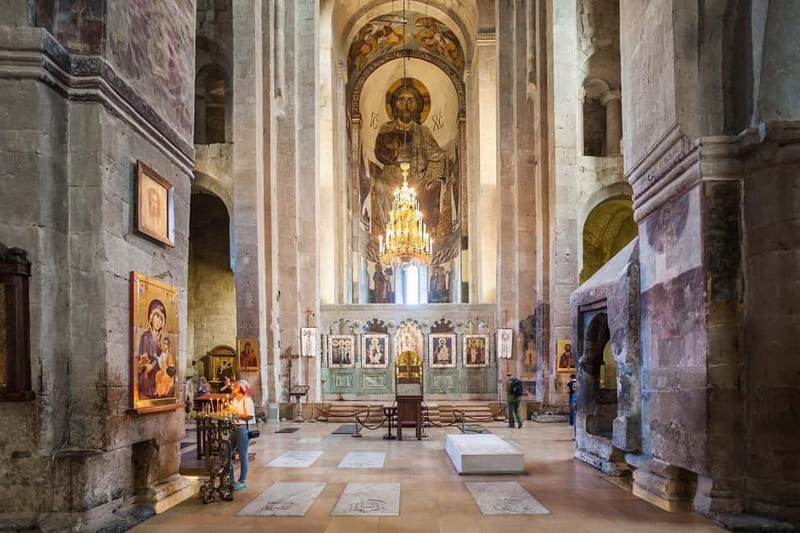
Inside, expect Georgian medieval architecture and attention to details. The site is described as having beautiful frescoes and intricate stone carvings. In a guided visit, the guide usually points out what to look for, rather than leaving you to guess. Guides with strong storytelling skills, like those praised for engaging explanations, tend to make these details click.
A helpful etiquette note: photography is allowed, but it is an active place of worship. Keep your pace calm, follow any directions from staff, and avoid lingering in places that block others.
More Mtskheta tours from Tbilisi:
- Day Trip to Mtskheta Gori and Uplistsikhe
★ 5.0 · 1,801 reviews - From Tbilisi : Mtskheta, Jvari, Gori & Uplistsikhe Day Trip
★ 4.8 · 432 reviews - From Tbilisi: Mtskheta, Jvari, Gori, Uplistsikhe Guided Tour
★ 4.7 · 354 reviews - Tbilisi: The Chronicles of Georgia, Jvari & Mtskheta Tour
★ 5.0 · 307 reviews
Samtavro Monastery: quiet time and St. Nino connections
Your last stop is Samtavro Monastery, also known for its dedicated story. It focuses on the Virgin Mary and St. Nino, the Christian missionary linked to Georgia’s conversion to Christianity. Samtavro is positioned on the edge of the town, and it often feels more serene than the cathedral visit.
You get a shorter guided visit here, about 30 minutes, plus another photo stop. But do not treat it as a “quick extra.” The complex includes a church, a bell tower, and smaller chapels. Even when time is limited, the structure helps you understand how the site works as a devotional space, not a single monument.
The church itself is described as originally built in the 4th century, though much of it has been rebuilt and restored over time. That matters because it explains why you see layers rather than one moment frozen in time. Inside, there are impressive frescoes, including depictions of Saint Nino. There is also an ancient tomb, and it is believed that Saint Nino’s relics were kept there.
If you like ending a trip on a calmer note, you will probably appreciate this last stop. It is the kind of place where you can slow down, look upward at details, and absorb the quiet.
Price and value: $15 for three major sacred stops
At $15 per person, this is a budget-friendly way to do a high-impact route. The value comes from three factors: professional guiding, access to key sites, and the fact you are bundling multiple monuments into one short day.
Included details:
- Entrance to Svetitskhoveli Cathedral
- Guided tour of Jvari Monastery
- Visit to Samtavro Monastery
- Professional guide
Not included:
- Hotel pickup and drop-off
- Meals
So you are paying mostly for coordination and interpretation, not for fancy extras. If you are the type who likes to understand what you are looking at, the guide time is what turns the sites from scenery into meaning. People in recent experiences have praised guides for being engaging and for switching languages between Russian and English, which is a big deal if your group is mixed.
One more value point: the pacing is efficient. When a trip is only four hours, you want each minute to matter. This itinerary builds in photo moments plus guided explanation, so you are not stuck only listening or only rushing around.
What it feels like with a strong guide, and what can go wrong
A tour like this rises or falls on the guide. You have a professional guide, and language options are English and Russian, which helps. Recent guides have been praised for humor, charm, and story-driven explanations, like Diana and Mikhail, and for high-energy enthusiasm, like David.
When guides do well, you feel three things:
- you get context for the conversion-era stories
- you know where to look inside the churches
- you have time to step away for photos and your own slow observations
There is also a practical operational side. One experience highlighted that logistics can be handled well even if the minibus has a technical problem. That is the sort of detail you cannot predict, but it matters when you are relying on a tight schedule.
A caution based on real feedback: if your group includes people in different languages, you might hear information repeated as the guide alternates. That is not a dealbreaker, but it is good to know that you may spend some time listening in one language and then hearing the same key points again in another.
Walking, weather, and church rules you should respect
This is a moderate walking tour, so plan for shoes you can trust on steps and uneven areas around monasteries. Bring water and consider sun protection, because viewpoints can get bright quickly even when the rest of the city feels mild.
A few rules to keep the day smooth:
- Photography is allowed, but treat the sites with respect.
- Food and drinks are not allowed inside the monuments.
- Dress for the weather and expect you will spend some time outdoors between stops.
Because these are active religious locations, keep your voice low, move slowly inside, and follow any instructions from the guide or on-site staff. If you want photos, take them. If you want a moment of quiet, take that too.
Who this half-day tour suits best
This tour is ideal if you:
- want the core Christian sites in Georgia without committing to a full day
- like historical storytelling tied directly to what you see on the ground
- value guided interpretation, especially for architecture and conversion-era legends
It is also a good choice if you are already based in Tbilisi and want a focused “nearby escape” that still feels meaningful. Mtskheta is close enough for a half-day loop, but far enough that the atmosphere shifts quickly from city streets to stone and faith sites.
It is not suitable for wheelchair users or people with mobility impairments, based on the walking demands and site conditions.
Should you book this Mtskheta, Jvari, and Samtavro tour?
If you have half a day and you want the spiritual and historical backbone of Georgia, I would book it. For $15, you are paying for an efficient route, entrance to Svetitskhoveli, and a guide who helps you understand what matters at each stop.
Choose it especially if you care about context, not just sightseeing. When guides are doing what the best ones do, you leave feeling like you actually grasped why these places are sacred, not just where they are on a map.
If you dislike walking on uneven grounds or you need full accessibility support, look for a different option. Otherwise, this is a strong value day that feels both organized and quietly satisfying.
FAQ
How long is the tour?
The tour duration is 4 hours.
How much does it cost?
The price is $15 per person.
What stops are included in the tour?
You visit Jvari Monastery, Svetitskhoveli Cathedral, and Samtavro Monastery, with a schedule that includes photo stops at each location.
What is included in the price?
Included items are entrance to Svetitskhoveli Cathedral, guided tour of Jvari Monastery, visit to Samtavro Monastery, and a professional guide.
Where do I meet the guide in Tbilisi?
You meet in the central square of Old Tbilisi, Meidan, in front of the restaurant Machakhela.
What languages are the guides available in?
The live tour guide is available in English and Russian.
What should I bring for the tour?
Bring comfortable shoes, a hat, a camera, sunscreen, and water.
Are there rules about food, drinks, and photography inside the monuments?
Food and drinks are not allowed inside the monuments. Photography is allowed, but you should respect the sanctity of the sites.
Recently reviewed around Tbilisi
- Tbilisi City Tour★ 4.5 · 3 reviews
- Tbilisi City, Jvari Monastery, Uplistsikhe caves, Mtskheta city Private Day Trip★ 4.5 · 3 reviews
- Tbilisi City Tour with Street Photography★ 5.0 · 3 reviews
- Wild Georgia 4WD PACK Adventure through Kakheti and Kazbegi 2in1★ 5.0 · 3 reviews
- Private Trip to Tbilisi and Mtskheta – Cultural Capitals★ 5.0 · 3 reviews
- Tbilisi Airport to Gudauri, Bakuriani, Batumi, Tbilisi★ 5.0 · 3 reviews
- Private Adorable City Tour of Tbilisi★ 5.0 · 3 reviews
- Private Wine Tour In Kakheti Region with 7 Wines and Lunch★ 5.0 · 3 reviews
Mtskheta Ancient Capital, compared.
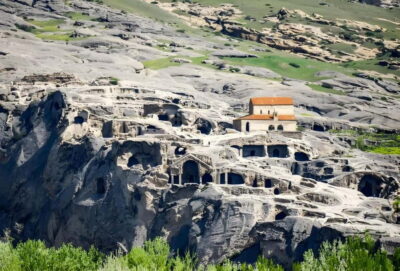
Mtskheta, Jvari, Gori and Uplistsikhe Day Tour
Read our review →
Mtskheta Jvari Bazaar, Chronicles of Georgia & Wine
Read our review →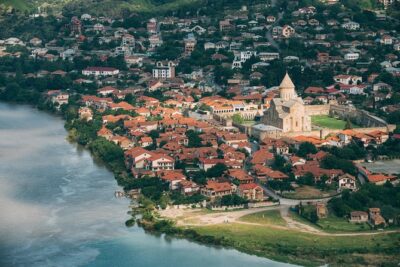
Mtskheta,Jvari,Bazaar,wine tasting,Chronicles of Georgia
Read our review →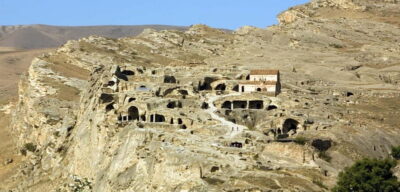
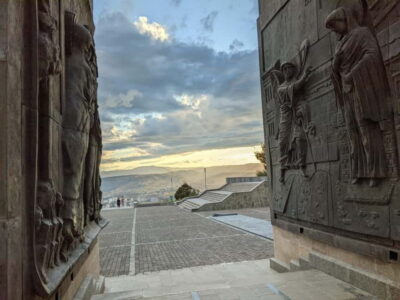
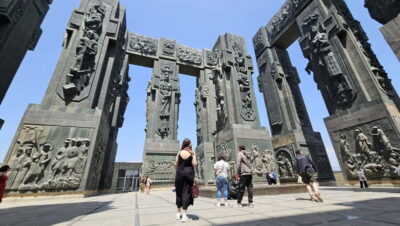
The Chronicles of Georgia, Jvari & Mtskheta Tour
Read our review →
Browse the lists this tour appears in