
Reviewed · MTSKHETA ANCIENT CAPITAL
Mtskheta: Ancient Capital of Georgia Half-Day Tour
Mtskheta is interesting because, in just half a day, you see Georgia’s sacred story unfold across several key sites, with big viewpoints and a scenic drive that breaks up the ride. I especially like the panoramas from the Chronicle of Georgia monument, and I love how the route strings together major spiritual stops like Svetitskhoveli Cathedral and Jvari with time for real-life wandering in town. One drawback to plan for: you are walking on foot to church areas, and in summer the midday heat in Mtskheta can be intense.
This tour runs like a well-paced private morning or afternoon, with pickup in Tbilisi and a live guide speaking English or Russian. Guides such as Khato, Khatuna, Guram, and Aleksi are repeatedly praised for making the sites make sense, with lots of room for questions and a relaxed tempo. Before you go, just keep church etiquette in mind, because dress code rules can be strict and entry can be limited during religious services.
Key highlights to look for
- Chronicle of Georgia photo stops with a wide view over Tbilisi
- UNESCO Svetitskhoveli and stories tied directly to Georgian identity
- Jvari Monastery on the hill overlooking the Aragvi and Mtkvari river confluence
- Scenic canyon drive that makes the ride part of the experience
- Time to shop and snack in Mtskheta, including Georgian sweets and coffee
- Private-group pacing with hotel pickup and drop-off from Tbilisi
The fastest way to feel Georgia’s ancient center
If you only have a short window outside Tbilisi, this is one of the most efficient ways to understand why Mtskheta matters. The city is tied to the origins of Georgian civilization and its early capital days, but it is not just a name on a map. You feel the continuity when you move from one holy site to the next, because each place comes with a different role in the story.
You also get a good mix of “big moment” sightseeing and smaller, everyday stops. There is a scenic drive through limestone scenery, a quick break where you can breathe and reset, and then time in Mtskheta to walk cobblestone streets and browse local bazaars.
The private format helps. You are not stuck watching a group sprint between doors. You can ask your guide to slow down when a detail catches your eye, like an architectural feature in a church or a specific scene tied to legends.
And yes, it is very much a religious sites tour. If that is your thing, you will have a good time. If you came mainly for ruined archaeology, you might find that the visit is more about historic sites and viewpoints than raw, collapsed ruins.
More Mtskheta tours from Tbilisi:
- Tbilisi: Mtskheta, Jvari, Gori and Uplistsikhe Day Tour
★ 4.9 · 2,396 reviews - Day Trip to Mtskheta Gori and Uplistsikhe
★ 5.0 · 1,801 reviews - Tbilisi: Mtskheta Jvari Bazaar, Chronicles of Georgia & Wine
★ 5.0 · 1,088 reviews
Chronicle of Georgia: the viewpoint that sets the mood
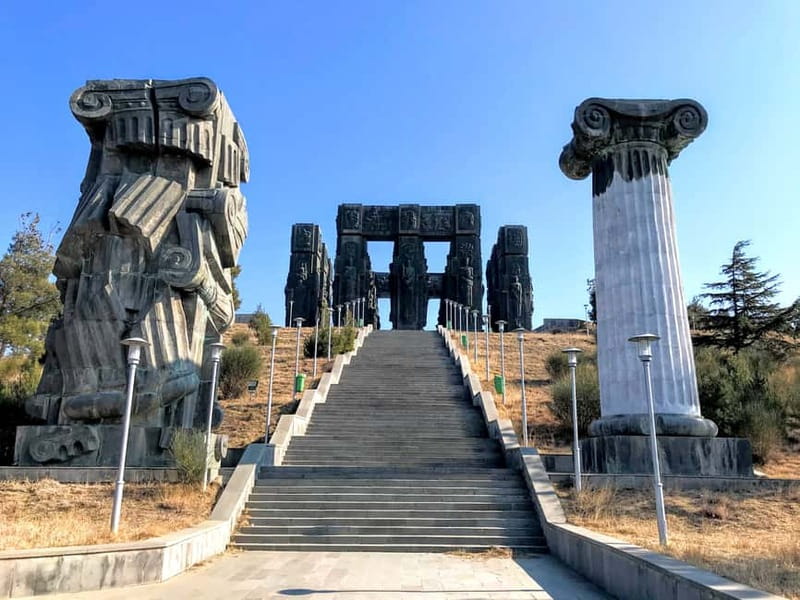
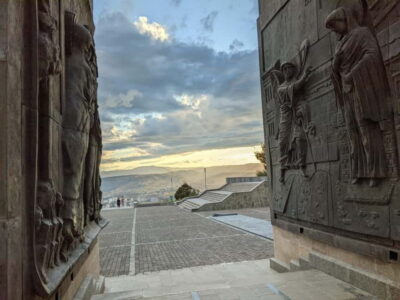
Your day usually begins with the Chronicle of Georgia monument, where you get both a guided visit and time for photos. The monument is famous for how it frames the past in stone, and it is also famous for the view. When you’re standing there, you get a clear sense of the region’s geography and why these hills and river routes mattered.
This is one of the best stops for first impressions. It’s easy to understand why your guide spends time here before you move on to the older sacred buildings in town. From this height, everything you see later feels connected, not random.
Practical tip: bring sunglasses and comfortable footwear. You will likely be outside for the photo stop, and even on a mild day, that open-air light can be sharp.
If you are into photography, consider timing. One review notes that a later start can be perfect for golden-hour conditions, since multiple sites are open at sunset-ish times and the views stay dramatic as the light changes.
Svetitskhoveli Cathedral: UNESCO importance plus real-world etiquette
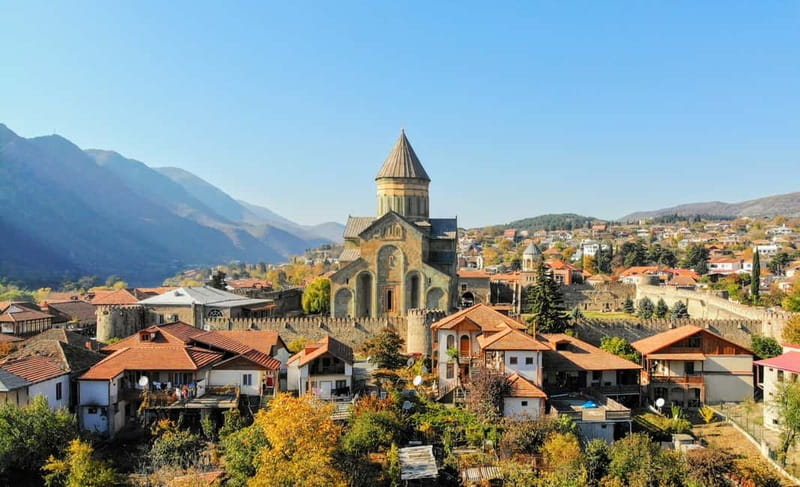
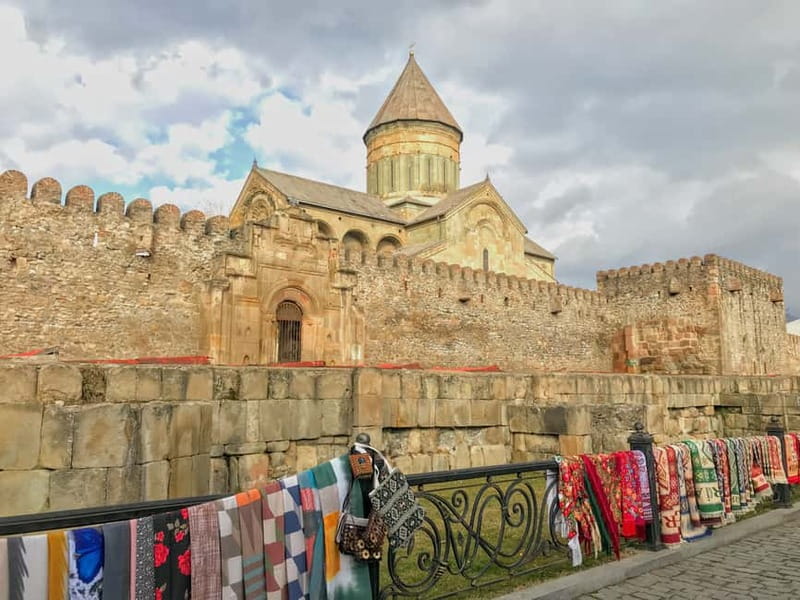
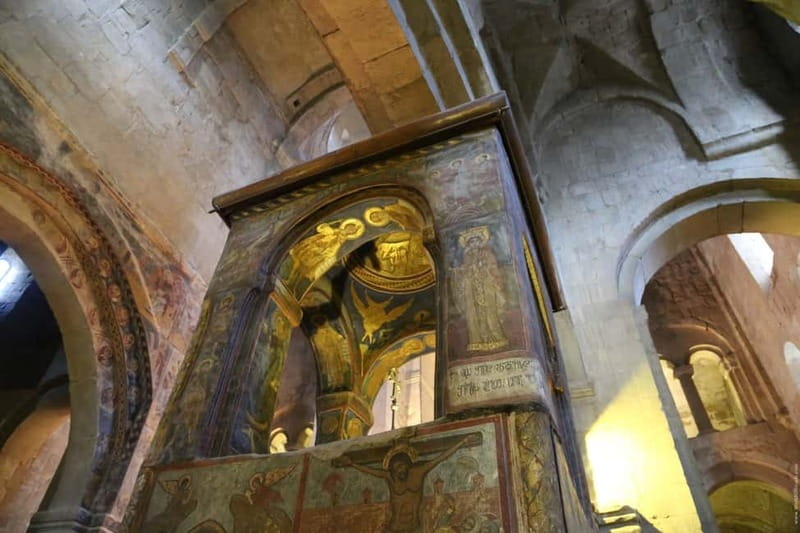
Next comes Svetitskhoveli Cathedral, one of the most important religious sites in Georgia, and a UNESCO World Heritage stop. This is the kind of place where the guide’s narration makes a difference. Instead of reading alone and guessing, you get explanations that connect the cathedral’s role to Georgian tradition and long-running stories tied to the land.
You’ll have about an hour for the visit and guided tour, with some walking. Pay attention to how people move through the space. Orthodox churches have a clear rhythm, and your guide will often nudge you on what to expect so you do not feel awkward.
Dress code matters here:
- Men cannot wear shorts or sleeveless shirts inside Orthodox churches.
- Women need to cover their head (often a headscarf is provided at the entrance).
- Both men and women should avoid shorts or sleeveless tops.
Also remember this part: access is pedestrian only around church and monument areas. Even if the main building looks close, you should plan for short walks.
A heads-up from the tour rules: during religious holidays or services, entry to some churches may be restricted. If you are traveling around a major holiday season, you may want to be flexible about what your guide can get you into.
A quick reset in Mtskheta town for sweets and souvenirs
After the cathedral, you get time in Mtskheta itself, with a short break and a chance to shop and walk. This is the piece that turns the outing from purely “sacred monuments” into an actual cultural snapshot.
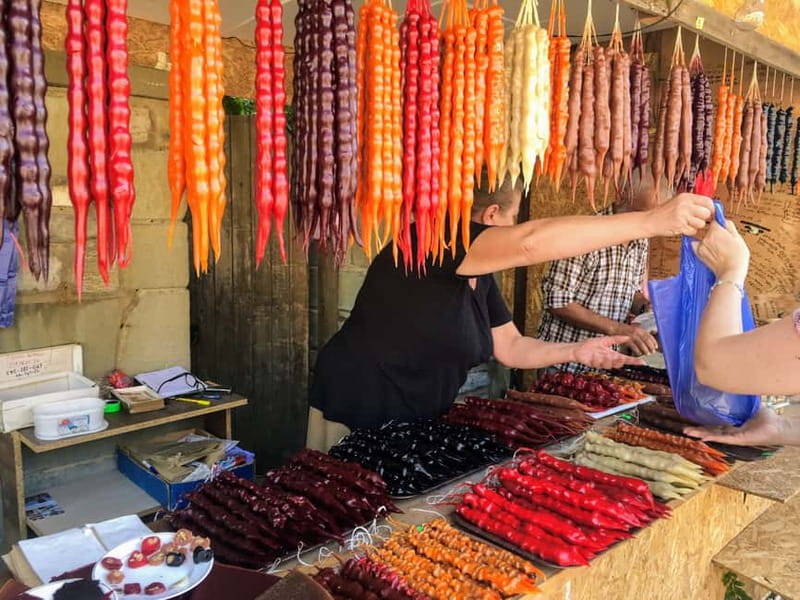
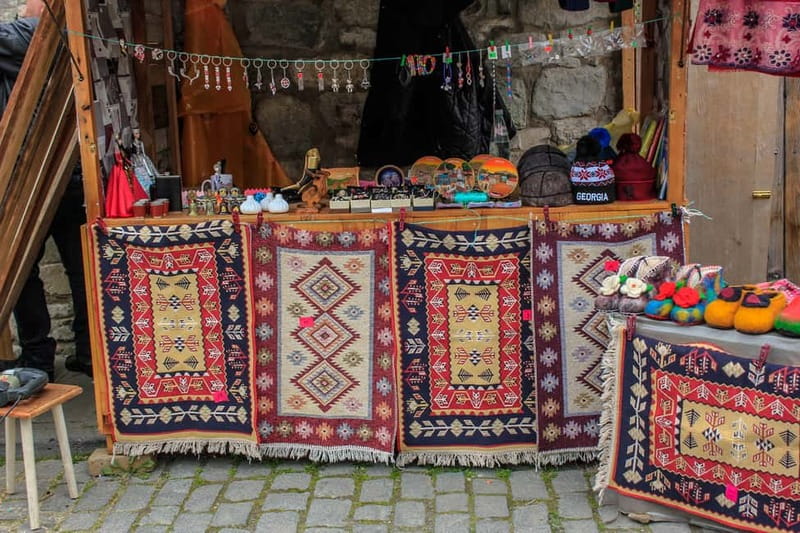
You’ll wander cobblestone streets and run into local bazaars. This is where you can pick up traditional souvenirs, but more importantly, you can snack like a local. The tour includes time for you to try Georgian sweets, grab robust coffee, and even go for unusual treats like wine ice cream if you feel like it.
This is also where I think the private format shines. Twenty-something minutes in a big historic setting can feel rushed if you’re thinking only about checkboxes. But if you use it to do something small and specific, like finding a pastry or a drink and then walking slowly through the nearby streets, the time feels like it has value beyond the photos.
Practical tip: if you have dietary preferences, decide ahead. The break time is not long, and it’s better to know what you want rather than hunting for it under pressure.
One subtle takeaway from the way guides are praised: they often share not only site facts, but also day-to-day suggestions, like what to eat next in Tbilisi. If your guide is the type to do that, take them up on it.
A few more Tbilisi days worth putting side by side
- Tbilisi: Day Trip to Kazbegi, Gudauri, Gergeti, and Ananuri
★ 4.9 · 3,203 reviews - Day Trip to Kakheti Wine Region Including 9 Wine Tastings
★ 5.0 · 2,774 reviews - Highlights of Caucasus Mountains-Jinvali,Ananuri,Gudauri,Kazbegi(Group tour)
★ 5.0 · 2,682 reviews - From Tbilisi: Kakheti Wine Region Tour with 9 Wine Tastings
★ 4.9 · 2,541 reviews
Jvari Monastery: river confluence views that feel cinematic
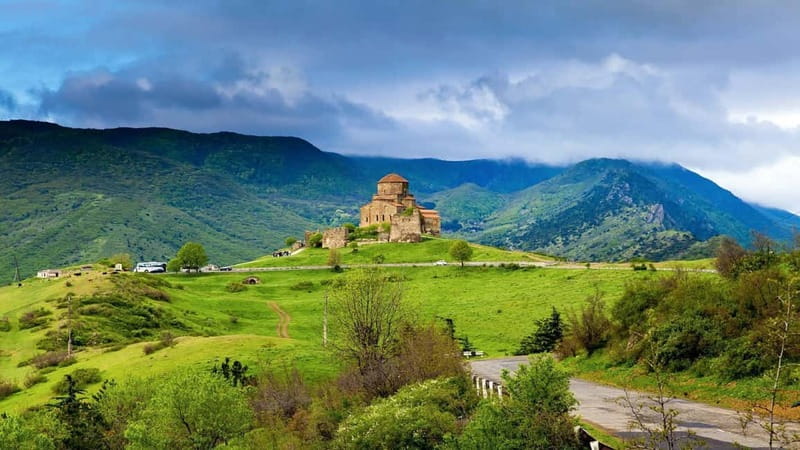
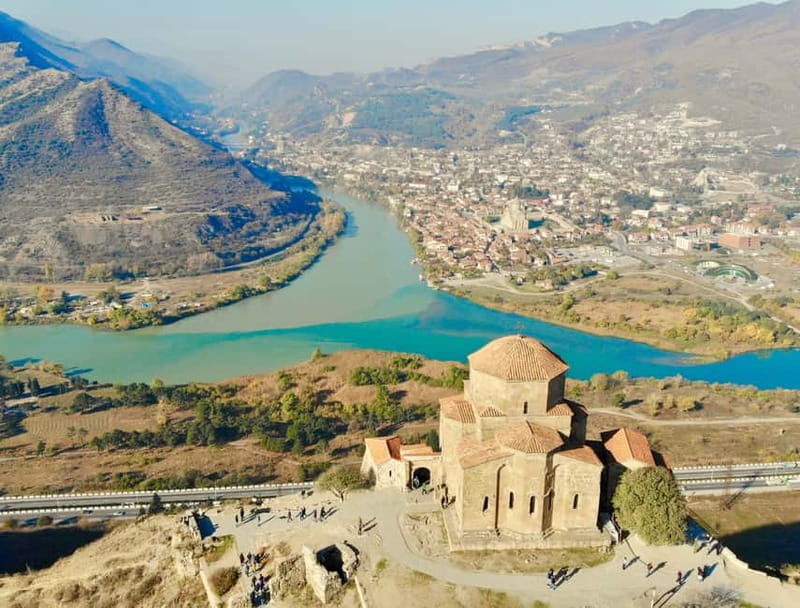
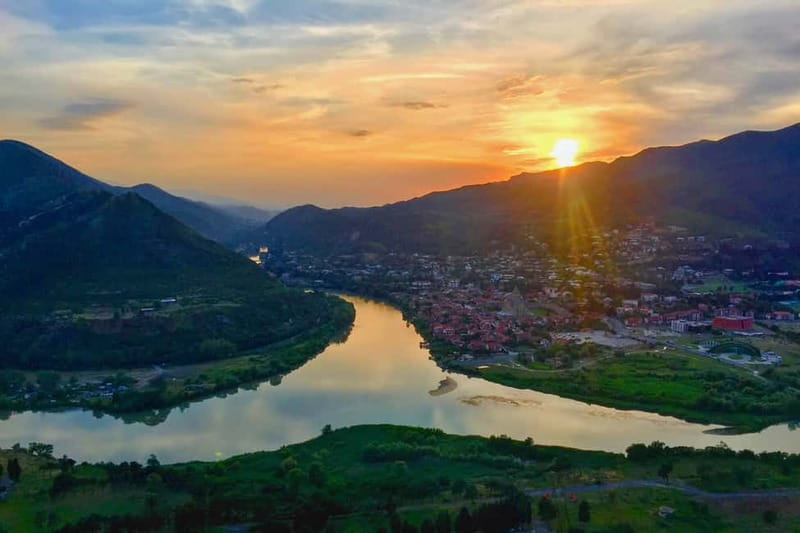
Jvari Monastery sits up on a hill, overlooking the confluence of the Aragvi and Mtkvari rivers. You get another photo stop and a guided visit, plus time for scenic views on the way. This is the stop that many people remember most, because the view turns the story into something you can see.
The monastery’s setting makes it easy to understand why people chose this spot for worship. You’re looking across water routes that connect regions, and on a clear day you can even see Mount Kazbeg in the distance, which adds scale to the whole landscape of your day.
How to get the most from this stop:
- Take a few minutes just standing and scanning the view before you start photographing.
- Ask your guide what you are looking at from the viewpoint (river names and directions help your brain map the geography).
- Use the time to notice how light hits the rivers, because the river surfaces can change dramatically as clouds shift.
One helpful pattern from the guides: they are patient about pacing, even when families are on board. For example, one review highlights a guide who slowed the pace for a 10-month-old, which says something about how flexible your day can feel if you ask for it.
The drive matters: limestone scenery and short, efficient routing
A big part of the “half-day” success is that the route is planned so you do not spend the entire time in a car. You do travel through limestone canyon scenery, and there’s also a mention of the Tbilisi Sea area as a calm break point. Even if those moments are not the main headline, they keep the day from feeling like a nonstop march of door-to-door tourism.
The transport is also repeatedly praised. A large majority of reviewers gave perfect scores for the transportation experience, and there are notes about comfortable cars with air conditioning, which matters when you are moving between viewpoints and churches.
Safe, smooth driving sounds boring until you have been on chaotic roads elsewhere. When you’re trying to focus on what you’re seeing and not on the ride stress, smooth driving becomes a real part of the value.
Timing, heat, and what to bring (so the day feels easy)
This tour is suitable for all seasons, but summer needs planning. In Mtskheta, midday temperatures can hit around 35°C (95°F). If you do this in summer, I strongly suggest starting in the morning or late afternoon to avoid the harshest heat.
Bring:
- Comfortable shoes for church walks
- Sunglasses for outdoor photo stops
- A sun hat for the brighter stretches
- Weather-appropriate clothing, meaning bring layers if the morning starts cool and warms up later
And bring the right clothing for Orthodox churches:
- Men should wear sleeves and avoid shorts.
- Women should be ready to cover their head and avoid sleeveless tops.
If you forget something, you may be able to handle the headscarf part at the church entrance, but you cannot count on that for everything.
Church visits: pedestrian-only access and holiday restrictions

Here’s the reality check you need for planning: access to churches, temples, and monuments is pedestrian-only. That means short walks even when the “destination” looks close on the map.
Also note the rule about services and religious holidays. Entry can be restricted during services, so your guide may have to adjust. If you have one must-see site, ask your guide early in the day how they plan to handle access.
Accessibility is an odd point in the provided info. The activity is described as wheelchair accessible, but it is also noted as not suitable for wheelchair users. Since the churches are reached via pedestrian-only access and the visits include walking, I would treat this as a cue to contact the provider ahead of time and ask about step-free routes and walking distance.
Price and value: is $48 for 4 hours fair?
At $48 per person for a 4-hour half-day, the value comes from how much gets bundled into that time. You are paying for:
- Entrance fees
- A live guide (English or Russian)
- Water
- A guided sequence across several major sites
- Skip-the-ticket-line support
- Pickup and drop-off from your Tbilisi accommodation for the private option
Lunch is not included, so budget for that on your own if you need it.
Is it worth it? For me, it is a yes if you want efficiency plus context. If you tried to do this independently, you would still need transport, you would still need to pay entry fees, and you would still need to figure out what you’re looking at at each site. Paying for a guide is what turns the places from pretty into meaningful.
Also, the transport is highly rated, and private-group pacing matters. You save time by not trying to coordinate every step yourself, and you gain flexibility, especially if your guide offers extra practical suggestions.
Who this tour fits best, and who should choose differently
This tour is a great match if you:
- Want a fast way to experience Mtskheta, Svetitskhoveli, and Jvari without spending a full day
- Prefer guided storytelling over reading everything on your own
- Like photography viewpoints, especially the river and city panoramas
- Travel with family members who need a slower pace (guides have been praised for being patient)
It may be less ideal if you:
- Expect purely ancient ruins with nothing active or restored. One note points out that Mtskheta can feel renewed rather than like a field of ruins.
- Have mobility limitations that make short walks difficult. The church access is pedestrian-only, and walking time is part of the experience.
If you do fall into either of those categories, you can still go, but you should adjust your expectations and plan carefully around clothing, heat, and walking.
Should you book this Mtskheta half-day tour?
If you want a high-value introduction to Georgia’s spiritual and historic core, I think you should book it. You get the key sites in a tight schedule, a drive that adds scenery rather than just transportation, and guided context that helps you make sense of what you’re seeing.
My “book it” checklist is simple:
- You have about 4 hours and you want a day that feels efficient, not rushed.
- You care about Orthodox church sites and the stories around them.
- You want viewpoint time, not just interior visits.
- You’re traveling at a time when you can avoid the hottest midday hours, or you’re packing for heat.
If those boxes click for you, this is one of the most practical ways to understand Mtskheta from Tbilisi, and you’ll likely leave with both photos and a clearer sense of Georgia’s early identity.
FAQ
How long is the Mtskheta half-day tour?
The duration is 4 hours.
What stops are included in the route?
You visit the Chronicle of Georgia, Svetitskhoveli Cathedral, Mtskheta town time for shopping and a walk, and Jvari Monastery.
Is lunch included?
Lunch is not included.
What is included in the price?
The tour includes entrance fees, water, and hotel pick-up and drop-off if you choose the private option.
What languages is the guide available in?
The live tour guide is available in English and Russian.
Are there dress code rules for church visits?
Yes. For Orthodox churches, men cannot wear shorts or sleeveless shirts. Women are required to wear a headscarf (often provided at the entrance) and should avoid shorts or sleeveless tops.
Recently reviewed around Tbilisi
- Tbilisi City Tour★ 4.5 · 3 reviews
- Tbilisi City, Jvari Monastery, Uplistsikhe caves, Mtskheta city Private Day Trip★ 4.5 · 3 reviews
- Tbilisi City Tour with Street Photography★ 5.0 · 3 reviews
- Wild Georgia 4WD PACK Adventure through Kakheti and Kazbegi 2in1★ 5.0 · 3 reviews
- Private Trip to Tbilisi and Mtskheta – Cultural Capitals★ 5.0 · 3 reviews
- Tbilisi Airport to Gudauri, Bakuriani, Batumi, Tbilisi★ 5.0 · 3 reviews
- Private Adorable City Tour of Tbilisi★ 5.0 · 3 reviews
- Tbilisi and Mtskheta cities private, cultural tour★ 5.0 · 3 reviews
Mtskheta Ancient Capital, compared.
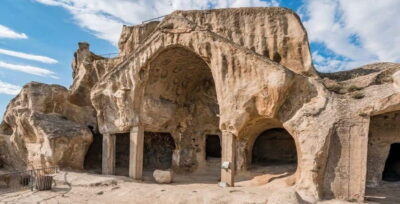
Mtskheta, Jvari, Gori and Uplistsikhe Day Tour
Read our review →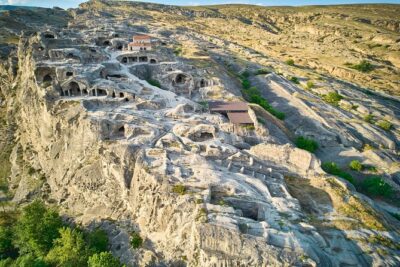
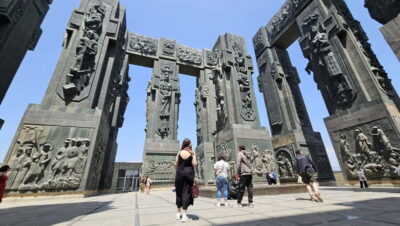
Mtskheta Jvari Bazaar, Chronicles of Georgia & Wine
Read our review →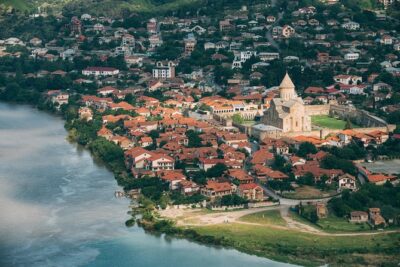
Mtskheta,Jvari,Bazaar,wine tasting,Chronicles of Georgia
Read our review →
The Chronicles of Georgia, Jvari & Mtskheta Tour
Read our review →
Browse the lists this tour appears in