
Reviewed · SOVIET-ERA SITES
Kutaisi: Tskaltubo Abandoned Soviet-Era Spas Tour
Tskaltubo feels like a movie set that lost power mid-scene. On this Kutaisi to Tskaltubo tour, you walk through abandoned Soviet-era sanatoriums and bathhouses where fashion, architecture, and spa culture once served huge numbers of visitors. Two stops I really like are Sanatorium Medea for its iconic colonnade and photo angles, and Spring N6 for the contrast of a still-working bathhouse tied to Stalin-era visits.
The main drawback is the same one that makes it so atmospheric: you’re in decaying buildings. Expect uneven ground and hazards like broken glass, crumbling concrete, and scattered debris, and plan to move slowly even with a guide who keeps you oriented.
Key things to know before you go
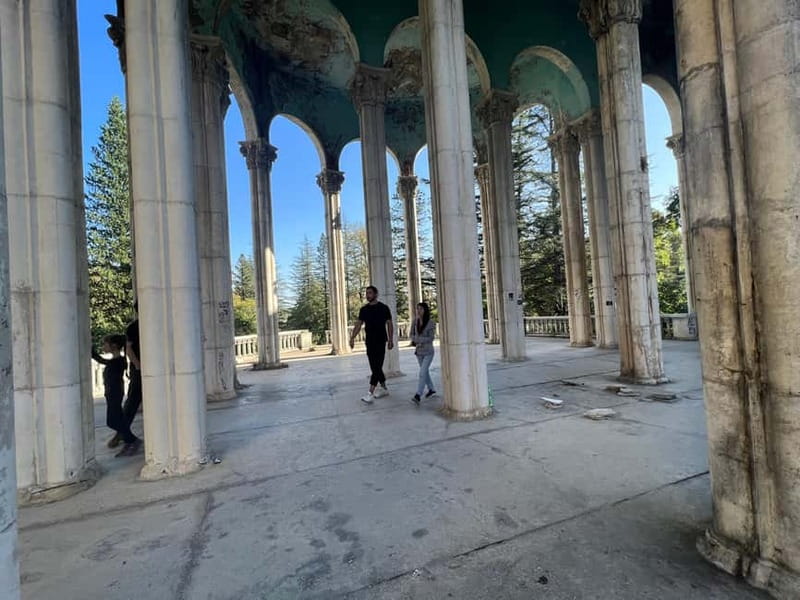
- Sanatorium Medea (1954 to 1962), including colonnade photo time and original 1960s hotel-room interiors
- Sanatorium Metallurgist with a dramatic entrance and a huge chandelier, plus old theater and restaurant halls
- Spring N6 as one of the few working bathhouses left in Tskaltubo
- Stalin-era stop connected to a special bathhouse built for his visit
- Small group size (up to 7) for a more personal pace and easier safety management
- Urbex approach: take only photos, leave only footprints, because it’s real, not a set
Tskaltubo Soviet spa town: why it feels like another world
Tskaltubo is the kind of place where the story is written in concrete. This area became famous for its spa culture, and the tour frames it with the rise and fall of the Soviet sanatorium boom. You’re not just taking pretty pictures of decay. You’re seeing how health tourism, grand architecture, and political prestige collided in one spa town.
And the water matters. Tskaltubo springs are often called the waters of immortality, and your visit includes a stop at Spring N6, plus background on why these waters drew crowds in Soviet times. That context makes the buildings more than ruins, because you start to understand what people came for, and why the town was invested in at such a grand scale.
More Soviet-era sites in Kutaisi:
- Kutaisi:Chiatura Tour with Katskhi Pillar & Cable Car
★ 4.9 · 433 reviews - Abandoned sanatoriums of tskaltubo – group tour from Kutaisi
★ 4.8 · 99 reviews - Kutaisi:Chiatura Tour with Katskhi Pillar & Cable Car Experience
★ 5.0 · 95 reviews
Meeting in Kutaisi and getting to Tskaltubo in a small group
The tour starts in Kutaisi at the Central Park columns, across from the Colchis Fountain. The park area is fenced and under construction right now, so give yourself a little extra time to find the exact meeting spot and lines.
From there, you go to Tskaltubo with included transportation from Kutaisi and back. It’s designed for a small group up to 7 participants, which matters here because the route includes abandoned interiors and uneven surfaces. A larger group would turn this into a traffic jam. A small one means you can pause for photos, listen to the guide’s explanations, and get through the buildings more carefully.
Sanatorium Medea: colonnade photos and original 1960s interiors
Your first big stop is Sanatorium Medea, built between 1954 and 1962. This is the kind of building that makes you stop walking. Even if you know nothing about Soviet architecture, you can feel the ambition in the clean lines and the sense of order that once came with “rest and recovery.”
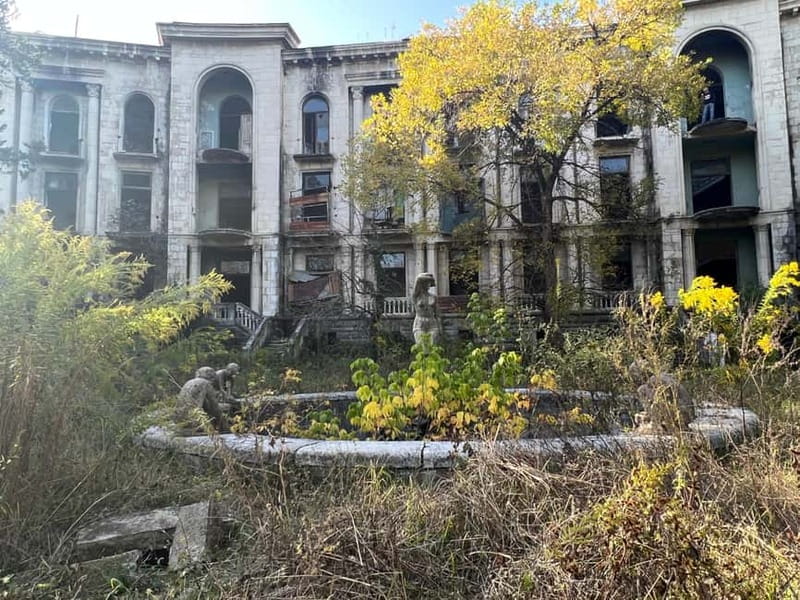
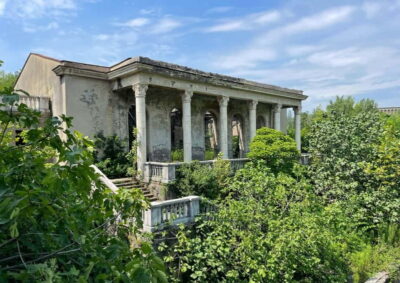
What I like for your photo plan is the iconic colonnade. It gives you structure, symmetry, and strong angles. Then you move inside and into the spaces that once supported daily life for guests. You’ll explore hotel rooms with original interiors from the 60s, plus patios with fountains and sculptures. Even when those details look worn, the design still shows through.
Practical note: since you’re touring abandoned rooms, your time inside may depend on what is safe and accessible on the day. The tour notes that locations can change if buildings become inaccessible. That keeps expectations realistic and helps the guide manage risk.
Sanatorium Metallurgist: the chandelier entrance and old halls
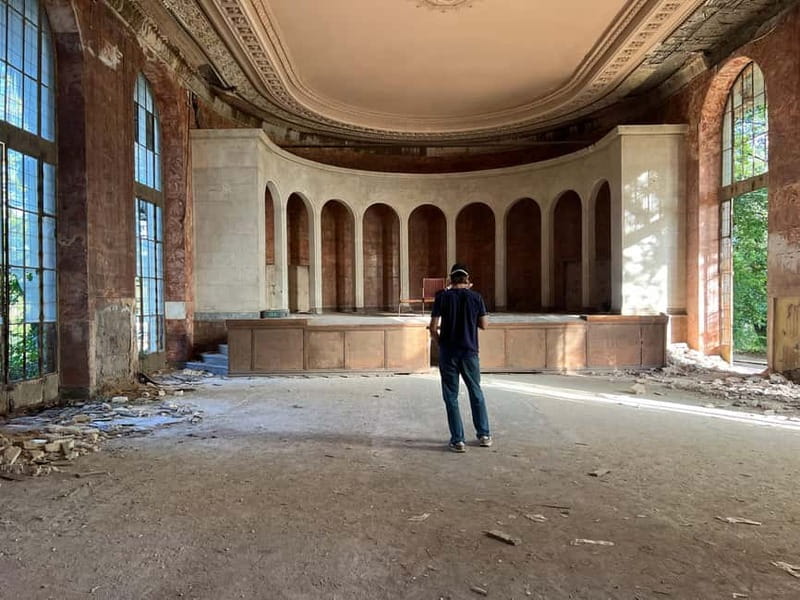
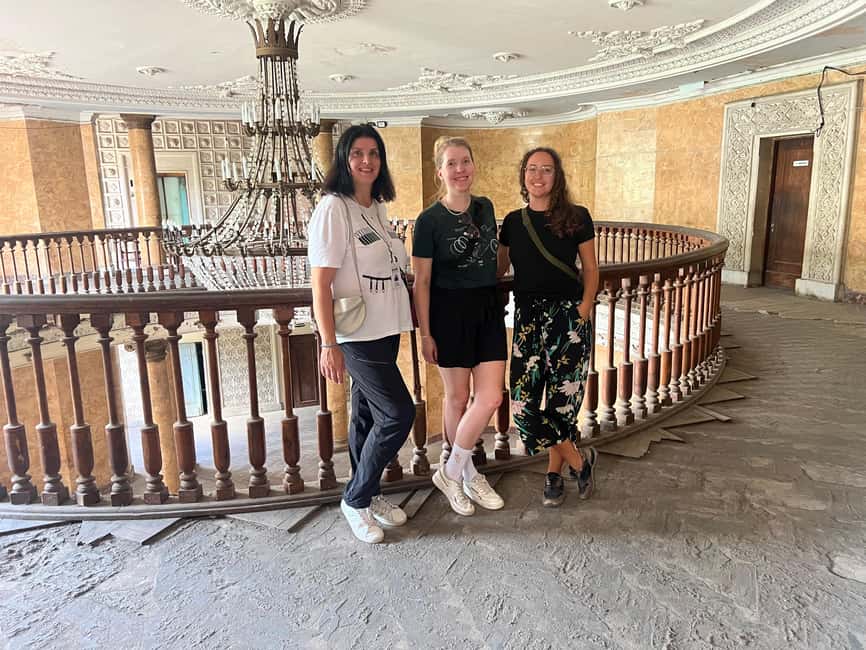
Next comes Sanatorium Metallurgist, which leans into drama. The entrance is dramatic, with a huge chandelier that feels almost theatrical for a place that’s gone silent. You’ll also notice fancy metalwork throughout the hotel spaces, which is one of those details that photographs better when you slow down and look at craftsmanship, not just the overall gloom.
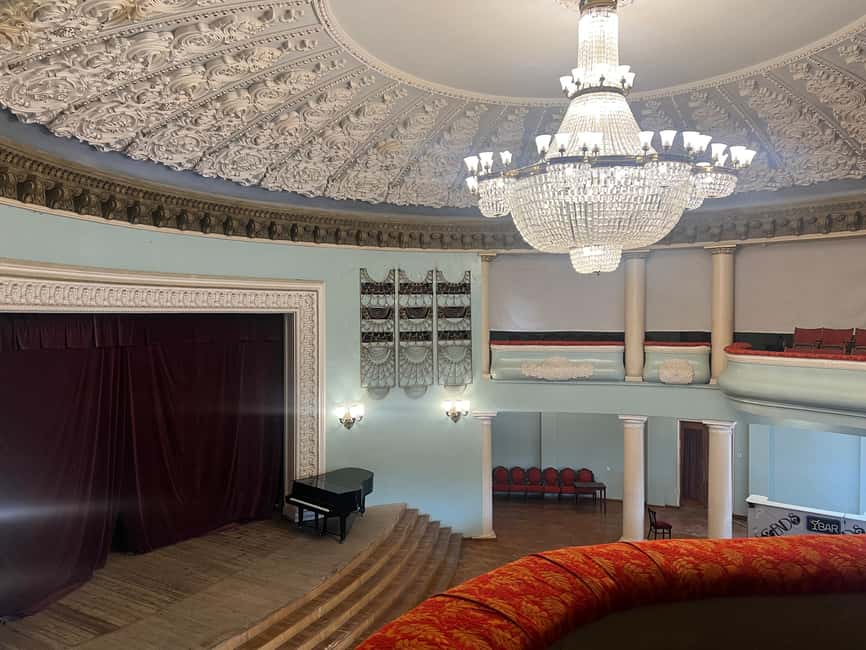
Once you’re inside, your walk through the corridors matters. This is where the tour shifts from “look at the building” to “understand how it worked.” You’ll see an old theater hall and a restaurant hall, both of which connect to the idea that these were not just medical buildings. They were social centers, complete with entertainment and dining.
If you like architecture, especially the way corridors, grand entrances, and public rooms are planned, this stop is one of the best. It’s also one of the most memorable because it shows you how big and organized the complex once was, before nature started taking back the spaces.
A few more Kutaisi days worth putting side by side
- Kutaisi: Martvili & Okatse Canyons & Prometheus Cave Tour
★ 4.9 · 829 reviews - From Kutaisi: Guided Tour of Okatse, Martvili, & Prometheus
★ 4.8 · 520 reviews - CANYONS & CAVE Tour from Kutaisi – Okatse, Martvili & Prometheus
★ 4.5 · 307 reviews - Kutaisi: Prometheus Cave & Martvili Canyon Guided Tours
★ 4.7 · 206 reviews
Spring N6 and the Stalin-era bathhouse details
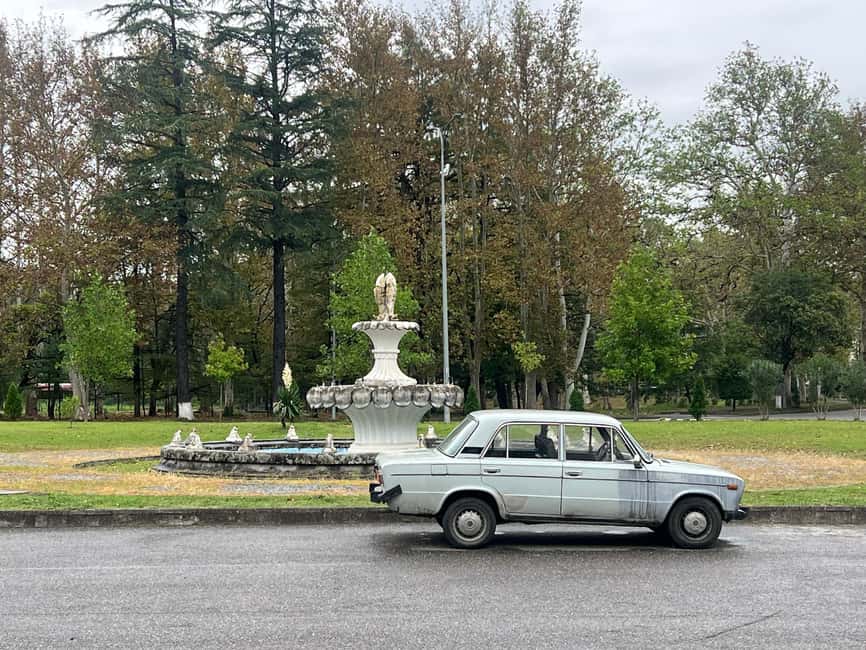
After the grand hotel buildings, the tour pivots to function with Spring N6. This is one of the few working bathhouses still left in Tskaltubo, so it brings a different energy. The atmosphere feels less like a museum and more like you’re seeing something still connected to the town’s original purpose.
Here, you also learn about a bathhouse built specially for Stalin’s visit to Tskaltubo. That detail changes how you view everything else. It’s not only a story of health tourism. It’s also a story of prestige, power, and the Soviet habit of turning big leaders into a national event.
You end this part of the tour with a short visit to an abandoned bathhouse nearby. That gives you one more taste of what has been left behind and how the town’s spa infrastructure is split between what still runs and what has been left to time.
Urbex rules and safety in abandoned sanatoriums
Let’s talk safety clearly, because it’s part of the experience here. The tour specifically warns you that abandoned buildings come with real risks: trash, broken glass, splintered wood, and crumbling concrete. You’re accompanied by a guide, but guidance does not eliminate hazards. It only reduces the chances of you taking the wrong turn.
So treat this like a careful walking tour, not an exploration adventure. Wear comfortable shoes with solid grip. Move slowly over uneven surfaces. If something looks unstable, don’t test it. If you need to pause for a photo, do it without stepping onto debris.
There’s also the golden rule of Urbex built into the tour: take nothing but photos and leave nothing but footprints. That means no souvenirs, no touching fragile details, and no leaving trash behind. It’s the right mindset for places like this, and it helps keep the tour respectful.
What makes the guided part worth it
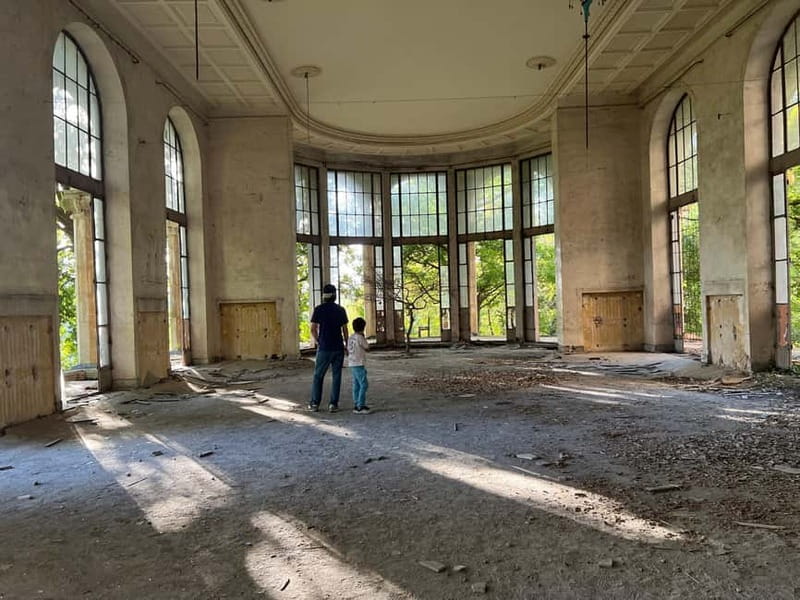
This tour works because the guide turns the scene into context. The small-group format supports that. You’re not rushing through stops to check boxes. You’re walking with a live English guide who can explain what you’re seeing and answer questions along the way.
From the way guides are described, they’re strong on history and on how politics and architecture connected in Soviet times. That matters because you’ll notice more when someone gives you a way to read the building. A corridor is just a corridor until you learn why it was built that way. A chandelier is just decoration until you understand how public spaces were meant to signal status.
Guides also get praised for being friendly and for creating a safe feeling during the visit. That’s not fluff. In a place like this, trust in the guide’s judgment affects how much you enjoy the day.
Timing, pacing, and the reality of four hours
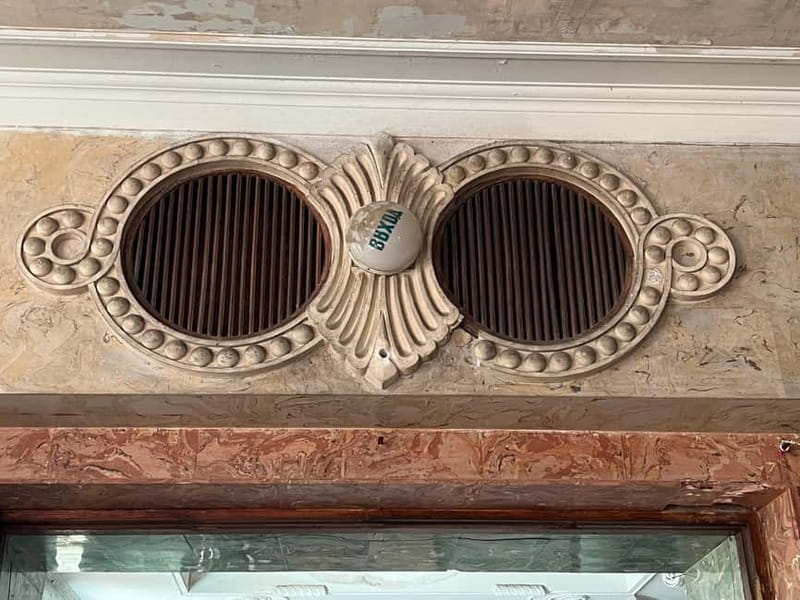
The total duration is about 4 hours, round-trip from the meeting point. That’s enough time to see several major buildings and a working bathhouse, but it can feel quick if you want to spend long minutes inside each room.
This is a good tour if you want a focused taste of Tskaltubo rather than an all-day deep crawl. If you want more, use this day trip as your first visit, then come back with more time on your side when you know what kind of shots you want and which halls you’ll want to linger in.
Who this tour suits best, and who should skip it
This is a strong pick for people who like Soviet architecture, urban exploration style photography, and places where nature has quietly moved into human-made spaces. If you care about understanding how the spa town rose and fell, this guided format gives you the framework so the ruins make sense.
It is not suitable for children under 12, not suitable for pregnant women, and not suitable for people with mobility impairments. That’s mainly about safety, walking conditions, and access to uneven and potentially hazardous areas.
What to bring for photos and comfort
Pack like you’re walking in an abandoned complex, because you are.
- Comfortable shoes are essential.
- Water is required since the day includes a lot of walking.
- A camera helps you capture the colonnade, chandelier entrance, and the contrast between glamorous design and abandoned interiors.
If you can, dress for uneven surfaces and changing light. The big entrances and patios can produce great contrast shots, especially around Meda and Metallurgist.
Also remember you may not be able to access every spot if something is deemed unsafe that day. Bring patience, and treat the itinerary as flexible.
Value for your time: why this feels like a smart day trip
You’re paying for three things that add up fast: transportation from Kutaisi and back, a live English guide, and guided access to multiple major structures within a short window.
Because the group is limited to 7 participants, you get less waiting and more time listening. You also get better safety management, which is important in an environment with hazards like broken glass and crumbling concrete. Since meals are not included, you should plan to eat before or after, so you don’t lose time hunting for food right after the tour ends.
If you’re already in Kutaisi and want something different from the standard day trips, this one is a solid match. It’s not a gentle stroll in a park. It’s a short, well-paced look at a whole system of Soviet spa life.
Should you book this tour of Tskaltubo Soviet spas?
Yes, if you want a guided, English-speaking day trip that shows you more than one abandoned sanatorium and connects the visuals to the story of Soviet spa culture and the waters of immortality. The combination of Sanatorium Medea, Sanatorium Metallurgist, and Spring N6 makes the time feel packed in the best way.
Skip it if you’re sensitive to unstable spaces, if mobility is an issue, or if you don’t like the idea of walking carefully around hazards in abandoned buildings. If you’re comfortable with that reality, the guided format and small group size should make the visit feel safe, focused, and genuinely memorable.
FAQ
How long is the Kutaisi to Tskaltubo abandoned Soviet spas tour?
The tour lasts about 4 hours.
Where do we meet the guide in Kutaisi?
The guide meets you at the Kutaisi Central Park columns, across the Colchis Fountain.
Is transportation included?
Yes. Transportation from Kutaisi and back is included.
What language is the tour guide?
The live tour guide speaks English.
How big is the group?
The group is limited to 7 participants.
What places does the tour include?
You’ll visit Sanatorium Medea, Sanatorium Metallurgist, Spring N6, and an exploration of an abandoned bathhouse, plus a short visit to an abandoned bathhouse nearby.
What should I bring?
Bring comfortable walking shoes, water, and a camera for photos.
Is the tour suitable for children or mobility issues?
It is not suitable for children under 12, not suitable for pregnant women, and not suitable for people with mobility impairments.
Can I cancel, and can I pay later?
You can cancel up to 24 hours in advance for a full refund. You can also reserve now and pay later.
Recently reviewed around Kutaisi
- Wine & Dine group tour from Kutaisi★ 4.6 · 3 reviews
- Wild Caving Experience in Melouri Cave Near Kutaisi★ 5.0 · 3 reviews
- Private tour from KUTAISI: Bagrati, Gelati and Motsameta★ 5.0 · 5 reviews
- Ski & Snow Tour to Bakuriani from Kutaisi with Borjomi Stop★ 5.0 · 5 reviews
- Break Bread with Kutaisi Locals★ 5.0 · 4 reviews
- WINE & DINE Tour from Kutaisi★ 5.0 · 34 reviews
- Causacus mountains at Majestic SVANETI and MESTIA from Kutaisi★ 4.5 · 4 reviews
- Prometheus Cave, Okatse Canyon & Martvili Canyon from Kutaisi★ 4.5 · 28 reviews
Soviet-Era Sites, compared.
Abandoned sanatoriums of tskaltubo – group tour from Kutaisi
Read our review →
Chiatura Tour with Katskhi Pillar & Cable Car Experience
Read our review →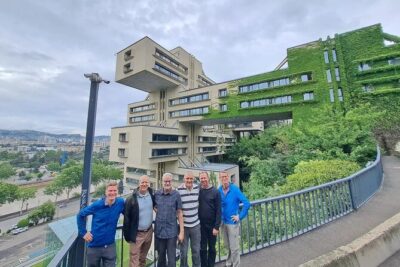
Tbilisi old town & soviet heritage – Private driver-guided Tour
Read our review →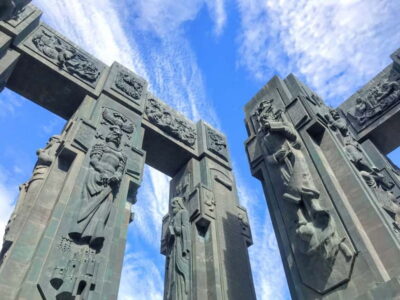
Brutalist Tbilisi: Urban exploration and untold stories
Read our review →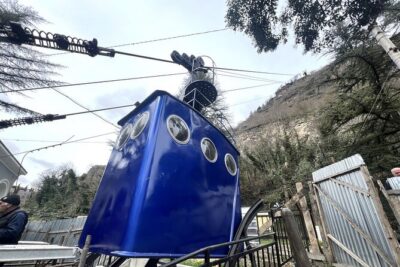
Chiatura Cable Cars & Katskhi Pillar Guided Tour
Read our review →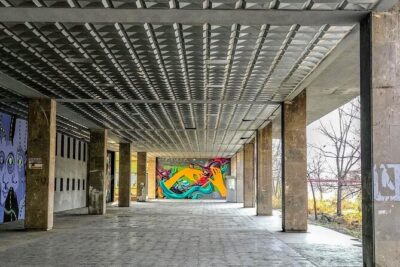
Brutal Tbilisi: Urban exploration and untold stories
Read our review →Browse the lists this tour appears in