
Reviewed · SOVIET-ERA SITES
Tbilisi: The Urbex and Soviet Tour of Tbilisi
Tbilisi: The Urbex and Soviet Tour of Tbilisi is interesting because it treats the city like a living Soviet document, not a postcard. I love how the focus lands on Soviet Brutalism and how it keeps you out of the usual historic-center route. I also like that the small group size makes it easier to ask questions and get real context for what you are seeing.
One consideration: a few spots are only viewable from the outside due to access limits, so you should be ready for photo stops where you cannot go inside.
Key points at a glance
- Brutalist architecture that still affects daily life, from refurbished concrete to decay you can photograph
- Guided museum time at the Underground Printing House Museum, with proper context before you take pictures
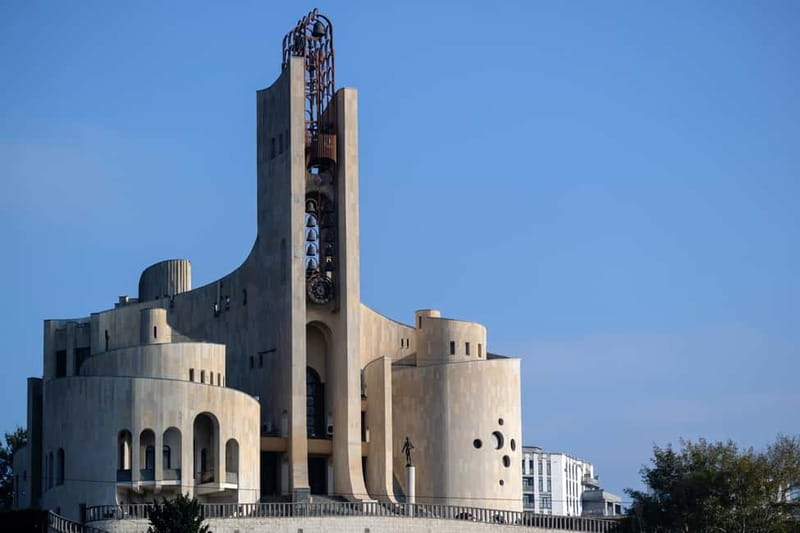
- Monuments designed for visibility like the Chronicle of Georgia, perfect for people who love scale and angles
- Photo stops built into the route, not tacked on at the end
- Real Georgia Tours guides often bring strong storytelling, with names like Giorgi, David, Temo, and Zezva showing up in past groups
- Expect some restricted areas, so your experience may lean more visual than hands-on in certain places
Soviet Tbilisi: Brutal Concrete, Real People, No Postcard Route
If your idea of history is something that should be seen at street level, this tour fits. Tbilisi still has Soviet buildings woven into neighborhoods, not just isolated landmarks. You get the feeling of a city that kept building, kept living, and kept changing, even when the Soviet plan was shaping what went up.
The architecture angle is the headline, but what makes it work is the pairing of forms with stories. Concrete is the visual hook, yet the guide is usually steering you toward how those buildings functioned and how locals navigated daily life under Soviet rule. Guides mentioned in past bookings, like Giorgi and David, are praised for answering questions in an easy, friendly way, and that matters because Soviet-era design is full of symbolism you might miss on your own.
There is also an urbex mindset here, meaning you are looking for evidence. You are noticing the scars of time, the way aging materials look against patched surfaces, and how Soviet design still frames the view from a bus window.
More Soviet-era sites in Tbilisi:
- Tbilisi old town & soviet heritage – Private driver-guided Tour
★ 5.0 · 83 reviews - Brutalist Tbilisi: Urban exploration and untold stories
★ 5.0 · 82 reviews - Brutal Tbilisi: Urban exploration and untold stories
★ 5.0 · 59 reviews
Where You Meet and How the Route Keeps Moving

You meet outside the metro station of Avlabari, at the round fountain. The tour also notes pickup depends on your selected option, but the Avlabari fountain is the anchor point you can plan around. Getting there is straightforward by metro, public buses, or taxi, and if you want help from your hotel, the provider asks you to contact them for the best route.
This matters because Soviet Tbilisi is spread out. The tour is designed to hop between areas instead of circling the same few blocks. You are not spending all your energy figuring out connections, which lets you focus on what you are there for: architecture, photos, and historical context.
Also, with a small group limited to 10 participants, you usually get a calmer rhythm than on big-city coach tours. That rhythm makes it easier to stop quickly when the light hits the concrete the right way, and to keep the group together without constant herding.
Underground Printing House Museum: Starting With Power and Craft
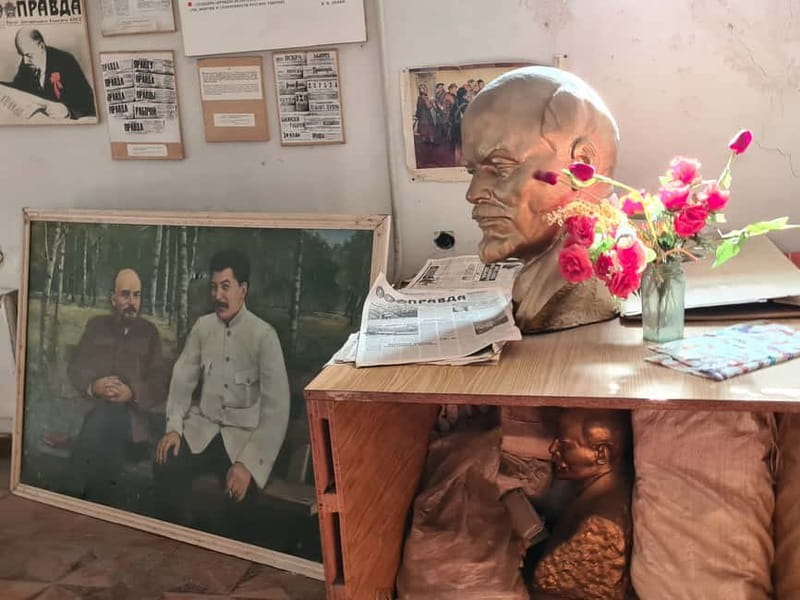
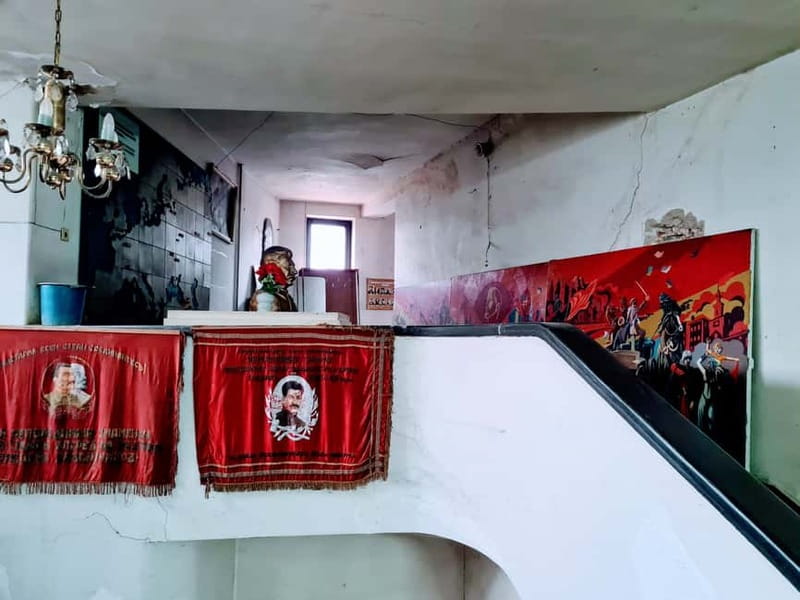
The tour begins with a visit to the Underground Printing House Museum. Plan on a guided tour here for about 30 minutes. This is one of the most thematic stops on the route because it is not just about buildings. It is about communication, control, and the machinery behind big political narratives.
One important practical note: Stalin’s Printing House is included only on weekdays, Monday through Friday. On weekends, the option shifts to the Car Museum instead. That is a real schedule detail, not a minor footnote. If you care deeply about this specific site, check the day you are booking and expect the substitution on weekends.
What I like about this opening stop is that it gives you a mental key before you move into monuments and government-style architecture. You start thinking about why certain structures were built, who used them, and how the Soviet system left traces in the material world.
Chronicle of Georgia: A Photo Stop That Teaches You How to Look
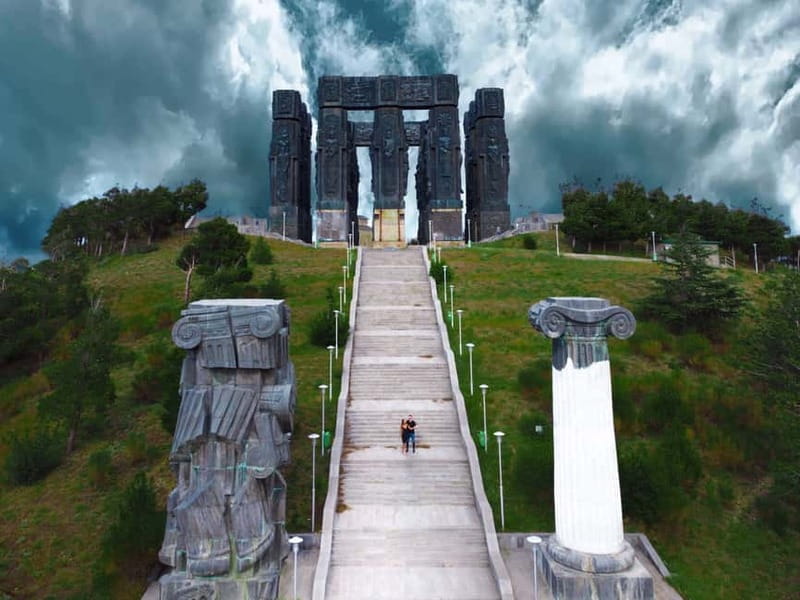
Next comes the Chronicle of Georgia. You get a photo stop plus a guided segment of about 30 minutes. This is where your camera habits start to matter. The monument is built for long sight lines and dramatic presence, so you benefit from a guide who knows what to notice.
When you are photographing Brutalist and Soviet-era concrete, the risk is going for only the most obvious angles. The Chronicle helps you practice something smarter: using perspective to show scale, then using small framing choices to emphasize texture, joints, and the contrast between intended structure and later wear.
If the rest of the tour is about the city as a system, this stop teaches you how the system was designed to be seen. It is not just a thing to look at. It is a design statement in stone and concrete.
A few more Tbilisi days worth putting side by side
- Tbilisi: Day Trip to Kazbegi, Gudauri, Gergeti, and Ananuri
★ 4.9 · 3,203 reviews - Day Trip to Kakheti Wine Region Including 9 Wine Tastings
★ 5.0 · 2,774 reviews - Highlights of Caucasus Mountains-Jinvali,Ananuri,Gudauri,Kazbegi(Group tour)
★ 5.0 · 2,682 reviews - From Tbilisi: Kakheti Wine Region Tour with 9 Wine Tastings
★ 4.9 · 2,541 reviews
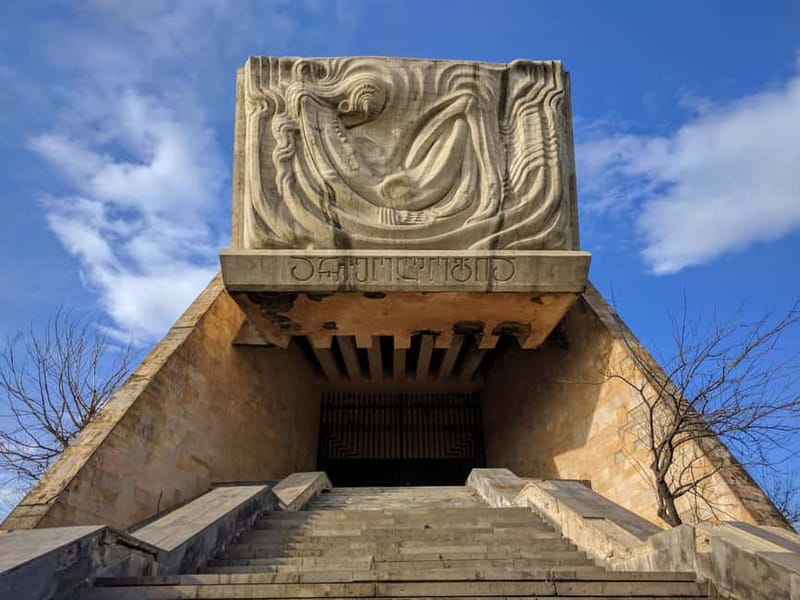
Bank of Georgia: Civic Brutalism and the Feeling of Institutional Weight
After that, you have a shorter photo stop at the Bank of Georgia, around 15 minutes. Since it is a photo stop, it is less about walking and more about reading the façade quickly and capturing it well.
This is a good reminder that Soviet-era architecture was often about institutional weight. Even when a building is used today, its original tone can still feel present. You start seeing patterns: heavy forms, strong lines, and the impression that the building was meant to project authority.
One thing I appreciate is that the tour does not overload you with long stops everywhere. Short segments like this keep your attention sharp. You are not stuck in one place so long that your brain turns off.
Tbilisi Skybridge: Concrete, Views, and a Guided Inside Moment
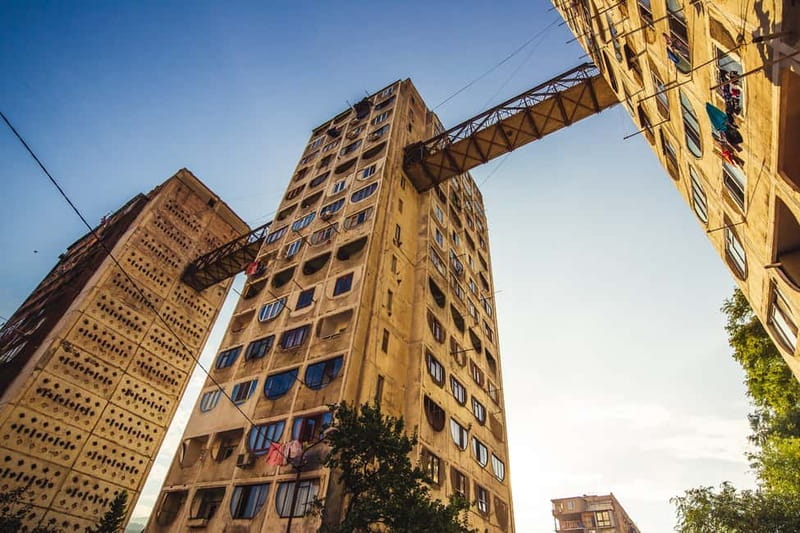
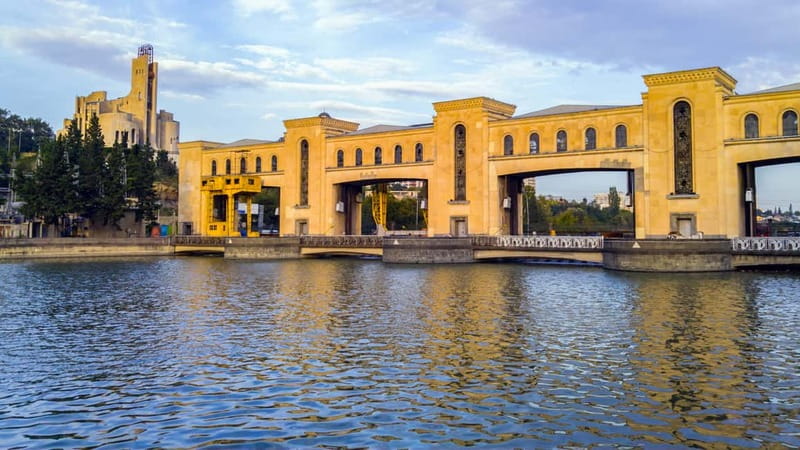
The tour then moves to Tbilisi Skybridge. You get a photo stop, plus a visit and guided tour for about 30 minutes. This is one of the more dynamic stops in the itinerary because you are combining architectural observation with a lived-feeling view of what the city has kept and reused.
Skybridge is also a favorite for photography because it puts concrete in a relationship with city movement. Even if you are not chasing street photography, you can still frame the structure against skyline elements and catch the way light plays across rough surfaces.
The guide time here helps you do more than click. You learn what the structure is, what role it plays in the broader Soviet layout, and what details to check for before you move on. Past groups have also praised guides for giving photo ideas and for helping take great pictures, which is exactly what you want at a stop like this.
Hidden Neighborhood Stop: Where Soviet Traces Feel Most Unfiltered
Then comes a hidden neighborhood stop, again with a photo stop, guided time, and sightseeing for about 30 minutes. The name varies by route flow, but the purpose stays consistent: show you Soviet-era architecture and infrastructure that you would likely miss if you only followed the central tourist path.
This is where your attention shifts from monuments to everyday context. You stop seeing concrete as a one-time artwork and start seeing it as infrastructure. You might notice how buildings are stitched into streets, how repairs or refurbishments changed the look, and how the Soviet era still shapes the city plan.
Some past groups also mention meeting people connected to Soviet memory during the day. Even when you do not meet anyone directly, the guided talk is still framed around how locals experienced those decades and how the city keeps absorbing that past.
One practical point: some parts of locations are restricted and can be seen only from the outside. So treat this stop as a visual walk with guidance, not a guarantee of access into every structure.
Transport, Time, and Why Small Groups Matter Here
Duration is listed as 5 hours, and the tour includes transfers between sights. That time window is realistic for a route that mixes guided museum time with photo-focused monuments and short sightseeing segments.
Transport quality is a standout here, with 96% of reviewers awarding it a perfect score. In a city like Tbilisi where traffic can slow you down, this is not a small detail. A comfortable ride, safe driving, and a guide who keeps the schedule moving helps you spend more of your energy outside looking at concrete and less of it stuck in transit anxiety.
Group size matters too. Limited to 10 participants, you are more likely to get personal attention when you ask a question. Past bookings frequently mention guides being funny, friendly, and engaging, with strong English. That combination turns architecture into a conversation instead of a lecture.
Also, a practical heads-up from real experience: at least one group reported the tour ran a bit longer than advertised. If you have a hard reservation right after, give yourself a buffer.
Price Value Check: Why $54 Can Be Worth It
The price is $54 per person for a half-day tour. On paper, you could get a cheaper car for the same route on your own. But Soviet Tbilisi is not just geography. It is interpretation.
Here is what you are paying for, and why it can justify the cost:
- An English-speaking guide with a focus on history and architecture, which changes how you see every stop
- Entrance fees included where the tour actually goes inside, like the Underground Printing House Museum
- Transfers between multiple, spread-out locations without you coordinating rides and routes
- Time-saving sequencing so you are not hunting down obscure concrete structures after you realize you missed them
If you love modern history, photography, or architecture, the guide is often the difference between taking pretty pictures and understanding what those pictures are telling you. For me, that is the value here.
If you only want a casual drive-by at a couple of landmarks, this format might feel like too much planned structure. But if you want context and you like off-center stops, the price starts to make sense fast.
Photo Tips for Soviet Concrete and Urban Decay
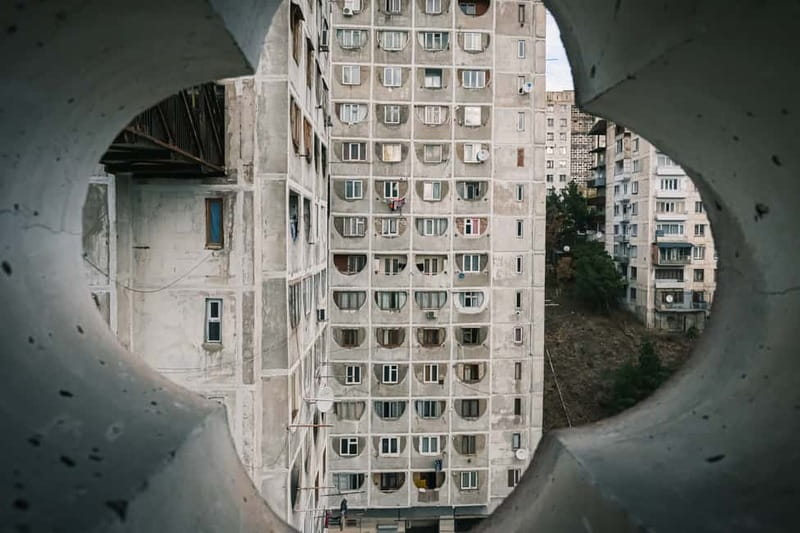
This tour leans hard into visuals: refurbished concrete giants, decaying Brutalism, and angles where you can photograph urban textures. To get the most out of it, think about your camera routine.
I’d plan for:
- Quick, repeatable framing at each photo stop, because the tour’s flow is time-based
- Using shadows and weather effects to bring out surface texture on Brutalist concrete
- Taking a wider shot first, then tightening in for details like edges, window patterns, and material changes from repair work
- Expecting some spots to be outside-only, so your best photos may come from street-level positions rather than interior viewpoints
Also, if you are the type who likes to ask questions while photographing, you will likely enjoy this more than a silent walk. Guides in past bookings were specifically praised for friendliness and for helping with photo ideas and tips.
Who Should Book This Tour, and Who Might Skip It
This is a great fit if you are one of these:
- An urbex fan who likes photographing decay and repurposed structures
- A modern architecture lover drawn to Brutalism and Soviet design logic
- A history buff who wants the political-era context tied to buildings, not just dates
- A photographer who prefers structured photo stops over wandering without direction
You might skip it if:
- You want mostly indoor museum time and are not interested in outdoor architecture
- You dislike subject matter tied to Soviet power, symbolism, or political history
- You have mobility constraints that make repeated short walks and photo-stops frustrating, since some access is limited and you may be viewing certain structures from outside
Should You Book: My Practical Recommendation
I’d book this if you want Tbilisi to feel unusual in the best way. It gives you Soviet-era architecture where it actually lives, plus guidance that makes those buildings easier to read and more fun to photograph. The small group format, the strong transport scores, and the fact that guides like Giorgi and David have a reputation for being personable and engaging are all signs this tour is built for real experience, not just checklists.
If your main goal is only the most famous historic sights, you could feel this tour is too specialized. But if you want a second Tbilisi that most visitors miss, this is one of the strongest ways to get it in a single half-day.
FAQ
How long is the tour?
The tour lasts 5 hours.
How much does it cost?
It is listed at $54 per person.
Where do I meet the guide?
You meet outside the metro station of Avlabari, at the round fountain.
What is included in the price?
Included are transfers between sights, all entrance fees as per the itinerary, and a professional English-speaking guide.
What is not included?
Food and drinks are not included.
Is the tour always the same on weekends?
Stalin’s Printing House is included only on weekdays (Monday to Friday). On weekends, the Car Museum is visited instead (optional).
Can I go inside every location?
Not necessarily. Some parts of locations are restricted, so you may only be able to see them from the outside.
What group size should I expect?
The group is small, limited to 10 participants.
What if my plans change?
Free cancellation is available up to 24 hours in advance for a full refund, and there is also a reserve now and pay later option mentioned for flexibility.
Recently reviewed around Tbilisi
- Tbilisi City Tour★ 4.5 · 3 reviews
- Tbilisi City, Jvari Monastery, Uplistsikhe caves, Mtskheta city Private Day Trip★ 4.5 · 3 reviews
- Tbilisi City Tour with Street Photography★ 5.0 · 3 reviews
- Private Trip to Tbilisi and Mtskheta – Cultural Capitals★ 5.0 · 3 reviews
- Wild Georgia 4WD PACK Adventure through Kakheti and Kazbegi 2in1★ 5.0 · 3 reviews
- Tbilisi Airport to Gudauri, Bakuriani, Batumi, Tbilisi★ 5.0 · 3 reviews
- Private Adorable City Tour of Tbilisi★ 5.0 · 3 reviews
- Private Wine Tour In Kakheti Region with 7 Wines and Lunch★ 5.0 · 3 reviews
Soviet-Era Sites, compared.
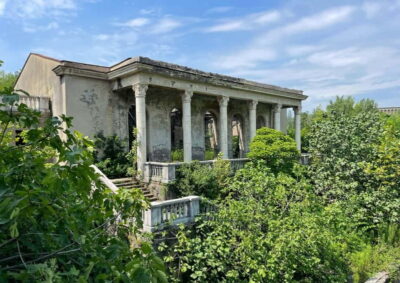
Abandoned sanatoriums of tskaltubo – group tour from Kutaisi
Read our review →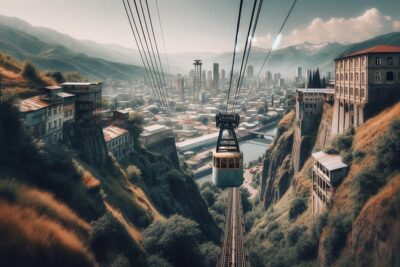
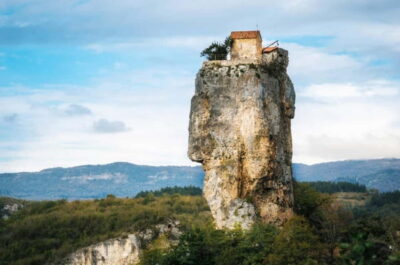
Chiatura Tour with Katskhi Pillar & Cable Car Experience
Read our review →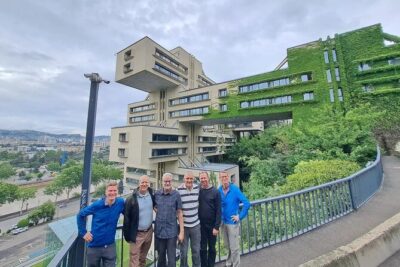
Tbilisi old town & soviet heritage – Private driver-guided Tour
Read our review →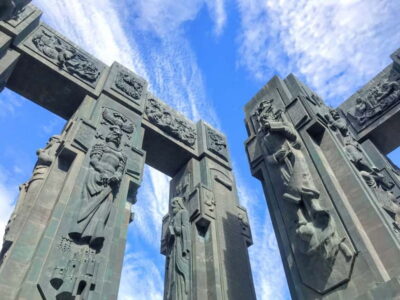
Brutalist Tbilisi: Urban exploration and untold stories
Read our review →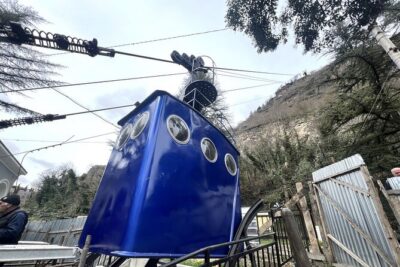
Chiatura Cable Cars & Katskhi Pillar Guided Tour
Read our review →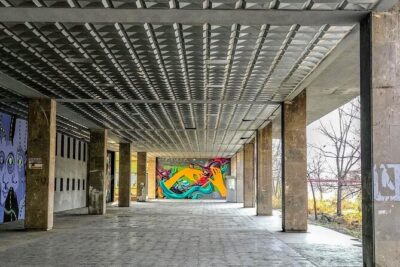
Brutal Tbilisi: Urban exploration and untold stories
Read our review →
Browse the lists this tour appears in