
Reviewed · SOVIET-ERA SITES
Day tour from Tbilisi to Kutaisi and Tskaltubo
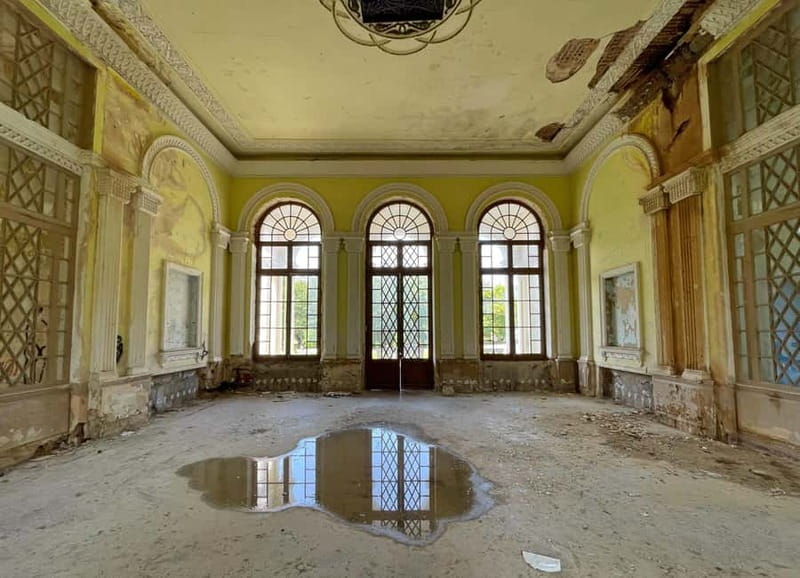
Tskaltubo has a way of making you slow down. This day tour strings together Kutaisi city walking with the eerie, off-the-radar feeling of abandoned Soviet sanatoriums in Tskaltubo. It’s a rare mix of normal Georgia street life and post-Soviet weirdness, all under one guide’s timeline.
I like that the Kutaisi portion gives you real context, not just photo stops. You’ll trace the city from the fountain group through the central park sights like the statue of sister Ishkhnelebi and the memorial of 9 April.
One thing to consider is the pace. It’s a 14-hour day from 08:00 to 22:00, with plenty of walking, and Tskaltubo is visually intense, especially once the guide starts explaining the Soviet occupation story.
Key highlights you should care about
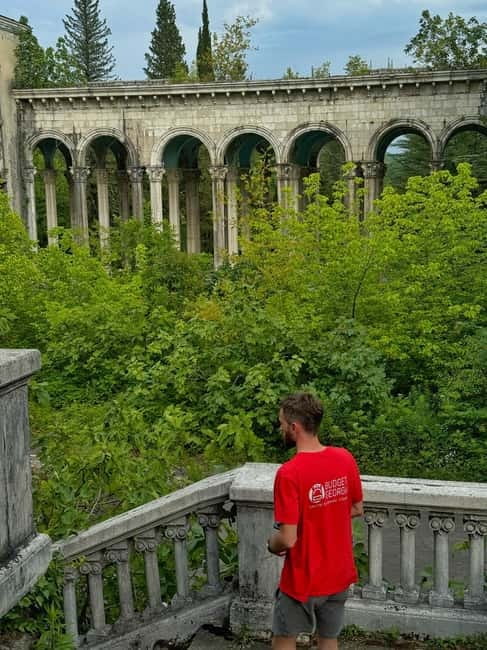
- Tskaltubo urbex-style stops with a guide so you know where to go inside huge, empty buildings
- Soviet architecture on display, from springs to sanatorium complexes
- Kutaisi landmarks on foot, including White Bridge and the park of love area
- A structured city walk that covers history, monuments, and major civic buildings
- Spring stops that change the mood, from Spring #6 to the more unusual Spring #8
A 14-hour route that makes west Georgia feel connected
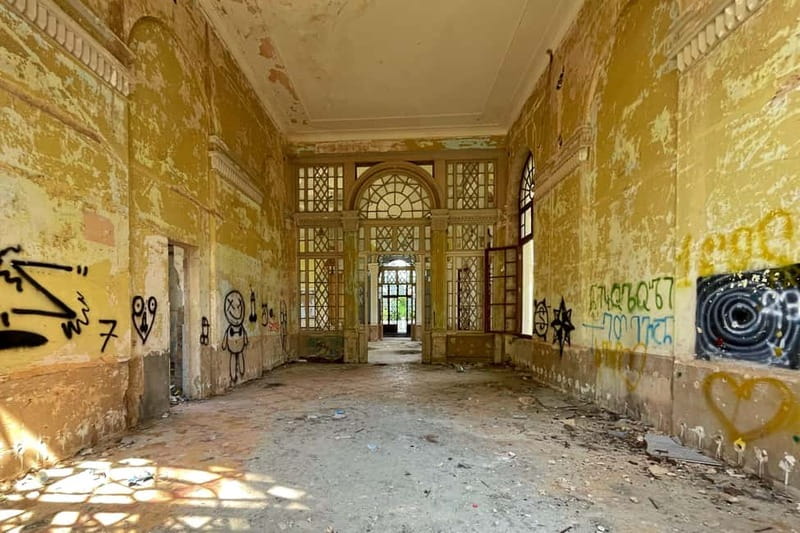
This tour is built for people who want a lot of variety without the stress of planning. You start at 08:00 from the operator’s office in Tbilisi, then you gradually switch gears from lively Kutaisi streets to the quiet, strangely cinematic atmosphere of Tskaltubo.
The timing matters. You’re out until 22:00, which is long, but it’s also why this works as a day trip. You’re not just rushing past places. You get a real walking sequence in Kutaisi before you move on to Tskaltubo’s springs and sanatoriums.
The group experience usually hinges on the guide’s storytelling. In this tour, names like George, Giorgi, and Lasha come up in a way that suggests the best days are the ones where the guide keeps things clear and animated. You’ll hear history, get practical orientation, and learn how to read what you’re seeing.
More Soviet-era sites in Kutaisi:
- Kutaisi:Chiatura Tour with Katskhi Pillar & Cable Car
★ 4.9 · 433 reviews - Abandoned sanatoriums of tskaltubo – group tour from Kutaisi
★ 4.8 · 99 reviews - Kutaisi:Chiatura Tour with Katskhi Pillar & Cable Car Experience
★ 5.0 · 95 reviews
Kutaisi walking tour: history markers and easy city rhythm
After pickup, the day kicks off with a downtown Kutaisi walk. This is the part that helps you “get” the city fast. Your guide explains Georgia’s history and connects it to what you’ll see as you go.
You’ll start with the fountain group for photos, then continue toward the central park. This stretch is useful because it mixes open-air sights with monuments that give you something to think about while you walk.
In central park, look out for:
- the statue of sister Ishkhnelebi
- the memorial of 9 April
This isn’t random sightseeing. These stops give you a sense of how Kutaisi remembers important moments, and it helps make later architecture feel more meaningful.
You’ll also pass by major civic landmarks along the way, including Kutaisi city hall and the Opera house. Even if you only see them from the sidewalk, they help you understand the city’s structure and scale.
Mon Plasir, White Bridge, and the park of love in one loop
The Kutaisi walk keeps building in small visual rewards. After the Opera area, you visit the Mon Plasir arch, then head past the first gymnasium.
Next comes the White Bridge, which is one of those spots that feels like a natural waypoint. You’ll likely pause here, just because it makes the route easier to follow and it’s a classic “turn point” in photos.
From there, the scenery shifts again. You go through the park of love area and then reach the Golden marquee palace. This part works well if you like architecture with character, especially if you’re curious about how different eras and styles sit side by side in one city.
Mtsvane Bazari market and the lunch break you can use well
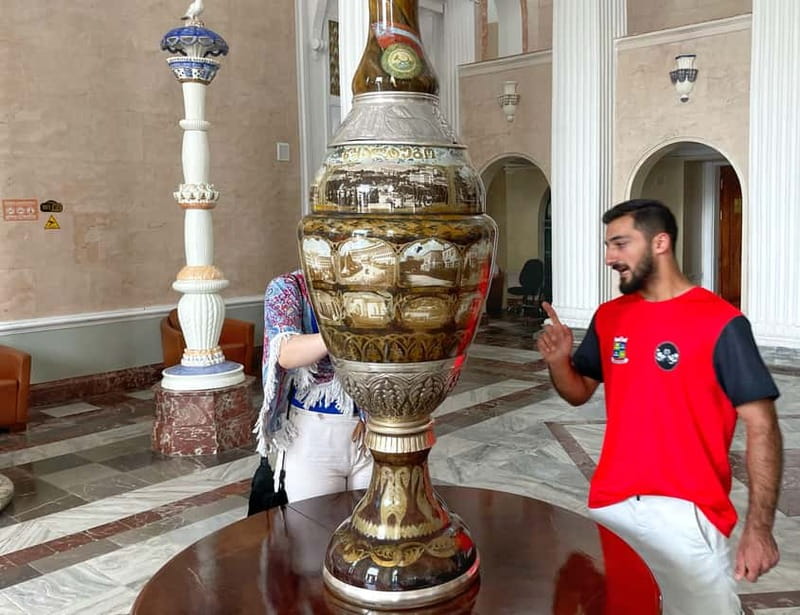
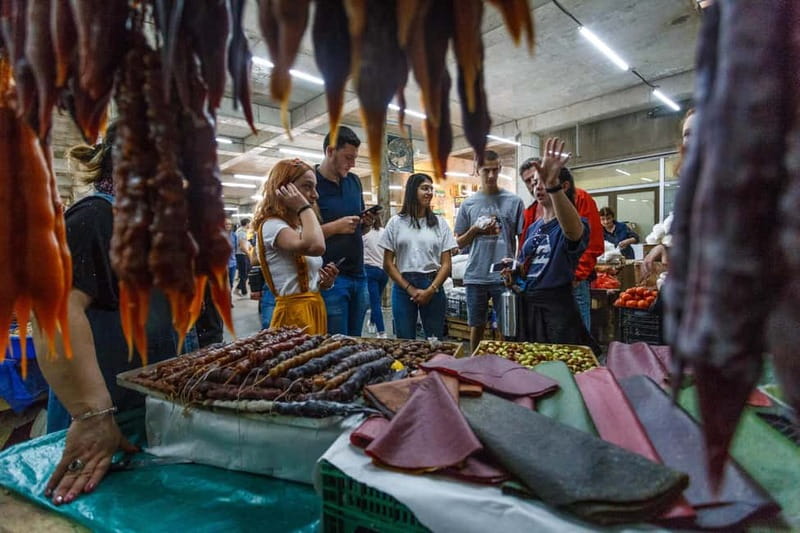
After the walking portion wraps up, you move toward a practical local stop: the central grocery market called Mtsvane Bazari. Markets can be hit or miss on tours, but this one is valuable because it’s not just a souvenir photo stop. It’s a place where local life shows up in everyday routines.
Then you get a lunch break. The key here is to treat it like fuel and time to reset. This is important because the second half of the day is more physically demanding visually and mentally.
If you’re the type who likes to browse quietly, the market time can be more satisfying than a rushed quick stop. If you prefer sitting down immediately, use the lunch window strategically so you don’t arrive in Tskaltubo tired and distracted.
A few more Kutaisi days worth putting side by side
- Kutaisi: Martvili & Okatse Canyons & Prometheus Cave Tour
★ 4.9 · 829 reviews - From Kutaisi: Guided Tour of Okatse, Martvili, & Prometheus
★ 4.8 · 520 reviews - CANYONS & CAVE Tour from Kutaisi – Okatse, Martvili & Prometheus
★ 4.5 · 307 reviews - Kutaisi: Prometheus Cave & Martvili Canyon Guided Tours
★ 4.7 · 206 reviews
The drive to Tskaltubo: why Soviet health towns still fascinate
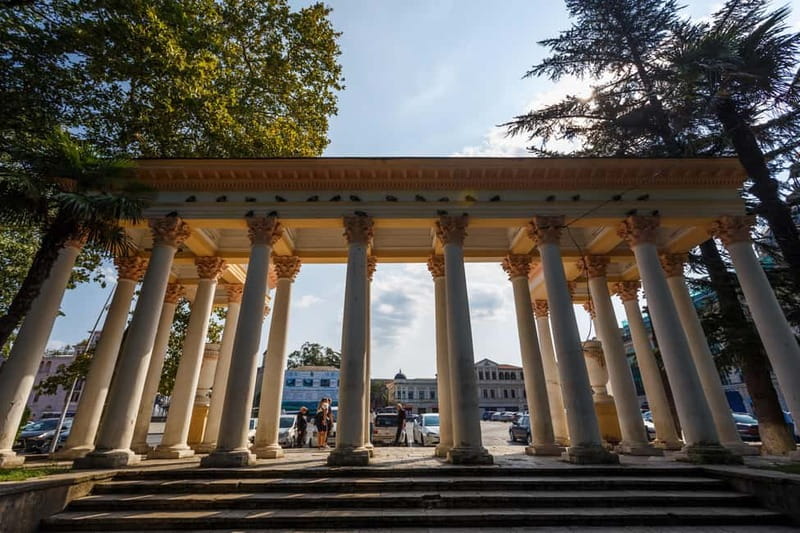
Once you leave Kutaisi, the mood changes quickly. Tskaltubo was shaped around the idea of health resorts, and Soviet planning left behind some of the most distinctive building styles in Georgia.
The value of this segment is that you go beyond “abandoned buildings.” With a guide, you start noticing patterns: how spaces were designed, how seasons and visitors were imagined, and why these places became symbols of an entire era.
The tour goes to specific spring and sanatorium sites rather than making it random. That keeps the story clear: springs first, then the facilities built around them.
Spring #6: Soviet occupation explained in context
Spring #6 is your first major Tskaltubo stop. You’re not just seeing water or taking a quick photo. Your guide talks about Soviet occupation here, which changes how you interpret the setting.
I like stops that connect architecture to history, because otherwise it’s easy to treat everything like a spooky backdrop. With Spring #6, the guide gives you a reason to look closely. You understand the political layer, then you can see the site as part of a larger system.
This stop also sets expectations for the rest of the day. The springs are not just interesting features. They’re part of why these sanatorium complexes existed in the first place.
Spring #8: unusual design that makes you stop moving
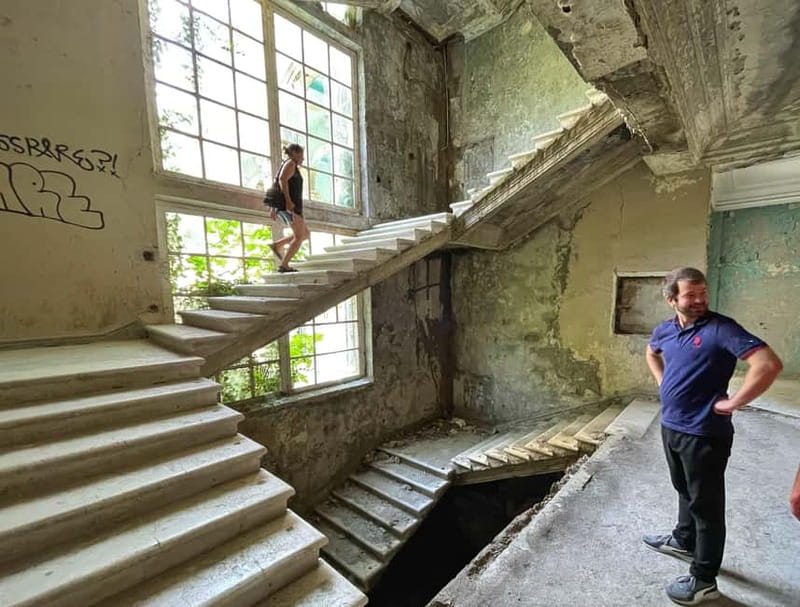
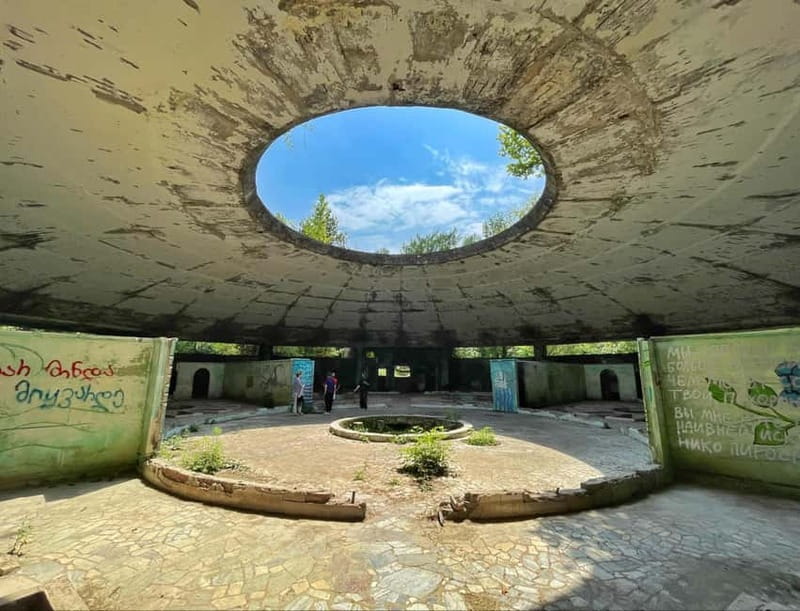
After Spring #6, the next highlight is Spring #8. This one is described as having the most unusual architecture among the Tskaltubo springs, and that’s exactly why it belongs next.
When you see a place that looks different from the rest, your brain pays attention. You start scanning details that you might otherwise ignore: structure, angles, the way the space frames the water source, and how the building interacts with the broader complex.
If you like photography, this is the kind of stop where you’ll want a few minutes just to breathe and compose. Even if your style is quick and practical, plan to slow down here.
Sanatorium Gelati: built for children, now a big viewpoint moment
Next comes sanatorium Gelati, which the tour highlights for a specific reason: it was specially built for children. That detail matters. It flips the emotional tone of the whole area.
You’ll see an old playground, plus a viewpoint over the inner construction. This is one of those moments where you can understand the scale of the complex without having to guess. Standing above or looking down gives you a clearer picture of how buildings, paths, and open areas were intended to connect.
From a tour value standpoint, Gelati is a strong choice because it’s not purely gloomy. It has a human story attached to it, even now that the facilities are abandoned.
Medea and Druzhba sanatoriums, then the Tskaltubo station finale
After Gelati, you walk to sanatorium Medea, then continue to Druzhba. The pace here is more about moving through connected spaces and taking in changing textures of abandoned architecture.
This sequence works best if you treat it like a slow walking museum. You don’t need to race to the next building. Instead, let the guide point out what makes each complex distinct, then you can compare them in your mind.
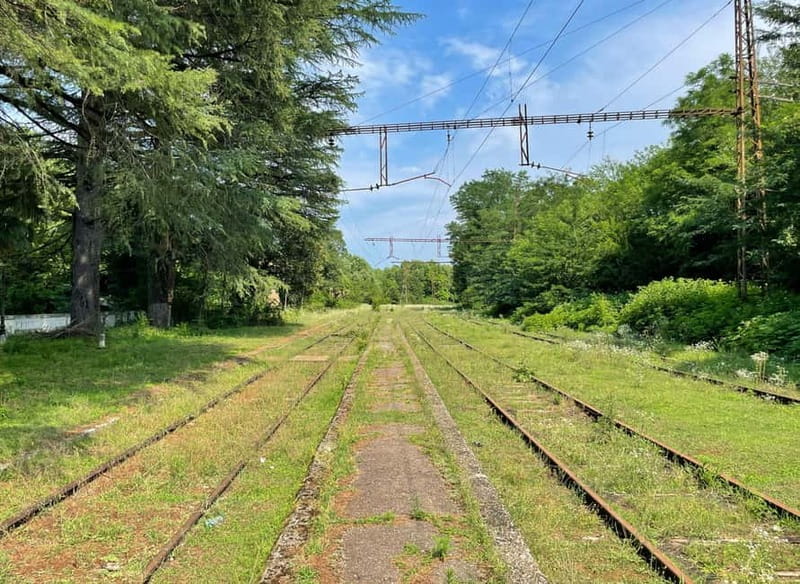
The last sequence is the train station of Tskaltubo. Ending at a transport hub gives the day a satisfying shape. It reminds you these places weren’t meant to be isolated curiosities. They were part of how visitors arrived and how the whole health resort idea was supposed to function.
Guides make the difference in Tskaltubo
This tour shines when the guide gives you both story and navigation. The sanatorium environment is huge and empty, so it’s easy to feel lost without a route.
That’s where the guide’s role really pays off. With a strong guide like Lasha, Giorgi, or George (names that repeatedly come up for engaging, warm, and funny delivery), you get more than facts. You get a sense of what to look for, why it matters, and how to move through the buildings without wasting time.
I’d also pay attention to how the guide explains the Soviet angle with an objective tone. It helps you stay grounded. Instead of just reacting emotionally to abandonment, you learn how to place it in a historical frame.
Practical note: ask questions. If something catches your eye, it’s usually a safe bet the guide has a story attached to it.
Price and value: $61 for a long day of guided transport
At $61 per person for a 14-hour tour, the value comes from three things: transportation, an English and Georgian live guide, and a structured mix of walking and Tskaltubo site visits.
You’re getting far more than a quick taxi ride. The day includes:
- a guided downtown Kutaisi walk with history context
- a meal break window
- multiple Tskaltubo spring and sanatorium stops
- finishing back in Tbilisi at 22:00
For readers who want an easier way to see west Georgia without juggling routes and meeting points, this pricing can make a lot of sense. If you’d otherwise hire drivers for separate legs and try to connect stops on your own, the guide + transport bundle is where the savings usually show up.
Still, it’s not a great fit if you hate long days. You’ll be tired at the end, even if you enjoy it.
Who this tour suits best
This day trip fits you if you like:
- Soviet-era architecture and the way it shapes places
- history that you can connect to buildings, not just dates
- photo stops that include monuments, bridges, and surreal structures
- a guide-led route that helps you move through confusing spaces
It’s also a good option if you want to see Kutaisi efficiently. The walking loop covers major highlights like White Bridge, the Opera house, and Mtsvane Bazari in a way that feels organized, not random.
If you’re more into nature, this won’t be a nature-heavy day. This is urban and architectural, with a strong historical theme.
Practical tips so you enjoy it (not just survive it)
Plan for a long day. Start the morning with water, and bring a small snack for the gaps between stops if you think you’ll want it.
Wear shoes you trust. You’ll walk through downtown areas, parks, and then inside or around large abandoned building spaces at Tskaltubo. Even when nothing is technically “dangerous,” tired feet make everything less fun.
Bring a camera or phone with a charged battery. The fountain group, White Bridge, and the Spring architecture give you angles worth capturing. In Tskaltubo, lighting can be tricky inside empty structures, so having a fully powered device matters.
Finally, keep your expectations real. This tour is set up for atmosphere. The abandoned sanatoriums can feel eerie and post-apocalyptic, and that’s part of the appeal. If that vibe doesn’t work for you, you may want a different style of day trip.
Should you book this Tbilisi to Kutaisi and Tskaltubo tour?
Book it if you want a guided day that mixes Kutaisi city highlights with Tskaltubo’s striking Soviet springs and sanatoriums, and you’d rather have the route and story handled than figure it out yourself.
Skip it if you’re easily overwhelmed by long days, lots of walking, or if you strongly prefer gentle sightseeing. This route is better when you like history, architecture, and the slightly strange feeling of exploring places that have clearly outlived their original purpose.
If you go in with comfortable shoes, a curious mindset, and some time to enjoy the guide’s context, you’ll likely come away feeling like you saw something specific, not just something famous.
FAQ
What time does the tour start and end?
The tour starts at 08:00 in Tbilisi and finishes back in Tbilisi at 22:00.
How long is the day tour?
It runs for 14 hours.
Is there a lunch break during the day?
Yes. After the Kutaisi walking tour, there is a lunch break before heading to Tskaltubo.
What languages are available for the guide?
The live guide is available in Georgian and English.
How much does the tour cost?
The price is $61 per person.
Can I reserve and cancel if my plans change?
You can reserve now and pay later, and free cancellation is available up to 24 hours in advance for a full refund.
Recently reviewed around Kutaisi
- Wine & Dine group tour from Kutaisi★ 4.6 · 3 reviews
- Wild Caving Experience in Melouri Cave Near Kutaisi★ 5.0 · 3 reviews
- Private tour from KUTAISI: Bagrati, Gelati and Motsameta★ 5.0 · 5 reviews
- Break Bread with Kutaisi Locals★ 5.0 · 4 reviews
- WINE & DINE Tour from Kutaisi★ 5.0 · 34 reviews
- Ski & Snow Tour to Bakuriani from Kutaisi with Borjomi Stop★ 5.0 · 5 reviews
- Kutaisi Airport to Tbilisi Private Transfer★ 5.0 · 3 reviews
- TBILISI, JVARI & MTSKHETA Tour from Kutaisi★ 4.5 · 19 reviews
Soviet-Era Sites, compared.
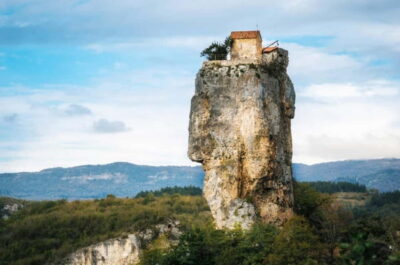
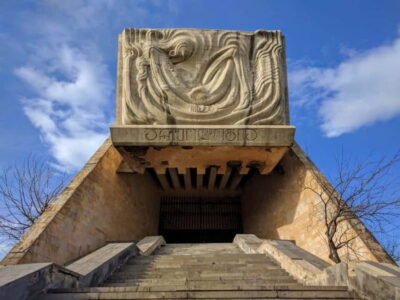
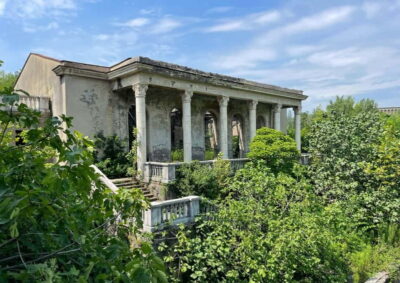
Abandoned sanatoriums of tskaltubo – group tour from Kutaisi
Read our review →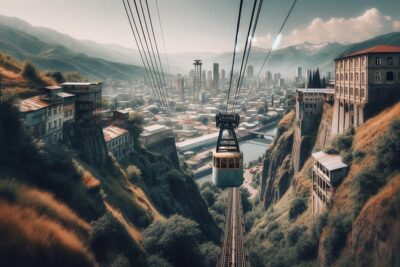
Chiatura Tour with Katskhi Pillar & Cable Car Experience
Read our review →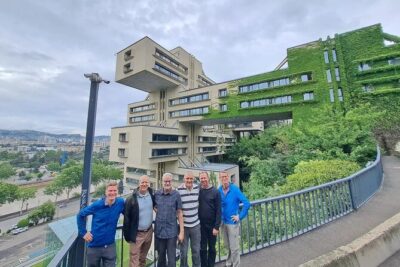
Tbilisi old town & soviet heritage – Private driver-guided Tour
Read our review →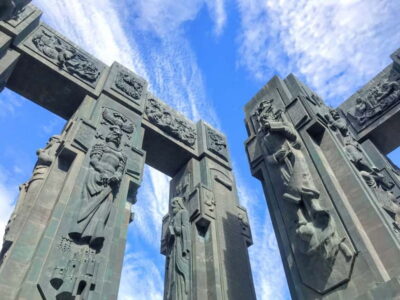
Brutalist Tbilisi: Urban exploration and untold stories
Read our review →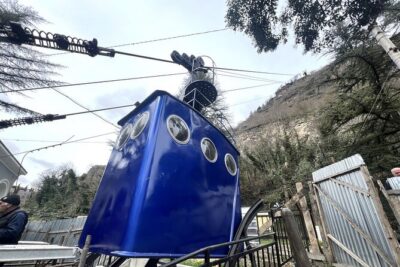
Chiatura Cable Cars & Katskhi Pillar Guided Tour
Read our review →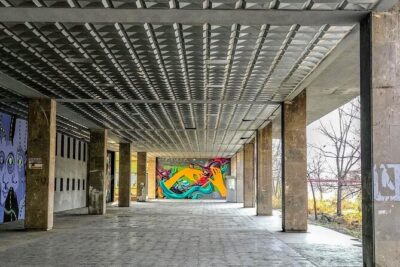
Brutal Tbilisi: Urban exploration and untold stories
Read our review →Browse the lists this tour appears in