
Reviewed · CITY TOURS
Beyond the Old City: Tbilisi’s Hidden Gems Walking Tour
This walking tour is interesting because it moves you past Tbilisi’s postcard lane and into the city’s later, more mixed identity, where Georgian life meets European and Russian influences. I love the Dry Bridge flea and flower market stop, since it gives you something real to look for with photos and stories. I also love the way the route follows the capital’s growth from old roots into newer neighborhoods, so you can understand why Tbilisi looks the way it does today.
One thing to consider is that this is a 3.5 km walk with stops over about 3 hours, so you’ll want comfortable shoes and a good pace. It is not designed for wheelchair users or people with mobility impairments, and there are no voice amplifiers, so you’ll rely on the guide’s normal speaking volume.
Key highlights I’d plan around
- Freedom Square start for fast orientation before you move outward into the left bank
- Dry Bridge flea and flower market time for photos, browsing, and quick context for what you’re seeing
- Architecture spotting on Agmashenebeli Avenue where styles overlap from different eras and cultures
- Local-led stories tied to families and buildings (research-based, not just street talk)
- Marjanishvili Square finish so you end near a practical area for continuing on your own
Beyond the Old City: why this route tells Tbilisi’s real story
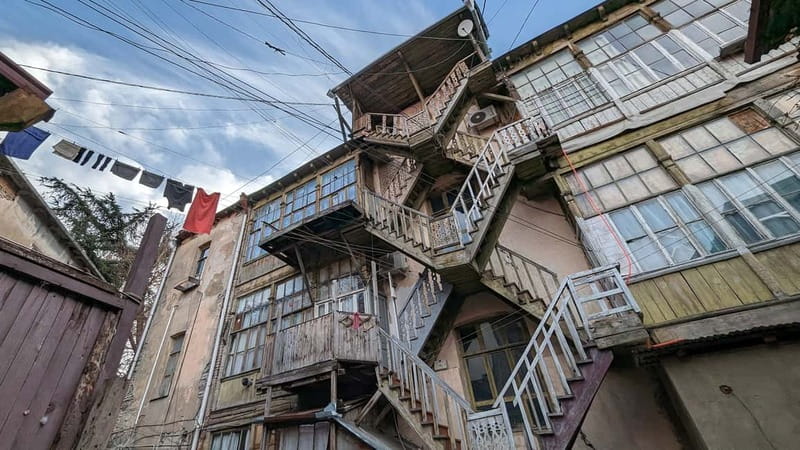
Tbilisi is often sold as an “old city” destination, and yes, that part is charming. But the city’s personality did not stop there. In the 19th century, Tbilisi began to modernize in a big way, especially toward the left bank of the Mtkvari River. That shift brought new architectural styles, fashionable streets, shops and factories, and a steady mix of European and Russian immigrants.
That is what makes this tour work so well. You are not just walking to new photo angles. You are tracing how the capital formed its later identity, then seeing the everyday pieces that came with it: markets, pedestrian streets, and neighborhoods where people still live their normal routines.
The small-group feel matters too. Since it is set up as a private group, you get more room for questions and for the guide to tailor the pace to what you care about, whether that is architecture, city life, or simply finding the right spots to photograph without rushing.
More walking tours in Tbilisi:
- Tbilisi Walking Tour Including Cable Car and Traditional Bakery
★ 5.0 · 1,310 reviews - Tbilisi: City Highlights Guided Walking Tour
★ 4.9 · 1,114 reviews - Tbilisi:Evening Walking & Talking Tour with Wine & Boat Ride
★ 5.0 · 572 reviews
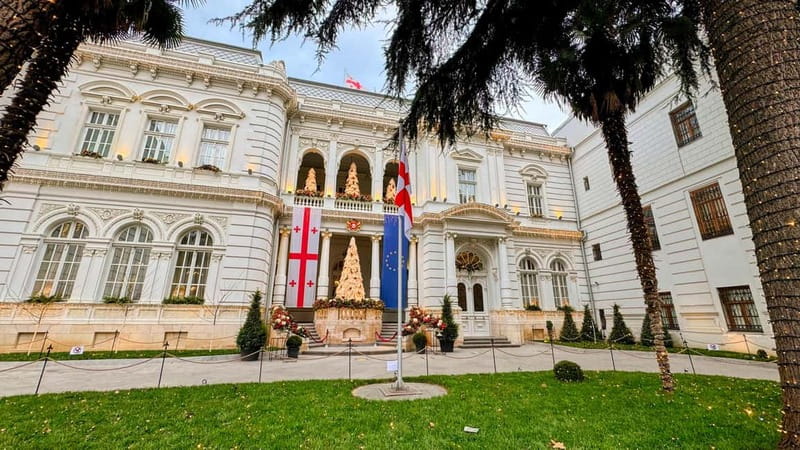
Freedom Square to Orbeliani Plaza, setting the stage the quick way
You start at the entrance of the Burberry shop on Freedom Square. I like starts like this because Freedom Square is one of those points that helps you get your bearings fast, and you are already in an area with clear movement options.
From there, the tour progresses through Orbeliani Plaza and onward toward the left bank. This part of the route is a useful warm-up. Instead of jumping straight into market noise, you get context first: how the city expanded beyond the older “Asian city” core and why people and commerce began to cluster in new directions.
This is also where the guide’s preparation shows. The tour is built around archive-style research into families and buildings, so you are not only hearing dates and generalities. You are connecting structures to people and to the city’s turning points. Even if you are not a “history person,” this kind of explanation helps you read the streets as a map of change.
If you’re someone who likes architecture, keep an eye out for the way building styles start to shift as you move along. If you’re more food and daily life focused, use this early segment to ask what locals actually use these streets for, because the tour later gives you enough visuals to make those answers make sense.
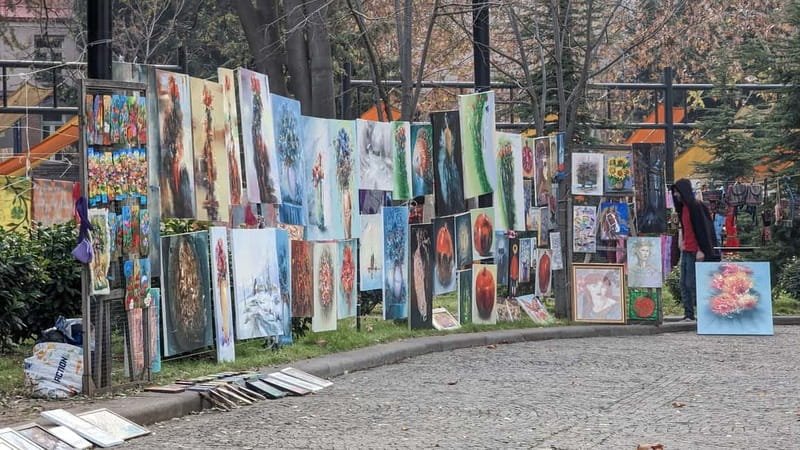
The Dry Bridge flea and flower market, where photos meet backstory
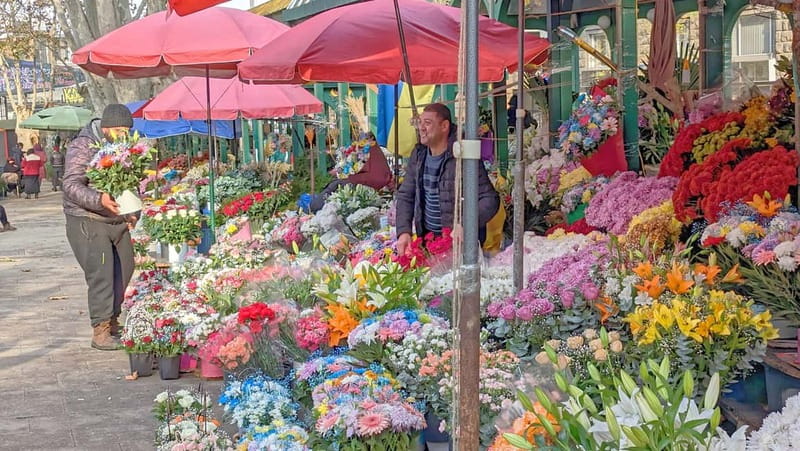
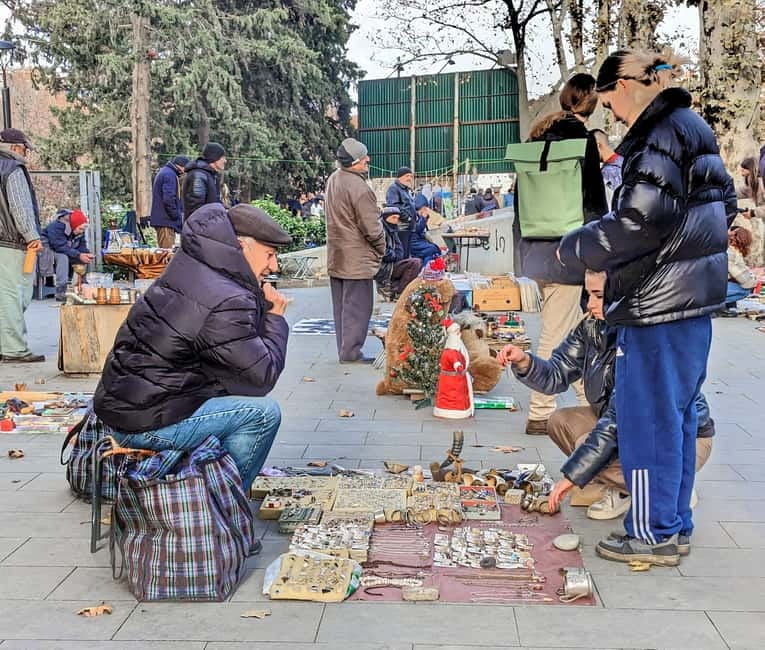
Next comes the star stop for a lot of people: Dry Bridge. This is where the tour becomes fun in a very practical way. You get time to browse and look closely at what’s on offer, including the flea and flower market side.
Here is the best way to use this stop: go slow for the first few minutes, then commit to a photo theme. You can photograph:
- close-up textures on small antiques or vintage objects
- shopfront details and how stalls are arranged
- older building faces you catch between market sightlines
- people moving through the space, since it adds scale and life to your shots
This market stop also works as a “story checkpoint.” The guide can explain what you’re seeing in plain terms, and you start to understand Dry Bridge as more than a shopping stop. It becomes part of the city’s identity as it shifted into modernization, then kept layers of the past while adapting to current street culture.
One of the strongest advantages here is that the guide often points out architectural buildings along the way and brings in insider information, including food recommendations. If you like planning your meals, ask right here. A good guide will connect the market area and the nearby streets to where locals tend to go.
Drawback to keep in mind: markets are visual and sometimes crowded. You’ll get better value if you show up ready to look, not just to pass through quickly. Also, because you are on a walk, make sure your camera strap is secure and your water plan is real.
Agmashenebeli Avenue, architectural overlap you can actually see

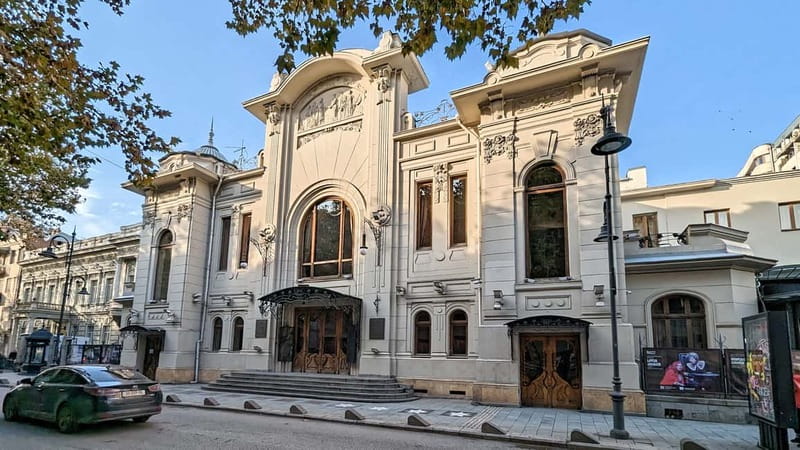
After Dry Bridge, the route moves to Agmashenebeli Avenue, a pedestrian-friendly stretch that’s known for cultural overlap and architectural variety. This segment is ideal for people who like to learn by observation.
What you’ll notice is the way the built environment reflects different eras living side by side. It is not a single style zone. Instead, the avenue feels like a timeline you walk through: details change, facades differ, and the feel of the street shifts as you move.
This is also a great stretch for photos of old buildings without feeling like you are sprinting. The tour’s pacing includes stops, so you can step back from the curb, line up shots, and get a better angle than you would if you were trying to figure it out on your own.
A helpful tip from how the tour is described: the guide brings in the “why” behind what you see. So when you spot a building that looks older, or one that signals the city’s later growth, you are not left guessing. You get context that makes the visual differences click.
If you’re the kind of visitor who likes to ask one good question and stick with it, this is the time. Use it to ask what the left bank represents in the city story, and then let the avenue answer you with your eyes.
A few more Tbilisi days worth putting side by side
- Tbilisi: Day Trip to Kazbegi, Gudauri, Gergeti, and Ananuri
★ 4.9 · 3,203 reviews - Day Trip to Kakheti Wine Region Including 9 Wine Tastings
★ 5.0 · 2,774 reviews - Highlights of Caucasus Mountains-Jinvali,Ananuri,Gudauri,Kazbegi(Group tour)
★ 5.0 · 2,682 reviews - From Tbilisi: Kakheti Wine Region Tour with 9 Wine Tastings
★ 4.9 · 2,541 reviews
Backstreets, gardens, and the kind of stories that change how you look
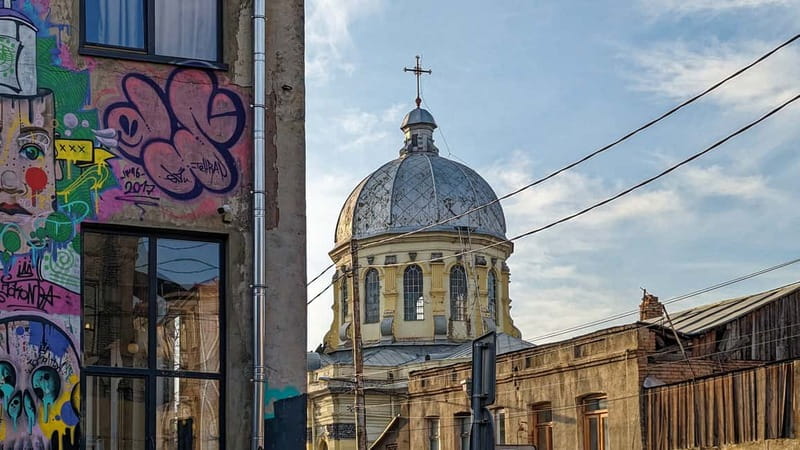
One of the biggest promises of this tour is that it goes beyond the usual tourist trails. That is not just marketing language. The route includes quieter backstreets and garden areas, which helps the tour feel like a walk with local context rather than a checklist.
You’ll also hear stories that connect families and buildings to the city’s evolution. The tour preparation is described as heavy on archival research, meaning the guide has specific material ready, not just general impressions. In practice, that often comes through as:
- explanations that make street layouts feel intentional
- small historical details that help you understand what you see today
- answers to questions you actually ask, instead of a rigid script
As you move through these less-traveled parts of town, the city starts to feel lived-in rather than staged. You can spot everyday routines, street-scale architecture, and the gentle contrast between newer commercial areas and older residential character.
Also, gardens and tucked-away lanes are where it’s easier to slow down. If you’re traveling with someone who gets tired of constant walking, these pauses can be the difference between a “good tour” and a “we can actually enjoy this” day.
Marjanishvili Square finish, and how to keep the momentum
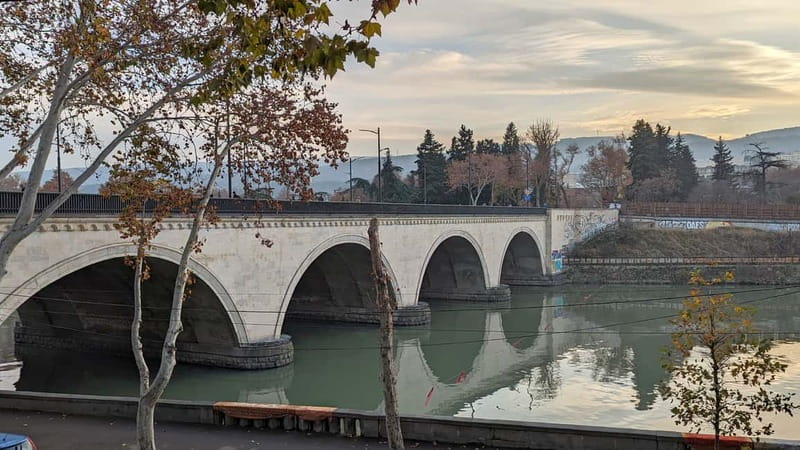
The tour ends at Marjanishvili Square, a location that fits the purpose well. You are not dropped somewhere awkward far from everything. You finish in an area where it is usually easier to keep moving on your own, whether that means grabbing lunch, heading to another neighborhood, or using nearby streets to continue exploring.
Think of Marjanishvili Square as your “after” bookmark. By the time you reach it, you’ve walked from Freedom Square across the left bank, seen Dry Bridge’s market character, spent time on Agmashenebeli Avenue, and picked up context that makes the city’s architecture and modern expansion feel understandable.
This is what I find most valuable: you leave with a mental map. You start noticing how Tbilisi grew, not only how it looks.
If you want to extend the day, don’t over-plan right after. Take 20 minutes to reset, check your photos, and then decide your next stop. You’ll enjoy your own walking more because you will recognize patterns now.
Price and value: what $47 gets you for a 3-hour experience
The price listed is $47 per group up to 2, for about 3 hours. That matters because group tours in major cities often cost a lot more, and this one stays personal by design.
Is it “cheap”? It depends on how you travel. But it can be strong value if you meet a few conditions:
- You want context you can’t easily pull from a guidebook on your own.
- You care about architecture and the story behind neighborhoods.
- You like market time where a guide can point out what to look for.
- You are traveling with one other person, since the pricing is per group up to 2.
Also, the route includes multiple major zones (Freedom Square, Orbeliani Plaza, Dry Bridge, Agmashenebeli Avenue, Marjanishvili Square). With that number of stops in a short time, paying for a guide can save you the energy of planning, map-reading, and second-guessing where to go next.
One more value point: the tour explicitly avoids voice amplifiers. That can feel more natural and conversational, and it often helps smaller groups stay engaged. Just remember you’ll still hear best if you stay close and pay attention to the guide.
Timing, walking pace, and what to bring so you enjoy it
Plan on about 3.5 km (2.2 miles) total walking, spread across roughly 3 hours with stops. This is not a sprint tour. It’s steady walking with pauses for market time, photo moments, and explanation.
Bring:
- Comfortable shoes (you will be on foot for a while)
- Camera (you’ll want it for old building angles and market details)
- Water (short rides do not replace walking hydration)
- Weather-appropriate clothing (you’ll be outside most of the time)
Timing matters. The tour start has a short buffer, with a waiting time before departure of no more than 10 minutes. If you are late, you will need a new booking. So I’d treat meeting time like an appointment, not a suggestion.
One logistical note that affects your comfort: the route is not suitable for wheelchair users or people with mobility impairments. If you’re in that category, it’s worth searching for a different format.
Who should book this Tbilisi tour (and who should skip it)
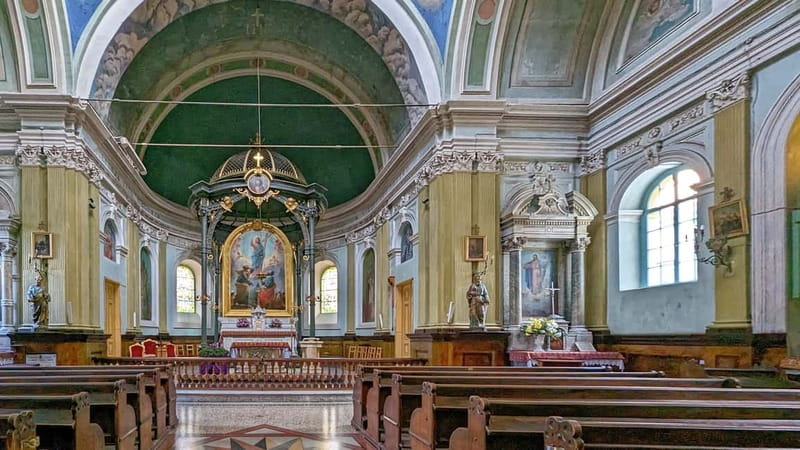
This is a great fit if you have already spent time in the old center and want the next layer of Tbilisi. It’s also a smart choice if you like:
- markets where browsing feels guided, not random
- architectural photo walks
- city-change stories (how capitals evolve beyond their origin districts)
- local recommendations, especially for food
It’s also a good option for people who ask questions. The guides described in the experience are the type that take questions seriously and adapt to what you care about.
If you’re not into walking or you prefer a car-and-stop itinerary, this may feel too active. And if you rely on clear amplification because you have hearing challenges, the lack of voice amplifiers can be a deal-breaker.
Should you book Beyond the Old City?
If you want Tbilisi with context, not just views, I think you should book this walking tour. It hits the sweet spot of being short enough to fit into a travel schedule, while still covering multiple zones that explain how the city grew beyond its original core.
Book it if:
- you’ve already seen the old streets and want the next chapter
- you like Dry Bridge and want more than shopping time
- you want architecture plus local life stories, explained clearly while you walk
Skip it if:
- you need a low-walking plan
- you need wheelchair access
- you dislike market crowds or prefer quiet museum-only touring
If you do book, show up on time, wear shoes you can walk in for hours, and bring your curiosity. This tour works best when you treat the streets like a real story you’re reading, one photo and one stop at a time.
FAQ
How long is the walking tour?
The tour lasts 3 hours.
Where is the meeting point?
Meet at the entrance of the Burberry shop at Freedom Square, Tbilisi.
How far will we walk?
The walking route takes about 3.5 km (2.2 miles) with stops along the way.
Is the tour private and what languages are offered?
It is a private group, and the live guide speaks English, Russian, and Ukrainian.
What should I bring?
Bring comfortable shoes, a camera, water, and weather-appropriate clothing.
What is the cancellation policy?
You can cancel up to 24 hours in advance for a full refund. The activity also offers a reserve now and pay later option.
Recently reviewed around Tbilisi
- Tbilisi City Tour★ 4.5 · 3 reviews
- Tbilisi City, Jvari Monastery, Uplistsikhe caves, Mtskheta city Private Day Trip★ 4.5 · 3 reviews
- Tbilisi City Tour with Street Photography★ 5.0 · 3 reviews
- Wild Georgia 4WD PACK Adventure through Kakheti and Kazbegi 2in1★ 5.0 · 3 reviews
- Private Trip to Tbilisi and Mtskheta – Cultural Capitals★ 5.0 · 3 reviews
- Tbilisi Airport to Gudauri, Bakuriani, Batumi, Tbilisi★ 5.0 · 3 reviews
- Private Adorable City Tour of Tbilisi★ 5.0 · 3 reviews
- Private Wine Tour In Kakheti Region with 7 Wines and Lunch★ 5.0 · 3 reviews
City Tours, compared.
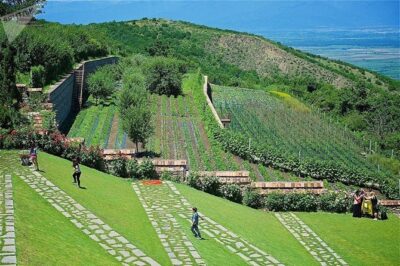
Kakheti;City of Love Sighnaghi, Bodbe. KTW. Wine House Group tour
Read our review →
Old and New City Guided Tour with 2 Cable Car Rides
Read our review →


Old & New City Guided Tour with 15 Tastings & Wine
Read our review →
Mtskheta – Jvari. Full City Tour on Hop On Hop Off Bus
Read our review →
Day tour to Chronicles of Georgia, Gori city, Uplistsikhe cave
Read our review →Browse the lists this tour appears in