
Reviewed · CABLE CAR RIDES
Very Friendly Tbilisi Walking Tour (wine tasting & cable car)
This is a great Tbilisi intro because it mixes big-name sights with the kind of details that help the city click. You get the walking rhythm of Old Tbilisi, then a proper break with the aerial tramway up to Narikala for views and photos.
What I really like is the small-group feel, max 15 people, so the guide can pace the stops and answer questions without the classic herd chaos. I also like how the tour points you to specific landmarks, from the puppet show clock trick at Rezo Gabriadze’s theater to the sulphur-bath area around Abanotubani.
One thing to consider: it is a lot to cover in about 4 hours. Expect some stairs and cobblestones, especially once you head toward the fortress area and down near the baths.
Key things to know before you go
- Small-group size (up to 15) makes this feel personal instead of rushed.
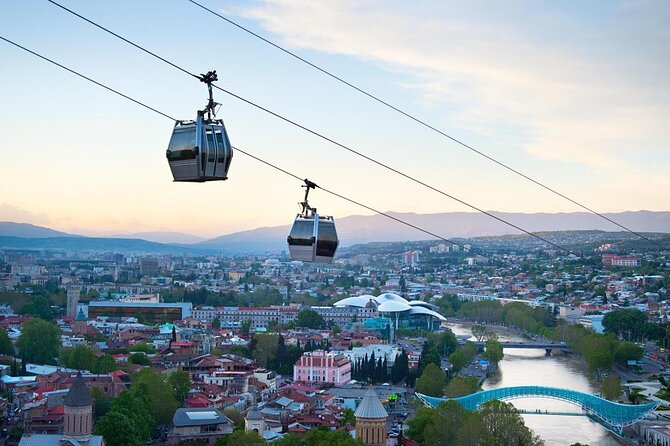
- Cable car ticket included connects Rike Park (Europe Square) to Narikala for an easier uphill experience.
- Free admission at many stops helps keep the total cost down, while the tour includes bottled water.
- One-hour puppet theater moment: a golden angel appears and rings a bell (right at the top of the hour).
- Metekhi Cathedral is about more than looks, with St. Shushanik’s tomb at the center of the story.
- Abanotubani + Sioni + Shardeni means you end in the most atmospheric parts of Old Tbilisi, not just a quick pass-through.
Why this Tbilisi walk feels like a smart city primer

Tbilisi can overwhelm you fast. The streets twist. The architecture shifts by neighborhood. Without context, you can end up taking photos and still missing the point.
This tour solves that problem with a clear route that links eras together. You start with early city remains, move through key churches and landmarks, cross to the riverfront modern icon, then climb up for fortress views. After that, you work your way back down toward Abanotubani and the market streets, where the city feels lived-in rather than museum-still.
The “very friendly” part matters here. A guide who explains at human speed can turn a short stop into something you actually remember. Fellini Travels guides, including Anastasia (named in one of the most glowing local comments), are described as warm and close, which is exactly what you want when you are walking for hours and stepping into places with history.
The route also has built-in variety. You get religious sites, royal monuments, a theater with a mechanical clock moment, and the sulphur-bath district. It is not just walking past pretty buildings. The tour gives you story threads.
More Wine Tours in Tbilisi
- Day Trip to Kakheti Wine Region Including 9 Wine Tastings
★ 5.0 · 2,774 reviews - From Tbilisi: Kakheti Wine Region Tour with 9 Wine Tastings
★ 4.9 · 2,541 reviews - Tbilisi: Kakheti Wine Region Tour with 10 Wine Tastings
★ 5.0 · 2,160 reviews
How long is 4 hours, and what pace to expect
You are signing up for about 4 hours on foot. That means short, efficient visits. Many stops are around 10 to 20 minutes, so you can look, listen, and move on without getting stuck.
Because the walk includes both flat riverfront areas and the fortress approach, plan for:
- Comfortable shoes for stones and uneven ground
- A light layer for wind near the river and viewpoints
- Camera time, especially after the cable car when Narikala opens up
Good news: this is built for most people. It is described as suitable for most travelers, and children must be with an adult. Service animals are allowed too.
If you are the kind of traveler who likes to linger, treat the tour as your first day “map in motion.” Then you can return later on your own to the places that grabbed you most.
From Pushkin Square to Tbilisi Wall Ruins, the tour starts with the city’s roots

The meeting point is Tbilisi Pushkin Square. From there, you ease into the Old City feel right away.
Stop 1: Tbilisi Wall Ruins (Old customs gate area)
You begin at the city wall ruins and underground heritage tied to the 11th century, connected with an old customs gate. This is a strong opener because it tells you Tbilisi was built to manage movement and trade, not just to be pretty.
Drawback to note: this is a “look and learn” stop. The site is brief, so come with a curious mindset rather than expecting a long museum-style visit.
More cable car rides in Tbilisi:
- Tbilisi Walking Tour Including Cable Car and Traditional Bakery
★ 5.0 · 1,310 reviews - Tbilisi: Old Town Highlights w/ 5 Tastings & Cable Car Ride
★ 5.0 · 180 reviews - Tbilisi: Old and New City Guided Tour with 2 Cable Car Rides
★ 5.0 · 176 reviews - Tbilisi: Sightseeing Tour, Wine or Beer Tasting, & Cable Car
★ 5.0 · 26 reviews
Rezo Gabriadze Marionette Theater: the hour-by-hour detail you will want to catch

Stop 2: Rezo Gabriadze Marionette Theater
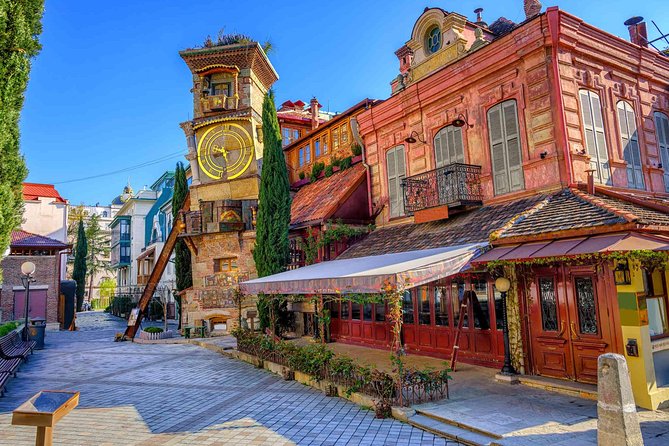
This puppet theater is one of the most distinctive places in Old Tbilisi. It was built in 1981 and has a clock tower that became the theater’s face in 2010.
The standout detail is mechanical and specific: once every hour, a golden angel appears from the painted doorway and rings a bell with a small hammer. Even if you miss the exact moment, the building itself is unusual enough to be worth the stop.
Practical tip: if your schedule aligns, hang around for the hour mark. It turns a quick visit into a “how did they do that?” memory.
Anchiskhati Basilica: a 6th-century church that makes early Tbilisi feel real

Stop 3: Anchiskhati Basilica
Anchiskhati Cathedral, dating back to the 6th century, is described as the oldest church building in Tbilisi. It is a three-nave basilica, and it also connects to an important icon story: the name is tied to an icon of the Savior that arrived from Anchi Monastery in South Georgia in 1664.
Why this works on a walking tour: you do not just hear dates. You learn how objects moved, how names formed, and how the church became a cultural center in the Middle Ages. You can feel the layers even with limited time.
Erekle II Square area: Patriarchate of Georgia and how empires changed buildings

Stop 4: Patriarchate of Georgia, seminary buildings
This stop sits in the eastern part of Erekle II Square, where there used to be a palace linked to King Rostom. The present building began in 1809 on top of earlier palace ruins linked to Tsarist Russia, and later served as a government center for the Russian Orthodox Church and an Exarch and his services.
This is a good example of Tbilisi’s timeline being written in stone and repurposed architecture. You may not stay long, but it gives your brain a framework for what you see later.
Peace Bridge and Rike Park: the modern Tbilisi break (with map-shaped geometry)
You switch from older streets to the riverfront, and the vibe changes quickly in a good way.
Stop 5: Bridge of Peace
The Peace Bridge crosses the Mtkvari River between Metekhi and Baratashvili Bridges. It opened on May 6, 2010 and is a symbol of renewed Tbilisi.
Two concrete details you will like:
- Architect Michele de Luca
- Lighting designer Philippe Martino
Even if you mostly want photos, this is useful because it frames Tbilisi as both ancient and newly designed.
Stop 6: Rike Park
Right nearby, you get Rike Park, described as artistically planned. The fun fact here is that from above, the pathways and layout form a large-scale map of Georgia, with borders showing different regions.
Practical advice: this is a walk-and-look stop. If it is crowded, just skim the views and move. The next parts are the ones with longer “story impact.”
Metekhi Cathedral, St. Shushanik, and Queen Tamar’s connection
Stop 7: Metekhi Cathedral
Metekhi Church of the Nativity of the Virgin Mary sits on the left bank in the Metekhi district. The main sanctuary centers on the tomb of St. Shushanik. After an ecclesiastical split between Armenians and Georgians early in the 7th century, Catholicos Kyrion transferred her remains from Tsurtavi to Metekhi.
This stop gets especially interesting because the story includes royal care: Queen Tamar adorned the body with gilded clothes and paid special homage.
Why it matters for you: this is the kind of landmark where a short guided explanation changes the whole experience. Without context, you might just register “church, pretty place.” With context, it becomes a place of memory and identity.
Monument of King Vakhtang Gorgasali: a quick stop with big political background
Stop 8: Monument of King Vakhtang Gorgasali
Vakhtang I Gorgasali, king of Iberia (Kartli), is connected to the second half of the 5th and first quarter of the 6th century. His story includes an alliance with the Byzantine Empire and a struggle against Sasanian Iranian hegemony.
This is a short stop, around 5 minutes. Use it to reset your mental timeline before the more dramatic climb.
The cable car to Narikala: how to get fortress views without going full climb mode
Stop 9: Aerial tramway (cable car)
Now comes the included payoff: the aerial tramway ticket is included. It connects Rike Park (Europe Square) to the fortress of Narikala. This is one of the best value pieces of the tour because cable car tickets would cost extra if you did it on your own.
If you want views, this is your moment. Narikala is one of the places where Tbilisi looks spread out rather than cramped, and that helps you orient yourself for later exploring.
Kartlis Deda statue: the city’s message in one pose
Stop 10: Kartlis Deda (Mother of Kartli)
This monumental statue is one of Tbilisi’s symbols. The sculpture holds a wine glass in one hand for guests and a sword for enemies in the other.
It is a clever detail that ties the culture theme together. After churches, empires, and a theater with a golden angel, you now get a simple visual statement: hospitality and strength.
Narikala Fortress: ancient walls plus Arab fortification character
Stop 11: Narikala Fortress
Narikala is on the Holy Mountain Mtatsminda. The fortress fragments you see today are linked to construction dating to the 4th century AD, with later expansion in multiple periods. Arabs contributed in the 7th to 8th centuries, and the citadel in its modern condition is described as an example of Arabian fortification.
Inside the fortress territory, you can find St. Nicolas temple dated to the 12th century.
Reality check: this is a “look, walk, and absorb” zone more than a single spot. Plan time to stroll and catch angles where Tbilisi looks best.
Juma Mosque: the city’s only Muslim shrine adds a different layer
Stop 12: Tbilisi Mosque (Juma Mosque)
Below Narikala Fortress is Juma Mosque, described as the only Muslim shrine in the city. The first Sunni mosque here was built by Ottomans between 1723 and 1735. It was destroyed by Persians in the 1740s.
Later, it was rebuilt between 1846 and 1851 by architect Giovanni Scudieri. The eastern part was significantly altered during renovations in 1895 by Hajizinelabdin Tagiyev.
This stop is short, but the timeline is long and dramatic. It helps you see Tbilisi as a crossroads where different communities left architectural fingerprints.
Leghvtakhevi Waterfall and Leghvi figs: the surprise stop in Old Tbilisi
Stop 13: Leghvtakhevi Waterfall
This is an unexpected one: Leghvtakhevi Waterfall is about 22 meters tall and sits in the old city near Abanotubani. The name comes from the Georgian word “Leghvi,” meaning fig, referencing fig trees that used to surround the area.
The gorge separated the Kala district from the main city.
Even if you only get brief time, waterfalls are instant mood changers. After fortress and mosque, this gives you a natural break and a chance to watch the area’s flow down toward the baths.
Abanotubani sulphur baths: where Tbilisi smells like history
Stop 14: Abanotubani
This is the famous sulphur baths district at the foot of Narikala. The baths exist because of hot sulphur springs, and they were built across the 17th to 19th centuries.
The oldest mentioned is the Irakli bath, tied to ownership disputes between imperial family and Georgian princes in the 16th century.
Why it’s worth including on a walking tour: Abanotubani gives you the living texture of Tbilisi. It is not just history behind glass. It is a neighborhood practice.
Stop 15: Chreli Abano
You also stop at Chreli Abano, a sulphur bath area popular with tourists and Georgians. The description notes it looks like a mosque but is a sulphur bath place where you can have fun.
Practical note: you might want to check whether you want to enter at this point. The tour stop timing is limited, so if you plan to actually bathe, you may wish to come back later with more time.
Meidan Bazaar and Jan Shardeni Street: your wine stop and your shopping-friendly finish
Stop 16: Meidan Bazaar
This market square has a commercial history going back at least to the 18th century, linked to French traveler Jean Sharden. It has also been known by names like Shaitan Bazaar, Tatris Moedani, and Tsikhis Moedani.
This is where your tour becomes practical for “what should I buy or bring home?” Traditional wine, handmade accessories, souvenirs, and delicacies are mentioned as things you can find. So if you are coming with a wine mindset, this is the most logical moment during the tour to browse for a bottle or gifts.
Drawback: markets can be quick if you are shy about shopping. Keep your attention on what looks locally made and ask for guidance from your guide if you want a safer pick.
Stop 17: Jan Shardeni Street
Then you enter pedestrian lanes, including Shardeni Street, named after Jean Chardin after reconstruction in the 19th century. You’ll find galleries and cafes, and the street pairs with nearby pedestrian streets like Bambis Rigi and Rkinis Rigi.
This feels like a gentle landing zone after the fortress and baths.
Sioni Cathedral: a final spiritual anchor on the riverbank
Stop 18: Sioni Cathedral Church
The tour ends with Sioni Cathedral. It is described as a cross-domed temple with roots in the 5th century to the present, and since 1920 it has been the Patriarchal Cathedral.
Location-wise, it sits on the lower right bank of the Mtkvari in Old Tbilisi, in the Zemo Kala area.
If you finish here, you get a satisfying sense of closure. The cathedral is not just architecture, it’s a statement that Tbilisi’s identity is still tied to faith and community.
Price and value: why $27.24 can make sense here
The listed price is $27.24 per person for about 4 hours. When I look at value, I check three things: guide time, big included costs, and how much you pay in admissions.
Here you get:
- A local guide
- Bottled water
- The cable car ticket is included
- Many major stops are shown with admission tickets marked free
Food and drinks are not included. If you want a sit-down meal, plan for it separately.
The most valuable part is the cable car inclusion. Doing Narikala without it is possible, but it is more work. You also save time because the tour threads the riverfront to the fortress efficiently.
Also, this is described as a small-group format with max 15, which usually means less waiting and a better pace than a large coach-style tour.
One more practical thought: average booking is about 14 days in advance, so if you want a specific time window, book earlier rather than later.
Who should book this Tbilisi walking tour
This tour is a good fit if you:
- Want a first-time route that covers both Old Tbilisi and key “renewed city” landmarks
- Prefer a small group with a friendly guide
- Like guided context at churches, monuments, and heritage sites
- Want the convenience of a cable car included rather than planning it yourself
You might skip it if you:
- Want long, slow time inside museums or a lot of independent wandering
- Are sensitive to steep viewpoints and stone steps, since you do go up toward Narikala and down toward Abanotubani
Should you book this Very Friendly Tbilisi Walking Tour?
I would book it if you want a guided framework for the city in one half-day, with the Narikhala cable car built in and stops placed where Tbilisi changes character from ancient to modern to bathhouse neighborhood.
If your main goal is wine tasting specifically, this tour gives you a strong lead-in through the market area where wine shopping is possible, but the data you provided does not promise a formal tasting session. In that case, I’d treat Meidan Bazaar as your “buy and sample later” moment, not a hosted tasting.
Bottom line: at $27.24 for a 4-hour small-group walk that includes the cable car and many free-entry stops, it is a solid value choice for a smooth first day in Tbilisi.
FAQ
How long is the Very Friendly Tbilisi Walking Tour?
The tour is about 4 hours.
How much does it cost?
The price is $27.24 per person.
Is the cable car included?
Yes. The aerial tramway from the Rike Park area (Europe Square) to Narikala is included.
What is included in the tour price?
Included items are bottled water and a local guide.
Are tickets to sights included?
Many stops are listed with admission tickets marked free, and the cable car ticket is included.
Where does the tour start and end?
It starts at Tbilisi Pushkin Square and ends near Orbeliani Bazaar at Площадь Орбелиани.
Is hotel pickup included?
Hotel pickup and drop-off are listed as not included, even though pickup is mentioned in the highlights. It is worth confirming with the provider before you go.
What are the rules for children?
Children must be accompanied by an adult.
Can I get a full refund if I cancel?
Yes. You can cancel up to 24 hours in advance for a full refund.
More Walking Tours in Tbilisi
- Tbilisi: City Highlights Guided Walking Tour
★ 4.9 · 1,114 reviews - Tbilisi:Evening Walking & Talking Tour with Wine & Boat Ride
★ 5.0 · 572 reviews - Tbilisi: Evening Walking Tour with Wine & Boat Ride Options
★ 5.0 · 407 reviews - Old Tbilisi Highlights walking tour with wine & 10 tastings
★ 5.0 · 276 reviews
More Food & Drink Tours in Tbilisi
- Tbilisi:Mtskheta,Jvari,Bazaar,wine tasting,Chronicles of Georgia
★ 5.0 · 730 reviews - Old Tbilisi Tour: Private Walking Tour With Wine Tasting
★ 5.0 · 273 reviews - Private Tbilisi Food Tour: 9 Tastings Walk in Bohemian District
★ 5.0 · 227 reviews - Tbilisi Food Tour in a Local Family
★ 5.0 · 113 reviews
Recently reviewed around Tbilisi
- Tbilisi City Tour★ 4.5 · 3 reviews
- Tbilisi City, Jvari Monastery, Uplistsikhe caves, Mtskheta city Private Day Trip★ 4.5 · 3 reviews
- Tbilisi City Tour with Street Photography★ 5.0 · 3 reviews
- Wild Georgia 4WD PACK Adventure through Kakheti and Kazbegi 2in1★ 5.0 · 3 reviews
- Private Trip to Tbilisi and Mtskheta – Cultural Capitals★ 5.0 · 3 reviews
- Tbilisi Airport to Gudauri, Bakuriani, Batumi, Tbilisi★ 5.0 · 3 reviews
- Private Adorable City Tour of Tbilisi★ 5.0 · 3 reviews
- Tbilisi and Mtskheta cities private, cultural tour★ 5.0 · 3 reviews
Cable Car Rides, compared.
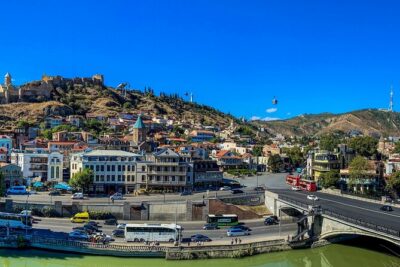
Tbilisi Walking Tour Including Cable Car and Traditional Bakery
Read our review →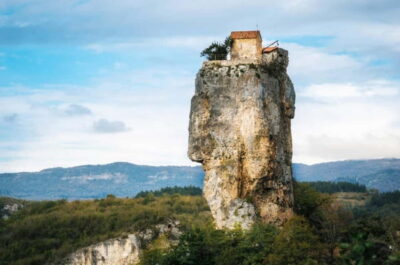
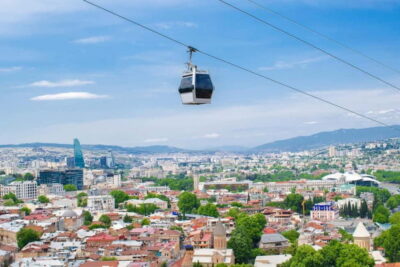
Old Town Highlights w/ 5 Tastings & Cable Car Ride
Read our review →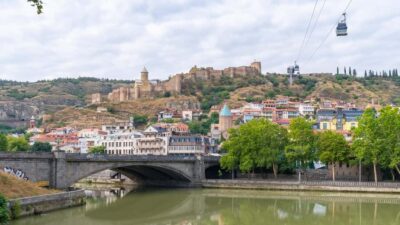
Old and New City Guided Tour with 2 Cable Car Rides
Read our review →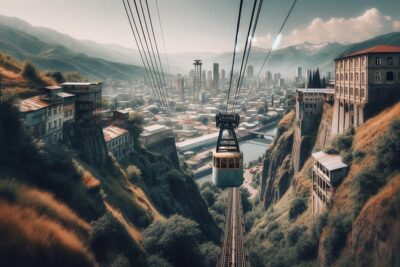
Chiatura Tour with Katskhi Pillar & Cable Car Experience
Read our review →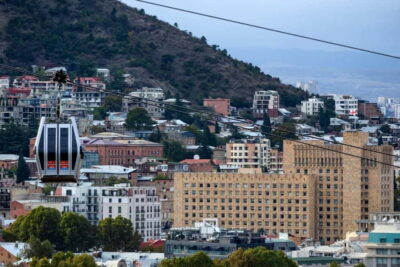
Sightseeing Tour, Wine or Beer Tasting, & Cable Car
Read our review →
Full Day Tbilisi City Tour with Wine Tasting & Cable Car Ride
Read our review →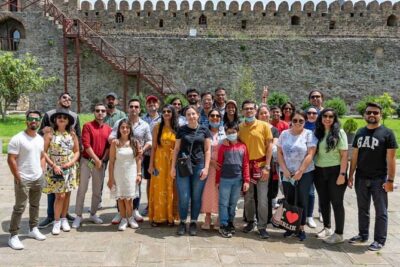
Tbilisi Walking Tour Including Cable Car and Wine Tasting
Read our review →Browse the lists this tour appears in