
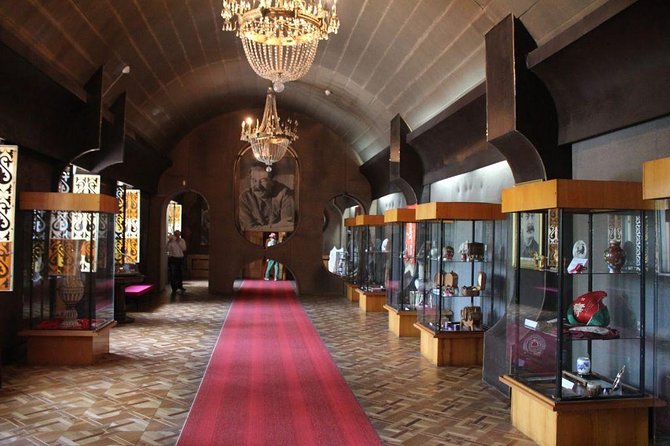
Reviewed · MTSKHETA ANCIENT CAPITAL
Uplistsikhe-Borjomi-Gori-Mtskheta
This tight day trip strings together panoramic monasteries, mineral-water stops, cave-city ruins, and the old capital of Mtskheta in one smooth route.
I love how private this is, usually for just your group up to 3, so the driver-guide can set a comfortable pace and answer questions without rushing. I also like the built-in contrast, from Jvari’s river views to the cable car moment in Borjomi.
One thing to plan for: not every entrance cost is included, so budget a bit for paid tickets at places like the Stalin Museum, Uplistsikhe Cave Town, and the Borjomi cable car.
Key highlights I’d circle first
- Private group up to 3, not a big bus shuffle
- Driver-guide format with friendly explanations along the way
- Big viewpoints at Jvari, where two rivers meet below
- Borjomi National Park time, including mineral water and a cable car ride
- Cave city history at Uplistsikhe, rock-cut and surprisingly atmospheric
- Svetitskhoveli Cathedral free entry, plus famous Orthodox relics inside
Why this Georgia circuit feels efficient (and not exhausting)
This is the kind of day trip that makes sense if you want a lot of Georgia in one go, without losing your mind to constant check-ins. You start in Tbilisi, then work your way through a classic sequence of culture, nature, and historic sites, before returning to where you began.
What makes it especially appealing is the variety packed into a single rhythm. You get a church built in layers of time, a mineral-water town break, a Soviet-era stop, and then an ancient rock city. It’s not just sightseeing, it’s different chapters of the region in a single arc.
More Borjomi trips:
- Tbilisi: Borjomi, Rabati & Vardzia Adventure Guided Tour
★ 4.9 · 817 reviews - Day tour to Vardzia, Borjomi in Georgia
★ 4.5 · 152 reviews - Vardzia, Rabati, and Borjomi Ancient Georgia Group Tour
★ 4.5 · 74 reviews
The real value is pacing, not just places
The itinerary spreads your time fairly evenly across major stops. You’re not stuck for hours at one single point, and you’re not sprinting either. With a private group, your guide can also help you spend that time well, instead of waiting around.
That showed up in the way guides are described, friendly and accommodating, with people naming Mamuka and Ani specifically. That matters because in a day like this, a good guide can turn “we saw it” into “we understood it.”
Private pickup and a driver-guide who actually talks
This tour is private, meaning it’s just your group, up to 3 people. That changes the vibe immediately. You can ask questions as they come up, and you are not stuck with a crowd that keeps everyone at one speed.
Pickup is offered from Tbilisi, and the driver is also your guide. In practice, that means fewer handoffs. You are not switching between a driver, a historian, and a ticket person. One person is with you the whole time, guiding your stops and keeping the day flowing.
Expect friendly, practical guidance
In the feedback, the most praised trait is how warm and accommodating the guides were. Several people highlighted guides who explained history clearly and kept the atmosphere relaxed, even when the itinerary packs a lot in. There’s also mention of good communication, including English and a local language, which makes a difference when you want to ask small questions like where to stand for the best view.
Also, guides helping with restaurants and shopping came up as a plus. That’s not just a bonus. When your day ends back in Tbilisi, those local recommendations can help you turn the day into a proper experience, not a series of quick photo stops.
More day trips to Gori:
- Tbilisi: Mtskheta, Jvari, Gori and Uplistsikhe Day Tour
★ 4.9 · 2,396 reviews - Day Trip to Mtskheta Gori and Uplistsikhe
★ 5.0 · 1,801 reviews - From Tbilisi : Mtskheta, Jvari, Gori & Uplistsikhe Day Trip
★ 4.8 · 432 reviews - From Tbilisi: Mtskheta, Jvari, Gori, Uplistsikhe Guided Tour
★ 4.7 · 354 reviews
Jvari Church: the 4th-century start, 11th-century church, and the river meeting view
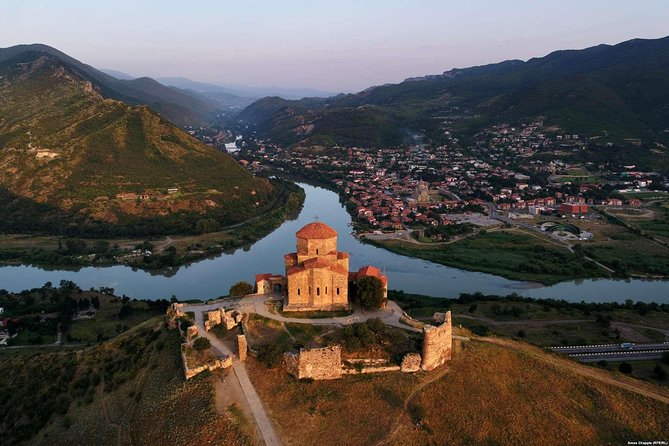
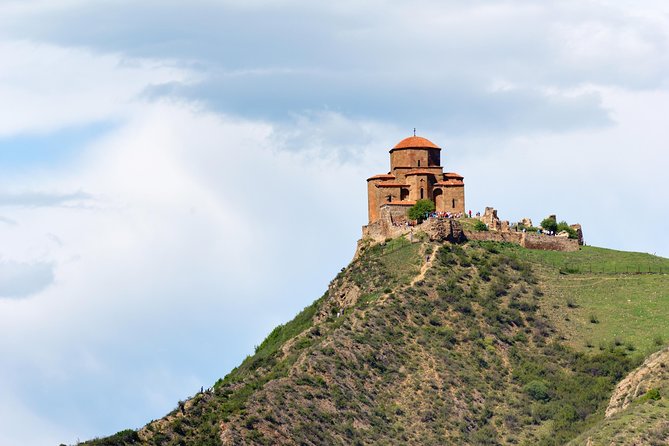
Jvari Church is the kind of place where you immediately get why people built holy spaces on high ground. After leaving Tbilisi, you head to this monastery site for a short stop, about 30 minutes.
Jvari’s story runs through Georgia’s early Christian era. Construction began in the 4th century, started in the 30s years after Christianity was accepted in Georgia, and then a larger main church was built later, in the 11th century. Standing here, you can feel the layers. It’s not a one-era site, it’s a timeline in stone.
What you should look for during your visit
The best part is the view. From Jvari, you can take in a panorama of Mtskheta, plus the dramatic meeting of two rivers, the Aragvi and the Kura, also called the Mtkvari. The description of the mountains as wave-like is accurate in spirit, because the area really does roll outward into soft, patterned horizons.
Admission is free, which is always nice on a day with multiple paid stops. Still, don’t treat it as a rushed “quick entry.” The view is the point. Give yourself a few minutes to step back, look around, then take photos.
The Borjomi route: national park scenery on the drive, then mineral water and cable car views
On the way toward Borjomi, you pass by Borjomi-Kharagauli National Park. Even if you are just driving through, this is one of the easiest stretches to enjoy because the scenery supports the stop structure. You get nature without adding extra hiking pressure.
Borjomi itself sits high, about 800 to 900 meters above sea level, so the air feels different than in lower areas. It’s not a minor detail. When a town is elevated, your body notices, and that can make the walk feel more comfortable.
Borjomi Central Park, what you’ll do in about 45 minutes
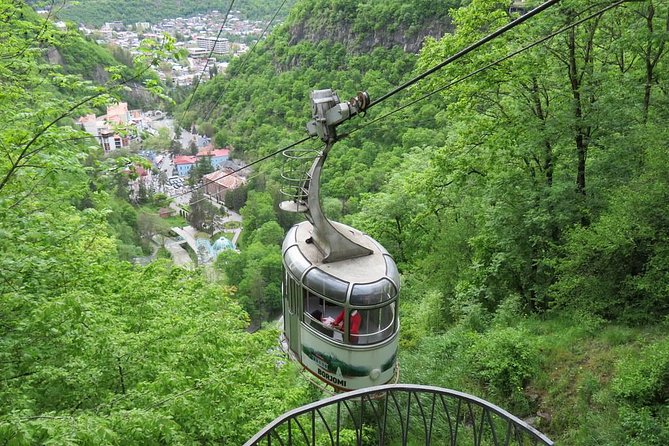
In Borjomi Central Park, you can drink the local mineral water, the famous Borjomi. Then you walk through the park and you can see a waterfall along the route. After that, the highlight move is the cable car up to a plateau with a lake area above the town.
The cable car experience is part of the appeal, because it turns your viewpoint from street-level to a wide city-and-valley view. The listing notes that admission ticket for this part is not included, so expect to pay for tickets there separately.
A practical tip so Borjomi doesn’t feel like a blur
Because the visit is about 45 minutes, plan your priorities. If mineral water is your must-do, do that early. If you care more about views, time your cable car so you have a calm moment at the top. With a private group, you can coordinate that timing better than you can on a big tour.
Gori and the Stalin house museum: a compact stop with big historical weight
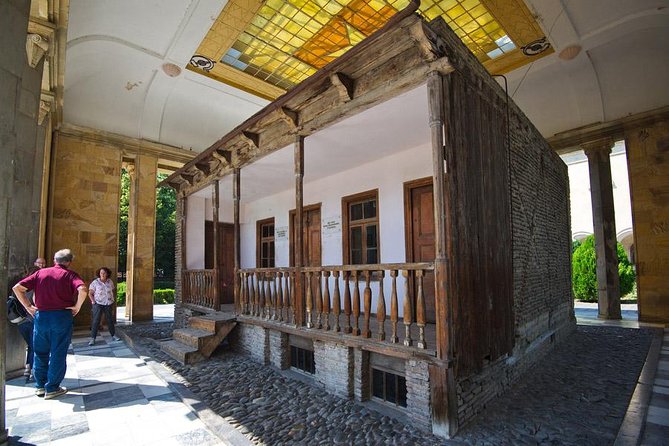
Next comes Gori, known as Joseph Stalin’s birthplace. You spend around 40 minutes here at the Stalin house museum.
Even if you are not a political history person, this stop has a clear value: it puts Soviet-era power into a physical place. You’re not just reading names in a textbook. You are seeing a museum tied to a real location.
Gori is described as sitting in the Kartlia valley, around the confluence of the Kura and the Liakhi, with mountains surrounding it to the south and west. That geography explains why the town looks like it belongs in a valley bowl. It’s the kind of setting that helps you picture how control and movement worked in older eras.
What makes this stop worth your time
A museum like this works best when you go in expecting it to be short and focused. With just 40 minutes, the goal is orientation, not a deep scholarly session. Your driver-guide can help interpret what you see, especially if they explain the timeline around Stalin, including that he ruled the Soviet Empire from 1925 to 1953.
Admission here is not included, so treat it as a planned add-on. If you’re curious about the Soviet period, this is a straightforward, no-drama way to include it.
Uplistsikhe Cave Town: rock-hewn streets from the late Bronze Age
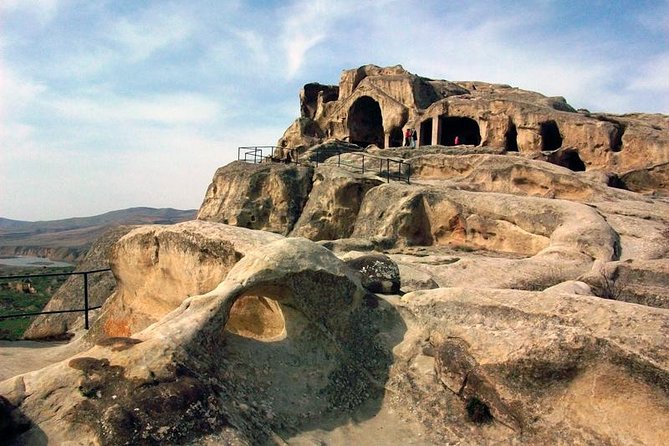
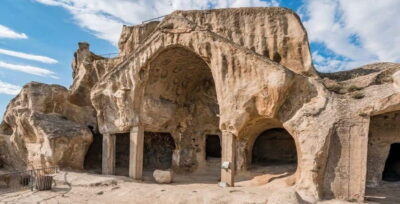
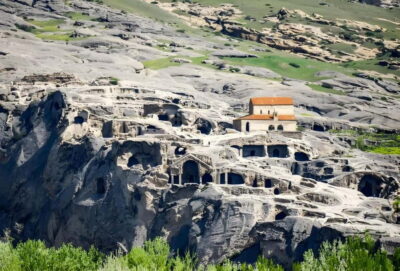
After Gori, you travel to Uplistsikhe Cave Town. This is one of those places where photos only tell half the story. Up close, you get the texture of rock and the sense of how people carved their everyday life into it.
Uplistsikhe means Lord’s Fortress, and it’s an abandoned rock-hewn town. It was founded in the late Bronze Age, around 1000 BC, and it remained inhabited until the 13th century AD. That’s a huge timeline, and the site reflects it. It was also described as one of the most important political and religious centers of pre-Christian Kartli.
At its peak, it housed up to 20,000 people, and what you visit today is the Shida Qalaq area, about 40,000 square meters. That size clue helps you understand why you can wander and still feel like you missed parts.
Your Uplistsikhe visit, what to expect in about 40 minutes
You’ll have around 40 minutes to explore. That usually means walking through key sections rather than doing an all-day exploration. It’s still enough time to understand the basic layout, spot carved spaces, and appreciate the scale.
Admission is not included, so plan for that cost ahead. The practical win is that you get a major historic site without stretching your day into an early evening exhaustion.
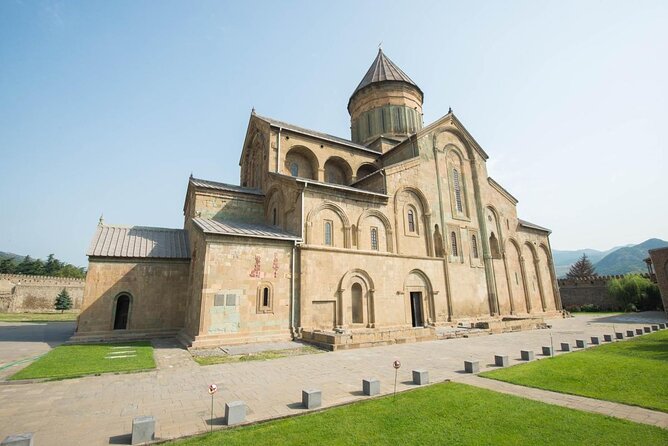
Mtskheta’s Svetitskhoveli Cathedral: free entry and four Orthodox sanctities
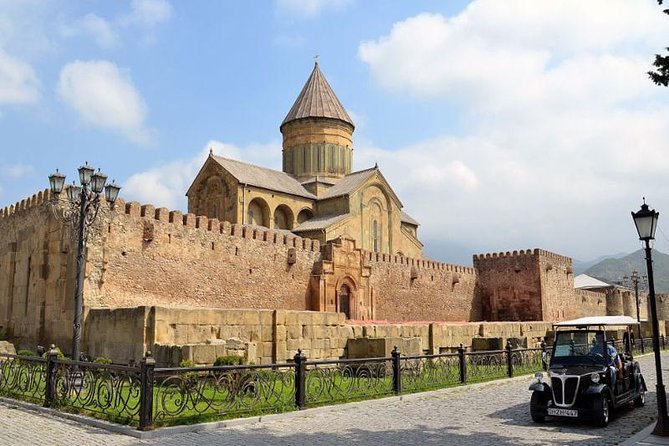
The final major stop is Svetitskhoveli Cathedral in Mtskheta, Georgia’s old capital. You spend about 30 minutes here, and admission is free.
The cathedral’s construction is dated from 1010 to 1029, which gives you a concrete window to place it in. Then there’s the religious importance. The site keeps four major sanctities of the Orthodox world.
Those sanctities are specifically listed as:
1) the Mantle of Isaiah the prophet
2) the robe of Jesus Christ
3) a particle of Andrew the Apostle
4) a Wood Cross with small particles tied to the cross where Jesus Christ was cast
How to make the most of 30 minutes
With only half an hour, don’t try to do everything. Focus on the space first, then let your guide point out what matters most. In a cathedral like this, the “meaning” is the experience. You’ll feel it more if you’re listening and not just scanning.
Also, this stop is one of the best ways to balance the day’s variety. After cave city and Soviet-era history, Svetitskhoveli brings the spiritual and architectural thread back into focus.
Timing, ticket costs, and what to pack for a long day
This tour runs about 7 to 9 hours total, starting at 9:00 am and ending back at your meeting point in Tbilisi. The time at each stop is generally short, but the day adds up because of driving between regions.
Here’s the basic rhythm you can expect:
- Jvari Church: about 30 minutes, free admission
- Borjomi Central Park: about 45 minutes, cable car admission not included
- Stalin Museum in Gori: about 40 minutes, admission not included
- Uplistsikhe Cave Town: about 40 minutes, admission not included
- Svetitskhoveli Cathedral: about 30 minutes, free admission
Ticket budgeting without guessing numbers
You can treat it like this: two stops are free for entry, and the other ones usually involve paid admission, plus the cable car. Since specific ticket prices are not listed here, the safe move is to bring extra cash or card ready for paid entries.
What I suggest you bring
Wear comfortable shoes. You’ll walk in parks and move around uneven, historic terrain at Uplistsikhe. Bring a water bottle, especially for the Borjomi walking portion. If you’re traveling in cooler months, bring layers. You’ll be outside at multiple stops, including where you’ll want to stop for views.
Is it worth $179 per group, and who should book?
The price is $179 per group, up to 3 people. That can be a great deal if you travel in a small group and want private pacing. For a group of 3, the effective cost per person is about $60. If you’re only 1 or 2, the per-person cost is higher, but you still get a full day of private transport and guided storytelling.
Who this tour suits best
This fits you if you want:
- a single-day introduction to Georgia’s major historical themes
- strong viewpoints, not just indoor stops
- a guide who talks, drives, and keeps the day flowing
- a private format where you can ask questions
The guide names that come up most are Mamuka and Ani, and the common thread is friendliness and good communication. That’s exactly what you want for a day packed with context-heavy stops.
Who might want a different option
If you prefer long museum time, deep archeology walking, or very slow travel with lots of free time, this may feel too structured. The stops are timed to fit the route, so you’ll want to treat it as a highlights-and-meaning day, not a full immersion in one single site.
Should you book this Uplistsikhe, Borjomi, Gori, and Mtskheta day trip?
If you’re trying to make a short trip feel complete, I think this is a strong choice. The route covers major places with real contrasts, and the private setup helps you enjoy it instead of surviving it. Jvari’s riverside panorama, Borjomi’s mineral water and cable car views, Uplistsikhe’s rock-hewn town scale, and Svetitskhoveli’s cathedral relics form a day that feels like you covered a lot of ground with purpose.
One last decision tip: if you care most about views and architecture, this works very well. If you care most about one single topic, like Soviet history or cave cities, you might find a more focused tour is better. But as a balanced sampler, this one earns its place.
FAQ
What time does the tour start, and how long is it?
The tour starts at 9:00 am and lasts about 7 to 9 hours.
Is this tour private?
Yes. It is a private tour/activity, and only your group participates.
How many people can be in a group?
The price is per group for up to 3 people.
Do you get pickup in Tbilisi?
Pickup is offered, and the tour starts in Tbilisi. It ends back at the meeting point.
Do I need to buy tickets for the sites?
Some admissions are free, like Jvari Church and Svetitskhoveli Cathedral. Tickets are not included for other stops such as the Stalin Museum, Uplistsikhe Cave Town, and the Borjomi cable car experience.
Does the tour use mobile tickets?
Yes, mobile ticket is included.
What is the cancellation policy?
You can cancel for free up to 24 hours before the experience’s start time for a full refund. If you cancel less than 24 hours before, the amount paid is not refunded.
More Mtskheta Tours from Tbilisi
- Tbilisi: Mtskheta Jvari Bazaar, Chronicles of Georgia & Wine
★ 5.0 · 1,088 reviews - Tbilisi:Mtskheta,Jvari,Bazaar,wine tasting,Chronicles of Georgia
★ 5.0 · 730 reviews - Tbilisi: The Chronicles of Georgia, Jvari & Mtskheta Tour
★ 5.0 · 307 reviews - Mtskheta-Jvari-Uplistsike-Chronicle of Georgia, PRIVATE Trip
★ 5.0 · 105 reviews
More Uplistsikhe Cave Town Visits
- From Tbilisi: Mtskheta, Jvari, Gori & Uplistsikhe Cave Tour
★ 4.7 · 296 reviews - From Tbilisi: Mtskheta, Jvari, Gori & Uplistsikhe Day Trip
★ 4.8 · 153 reviews - Mtskheta-Gori-Uplistsikhe
★ 5.0 · 112 reviews - Mtskheta, Jvari, gori, uflistsikhe, history and panorama (group tours)
★ 4.5 · 107 reviews
Recently reviewed around Tbilisi
- Tbilisi City Tour★ 4.5 · 3 reviews
- Tbilisi City, Jvari Monastery, Uplistsikhe caves, Mtskheta city Private Day Trip★ 4.5 · 3 reviews
- Tbilisi City Tour with Street Photography★ 5.0 · 3 reviews
- Wild Georgia 4WD PACK Adventure through Kakheti and Kazbegi 2in1★ 5.0 · 3 reviews
- Private Trip to Tbilisi and Mtskheta – Cultural Capitals★ 5.0 · 3 reviews
- Tbilisi Airport to Gudauri, Bakuriani, Batumi, Tbilisi★ 5.0 · 3 reviews
- Private Adorable City Tour of Tbilisi★ 5.0 · 3 reviews
- Private Wine Tour In Kakheti Region with 7 Wines and Lunch★ 5.0 · 3 reviews
Mtskheta Ancient Capital, compared.
Mtskheta, Jvari, Gori and Uplistsikhe Day Tour
Read our review →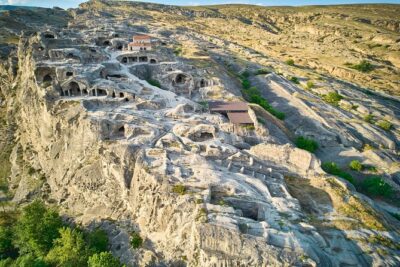
Mtskheta Jvari Bazaar, Chronicles of Georgia & Wine
Read our review →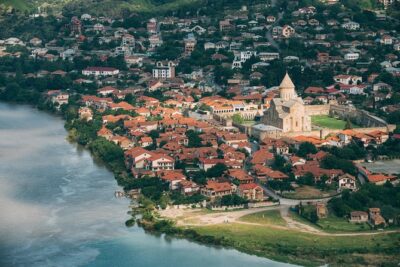
Mtskheta,Jvari,Bazaar,wine tasting,Chronicles of Georgia
Read our review →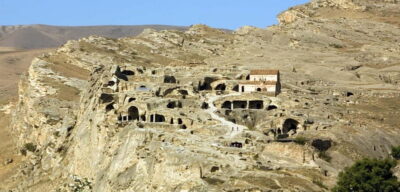
The Chronicles of Georgia, Jvari & Mtskheta Tour
Read our review →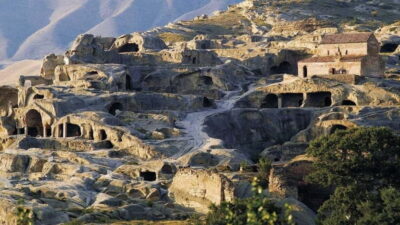
Browse the lists this tour appears in