Reviewed · GUIDED
Tbilisi: Hidden Backyards Guided Tour
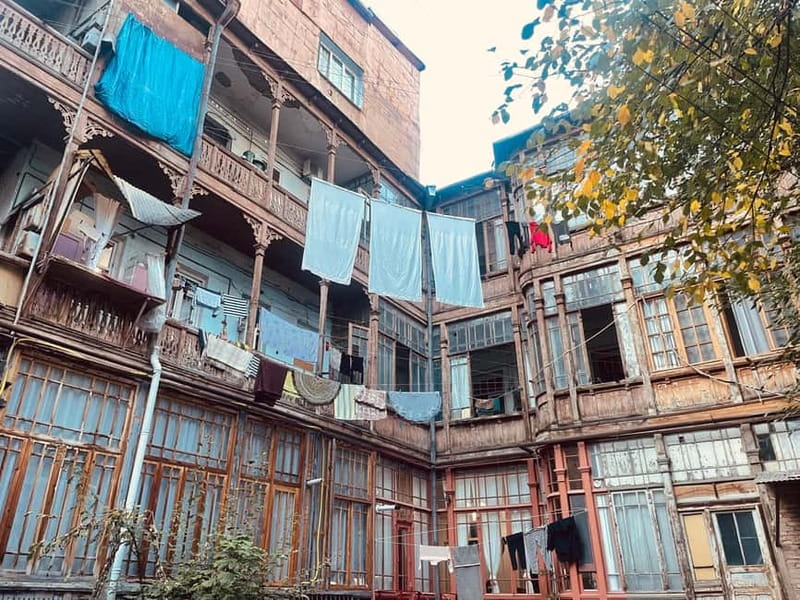
Tbilisi’s charm is often hiding behind plain-looking doors, and this tour is built to get you there fast. You’ll move through hidden courtyards where the city feels lived-in, and you’ll spend real time at Fabrika Tbilisi, the colorful creative yard locals actually use.
What I really like is the combination of street-level atmosphere plus clear explanations, so you understand why these places look the way they do. I also like how guides such as Giorgi bring the neighborhood story to life, turning courtyards into something you can picture and remember. One thing to consider: it involves walking in passages and yards, so you’ll want comfortable shoes and you should travel light since luggage or large bags aren’t allowed.
Key highlights at a glance
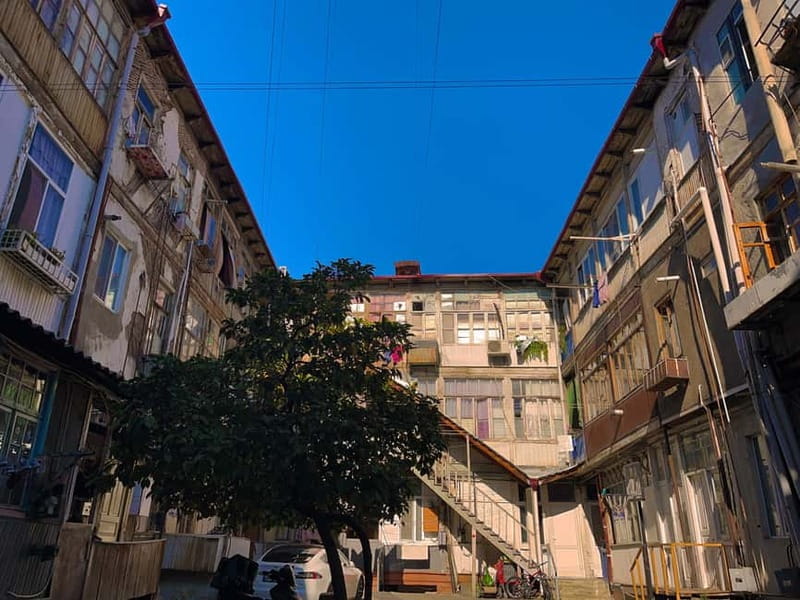
- Courtyard-focused walking route that goes past postcard sights into everyday Tbilisi
- Fabrika Tbilisi with photo stops and time to look, shop, and absorb the vibe
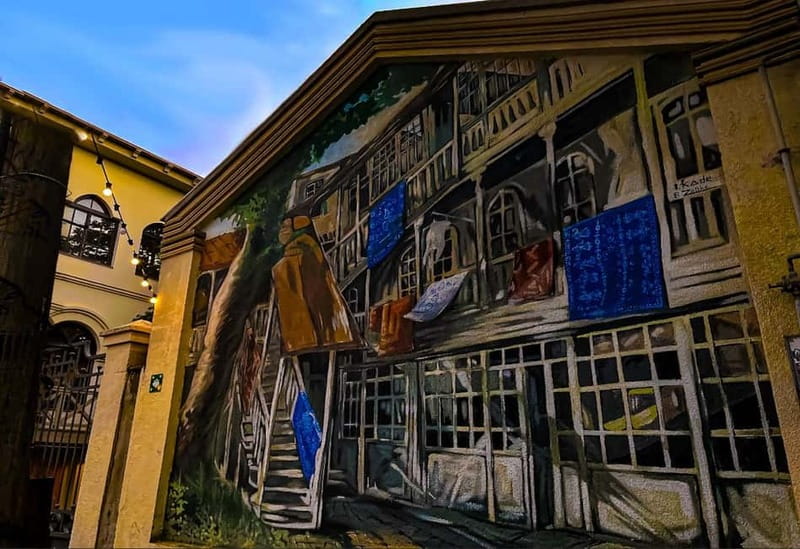
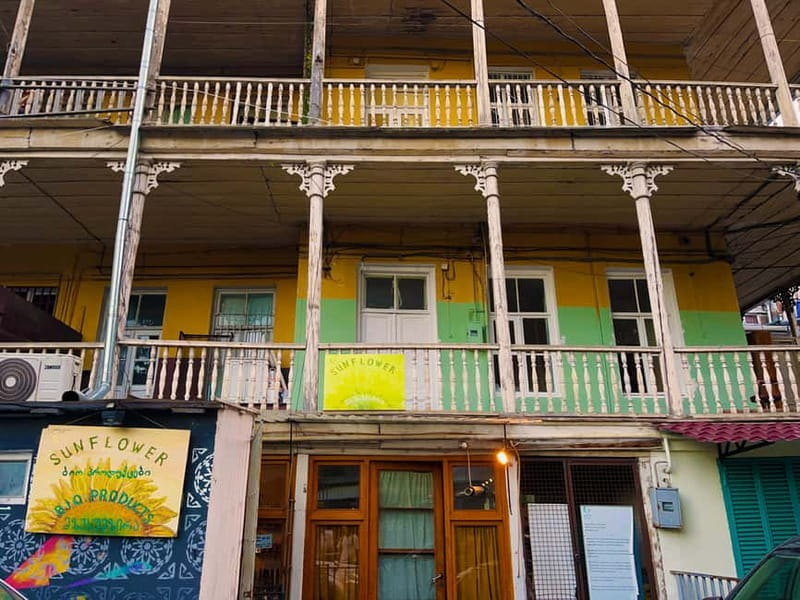
- Niko Pirosmani Museum yard with balconies and street-art-adorned walls
- Neighborhood transformation stories that explain how each area changed over time
- Metro experience to help you understand how to travel around like a local
Why “hidden backyards” is the smartest way to start Tbilisi
Tbilisi can look confusing at first. Big avenues, a river, hills, and churches everywhere, yet the most memorable scenes are often behind a gate, down a stairway, or in a narrow yard that doesn’t appear on many quick itineraries. This tour leans into that reality. You’re not just collecting photos, you’re learning how the city works at the street level.
At a practical level, it’s also a huge help when you’re new. Within a couple of hours, you’ll pick up guidance on what to prioritize, how to move between districts, and what kind of spots are worth your time later. The guide is part educator, part local friend. Reviews call out the way Giorgi keeps conversations going while also giving detailed descriptions that connect each stop to the bigger picture.
The small-group or private format matters here. In tight spaces like courtyards and passageways, you don’t want a crowd pushing behind you. A smaller group usually means easier pacing and more time to ask questions, especially when the route includes both iconic central areas and quieter side routes.
A few more Tbilisi days worth putting side by side
- Tbilisi: Day Trip to Kazbegi, Gudauri, Gergeti, and Ananuri
★ 4.9 · 3,203 reviews - Day Trip to Kakheti Wine Region Including 9 Wine Tastings
★ 5.0 · 2,774 reviews - Highlights of Caucasus Mountains-Jinvali,Ananuri,Gudauri,Kazbegi(Group tour)
★ 5.0 · 2,682 reviews
Getting picked up and oriented without wasting your day
The day starts with two pickup options, so you can choose the one that’s closest to where you’re staying. You’ll meet at either 19 Niabi IV Turn or 2/4 Vladimer Maikovski St. That reduces the usual hassle of figuring out where to go first, especially in a city where street layouts can shift quickly between districts.
The tour duration runs 1 to 3 hours, so it’s a good fit for both an early orientation and a flexible afternoon. If you’re trying to avoid a day that feels like “just transit,” this kind of compact route is a nice antidote.
You’ll also get transportation tickets included, and the tour description specifically mentions using the Tbilisi Metro to get a local feel for how neighborhoods connect. That matters because it’s not only about reaching places. It’s about learning the rhythm of the city so you can return on your own with confidence later.
Fabrika Tbilisi: art courtyards, shop windows, and the neighborhood story
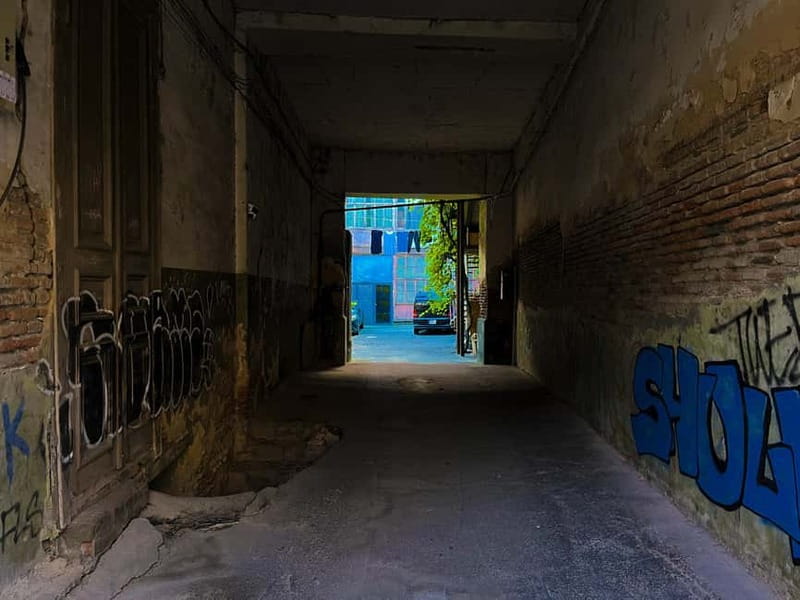
Fabrika Tbilisi is the kind of stop that makes the whole tour click. Even if you’ve seen pictures, it’s different in person because it’s active. People pass through, pause, meet friends, browse, and hang out. The courtyard isn’t staged for tourists. It’s the kind of place where you can sense why locals keep choosing it.
You’ll have time for a photo stop and a guided visit here, plus sightseeing along the way. The description also notes shopping. That’s useful if you like to bring home something small and Georgian made, or if you just enjoy scanning local design and art without a hard sales pitch.
What makes this stop valuable is the explanation behind it. You’ll learn how this quarter developed and how it shifted into an alternative, international-feeling area. That’s not a vague “cool neighborhood” label. You’ll get the origins and transformations of the places you’re walking through, so Fabrika becomes a case study, not just a pretty courtyard.
If you want a practical tip, it’s this: treat Fabrika as a visual reference point for the rest of the route. Once you understand how creative spaces took over old structures here, it becomes easier to notice what’s changing elsewhere in Tbilisi. The guide’s perspective helps you see details you might otherwise miss, especially the way courtyards function as social rooms for the neighborhood.
Niko Pirosmani Museum: a yard with balcony views and street art
Next comes Niko Pirosmani Museum, another spot where the setting does half the storytelling. The yard is where you slow down. You’ll do a photo stop and a guided visit, and you’ll get a focused look at the building’s walls and balconies.
The museum is described as the living house of one of Georgia’s most beloved artistic figures. Even if your art history background is light, the physical layout helps. You’re not only hearing about the past, you’re seeing the yard that shaped daily life. That’s the kind of place where “context” is not theoretical.
The yard also has street art on the walls and balconies. That blend is what I like most about stops like this. You see layers of time side by side: a historic home, plus later creative additions. It’s a reminder that Tbilisi doesn’t freeze its past. It reuses it.
One small caution for expectations: this isn’t presented as a long museum crawl. It’s a stop inside the courtyard theme. You’ll likely spend time appreciating the setting and images, then move on. If you’re the type who likes reading every exhibit panel for an hour, you might wish you had extra time on your own after the tour.
A different sort of day out of Tbilisi:
- From Tbilisi: Kakheti Wine Region Tour with 9 Wine Tastings
★ 4.9 · 2,541 reviews - Tbilisi: Mtskheta, Jvari, Gori and Uplistsikhe Day Tour
★ 4.9 · 2,396 reviews - From Tbilisi to Kazbegi, Ananuri, Gudauri & Gergeti
★ 4.9 · 2,278 reviews - Tbilisi: Kakheti Wine Region Tour with 10 Wine Tastings
★ 5.0 · 2,160 reviews
Shota Rustaveli Avenue: a quick look at the city’s big spine
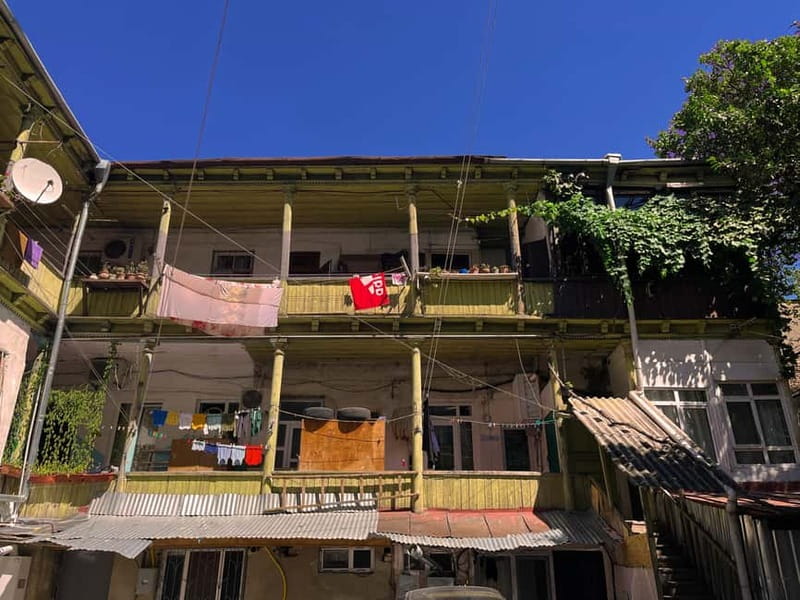
After the courtyards, you’ll pass through Shota Rustaveli Avenue, one of the main central stretches. Expect photo stops and guided commentary, with a walk-through feel rather than a deep visit.
This part works like a connector. Courtyards can be easy to romanticize. Rustaveli Avenue helps put them back in context. You understand where the city’s energy gathers and why the backyards matter. A big avenue is where visitors naturally point their camera. Courtyards are where residents point their time.
If you’re trying to map Tbilisi in your head, this stop helps. It gives you landmarks in the broader layout so later, when you wander independently, you’re not constantly guessing which direction you’re facing.
Liberty Square: famous landmarks, explained through everyday spaces
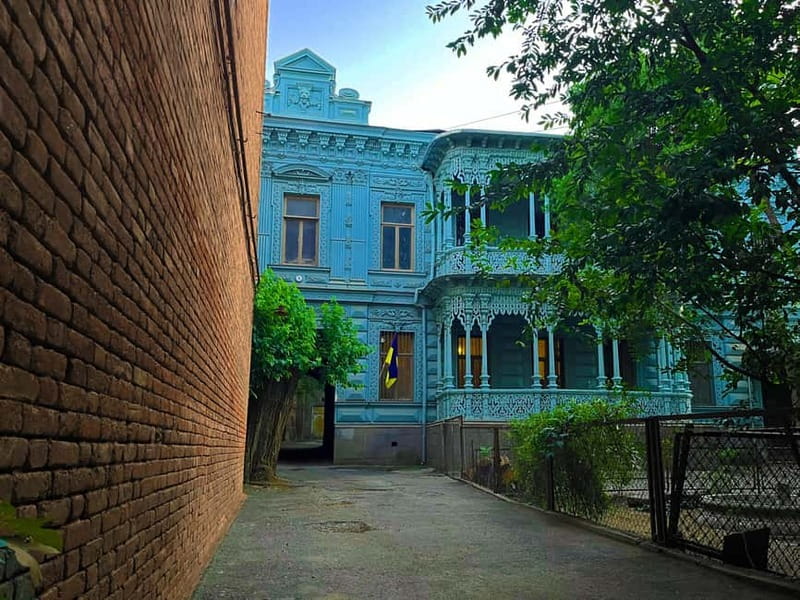
Then comes Liberty Square. You’ll have a photo stop, a visit, guided tour elements, and a short walk and pass by. Since Liberty Square is a well-known anchor, you might think it’s redundant on a hidden-backyards itinerary. But it’s included for a reason.
The tour’s angle is about neighborhood development and transformation. Liberty Square gives you a wider frame. It helps you understand that the changes happening in courtyards and creative quarters aren’t random. They connect to how the city grew, shifted, and reinvented itself across different periods and influences.
In other words, this isn’t just about seeing famous places. It’s about learning what kind of city you’re in. You’ll get explanations that connect those landmark spaces to the smaller, residential yards you saw earlier.
Dark alleys, passageways, and how the guide keeps it comfortable
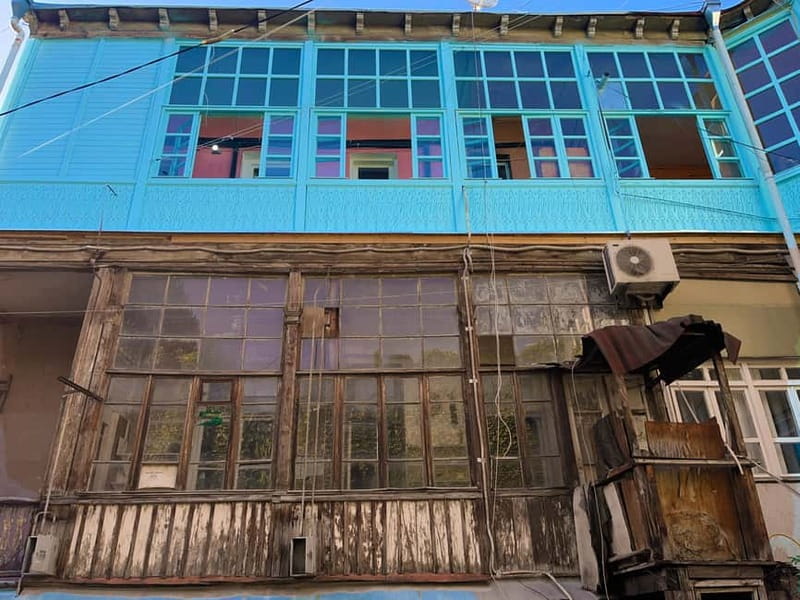
The tour description notes you’ll go through dark alleys and passageways. That can sound dramatic, but in practice it’s about discovering the “in-between” spaces that knit the city together. Courtyards often require a small detour, a gate you might not notice, or a staircase that looks like it leads nowhere.
This is where the guide’s role becomes more than informative. A good guide reduces friction. They keep the group moving, point out what matters, and help you feel safe in lanes that aren’t meant for long tourist crowds.
Reviews reinforce this. They highlight that guides were polite, positive, and attentive to guests throughout. One detail that pops up repeatedly is that the guide provides detailed descriptions and interesting facts at each location, not just a “walk here, take a picture” script. The conversations are part of the experience too, which helps if you’re the type who likes to ask why something is the way it is.
Practical note: since luggage or large bags aren’t allowed, travel light. Bring only what you need for a short walking loop, plus water if you want it since food and drinks are not included.
Metro tips and why you’ll feel more independent after
One of the more useful parts of this tour is how it pushes you to think about transportation like a resident. The experience specifically mentions taking the Tbilisi Metro to reach other districts, focusing on depth, unique architecture, efficiency, and ongoing expansion.
Even if you don’t ride the Metro every day, you’ll leave with a mental map of how the city connects. That makes it easier to plan your next day without wasting time on guesswork. It also helps you avoid the trap of only going where taxis are easiest. Once you understand the transport logic, you can choose neighborhoods based on what you want to see, not just what’s convenient.
And since the tour includes transportation tickets and pickup and drop-off, you avoid the usual first-day stress. You get the local route concept with less hassle.
Price and value: why $17 can be a smart deal

At $17 per person, this tour sits in the “don’t overthink it” category. But the value comes from how the time is structured. You’re not paying for one viewpoint. You’re paying for a guided walk that connects multiple places, each with a different angle: creative courtyard life at Fabrika, cultural context at the Niko Pirosmani Museum, and broader city framing at major central landmarks.
The included guide is a real factor. An English-speaking professional guide, with live interpretation in English and Russian, makes the story coherent. Without that, courtyards can feel like a set of cool doors. With the guide, they become a timeline you can follow.
Add included hotel pickup and drop-off plus transportation tickets, and the price starts to feel even more reasonable. You’re also not locked into food costs, since food and drinks aren’t included, which means you can choose what fits your budget and tastes.
If you only have a short window in Tbilisi, this is the kind of tour that helps you decide where to go next. That planning value is hard to price, but it’s often what makes the difference between a trip that feels random and one that feels intentional.
Who should book this courtyard tour, and who might skip it
This is a great fit if you want Tbilisi beyond the obvious stops. It suits first-time visitors, especially if you like urban walking and street-level culture. It also works well if you enjoy art details, because Fabrika and the Niko Pirosmani Museum yard both put creativity in your path.
You’ll also like it if you learn best through conversation. Reviews emphasize fun conversations, careful attention, and guiding that adapts to guest needs. If you’re the type who asks questions, a small group or private option can make that easier.
You might consider skipping if you need a long museum-style experience, because the tour is built around walking and guided stops rather than extended indoor time. Also, if you’re traveling with bulky luggage, note the rule that luggage or large bags aren’t allowed.
What to bring so the walk feels easy
For comfort, bring comfortable shoes. The route includes walking through courtyards and passageways, plus outdoor time for photos and visits. Weather matters too, since you’ll be outside part of the time.
Since food and drinks aren’t included, you may want to plan your timing so you’re not hungry at the end. If you prefer something light, bring a snack or plan to stop nearby after you return.
If you’re sensitive to narrow lanes and dark alleys, go slower and let the guide set the pace. The point is discovery, not rushing.
Should you book the Tbilisi Hidden Backyards Guided Tour?
If you’re trying to understand Tbilisi quickly, I think this is a strong choice. The route gives you courtyards that show daily life, plus an informed guide who can explain the neighborhood transformations in plain language. Fabrika and the Niko Pirosmani Museum are the two stops that most clearly deliver on the courtyard promise, and the central landmarks help you keep the city in context.
Book it if you want a short, high-impact orientation that helps you plan the rest of your stay. You’ll likely come away with ideas for what to revisit on your own, and you’ll feel more confident navigating neighborhoods afterward.
I’d skip it if your ideal day is mostly museums with lots of sitting time, or if you cannot travel light due to the no-large-bags rule.
FAQ
How long is the Tbilisi Hidden Backyards Guided Tour?
The duration is listed as 1 to 3 hours. Exact starting times depend on availability.
Where are the pickup locations?
You can be picked up at either 19 Niabi IV Turn or 2/4 Vladimer Maikovski St.
Is hotel pickup and drop-off included?
Yes. Hotel pickup and drop-off are included.
What is included in the tour price?
Included are an English-speaking professional tour guide, safe introduction of highlights, transportation tickets, and hotel pickup and drop-off. A private tour is available if that option is selected.
Are food and drinks included?
No. Food and drinks are not included.
What language(s) is the live guide?
The tour is available with live guidance in English and Russian.
Is there a luggage restriction?
Yes. Luggage or large bags are not allowed.
Closing thought
If your first days in Tbilisi feel like you’re only seeing the front doors, this tour gives you the keys to the backyards. You get art yards, historic balconies, and a guide who helps you connect the dots. For $17, it’s an efficient way to start seeing the city the way locals do.
Recently reviewed around Tbilisi
- Tbilisi City Tour★ 4.5 · 3 reviews
- Tbilisi City Tour with Street Photography★ 5.0 · 3 reviews
- Tbilisi City, Jvari Monastery, Uplistsikhe caves, Mtskheta city Private Day Trip★ 4.5 · 3 reviews
- Private Trip to Tbilisi and Mtskheta – Cultural Capitals★ 5.0 · 3 reviews
- Wild Georgia 4WD PACK Adventure through Kakheti and Kazbegi 2in1★ 5.0 · 3 reviews
- Tbilisi Airport to Gudauri, Bakuriani, Batumi, Tbilisi★ 5.0 · 3 reviews
- Private Adorable City Tour of Tbilisi★ 5.0 · 3 reviews
- Tbilisi and Mtskheta cities private, cultural tour★ 5.0 · 3 reviews
Guided, compared.
Borjomi, Rabati & Vardzia Adventure Guided Tour
Read our review →