
Reviewed · WALKING TOURS
Tbilisi Explorer: Essential Walking Tour for First-Timers
This Tbilisi Explorer route is interesting because it gives you an efficient first-timer map in real, walkable city streets. You start in the center, end back at the same spot, and get a mix of squares, churches, markets, and viewpoint moments that make Tbilisi make sense fast.
I like two things a lot. First, many stops come with free admission, so you spend your time looking at Tbilisi instead of buying tickets all day. Second, the guides really seem to match your energy, and names like Gio, Jonah, Koba, Aleksi, Tamar, and Sofi show up in the strongest feedback for being flexible and personable.
One consideration: you’ll hit several places of worship and selected museums, and the dress code is strict. Plan ahead for covered knees and shoulders, or you risk getting turned away.
Quick hits you will actually feel on the ground
- Free-entry stops most of the way, so the tour is about seeing, not waiting in lines
- One-way cable car included, a quick skyline upgrade without planning extra transport
- Anchiskhati Basilica and Sioni Cathedral bring you Georgia’s religious architecture up close
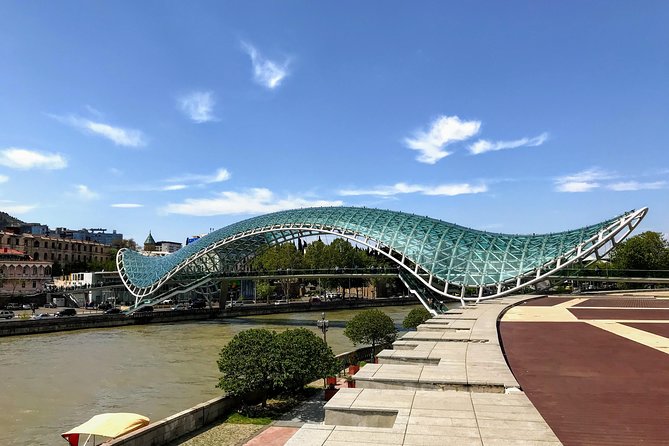
- Bridge of Peace gives you a modern landmark moment over the Mtkvari River
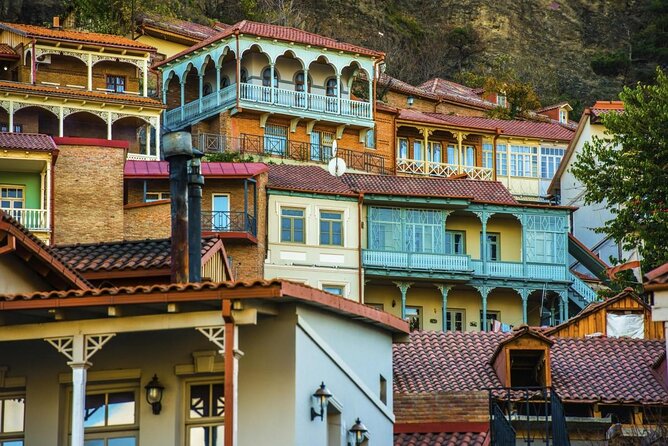
- Old Town Tbilisi and Shardeni Street are where the walking slows down naturally
- Guides flex your pace, including family-friendly handling if you’re traveling with kids
Price, pace, and what $41 buys you
At $41 per person for about 1.5 to 2 hours, this is the kind of tour that works when you want the essentials without turning your day into logistics. You get a local guide and a private tour format, plus a one-way cable car ride. If you’re paying for convenience, this one earns it.
The value gets even better because most of the sights on the route are listed with free admission. That means you are not constantly pulling out your wallet. The only big extra you might consider is the aerial tramway, which is explicitly marked as not included.
Pace is the real make-or-break. The tour is walking-heavy but not a grind, and the guides adjust to your speed. If you love fast photo stops, you’ll likely move through briskly. If you like lingering, you’ll still cover a lot, especially around Old Town.
More walking tours in Tbilisi:
- Tbilisi Walking Tour Including Cable Car and Traditional Bakery
★ 5.0 · 1,310 reviews - Tbilisi: City Highlights Guided Walking Tour
★ 4.9 · 1,114 reviews - Tbilisi:Evening Walking & Talking Tour with Wine & Boat Ride
★ 5.0 · 572 reviews
Starting at Freedom Square, the city’s name-changing crossroads
You meet at 2 Freedom Square in the center of Tbilisi, at the eastern end of Rustaveli Avenue. It’s a useful start point because it’s central, easy to reach, and it puts you right where locals start talking about the city.
Freedom Square has had several identities under different powers, including Erivansky and Paskevich-Erivansky Square under Imperial Russia, Beria Square and Lenin Square under the Soviet Union. That matters because your guide uses this as a fast primer on how layers of politics shaped the city you see today.
If you are a first-timer, I like this start because it gives you context before you start chasing landmarks. You’ll know what you are looking at, not just where it is.
Wall ruins and the 6th-century Anchiskhati Basilica
From Freedom Square, you move to Tbilisi Wall Ruins. It’s not a full museum experience, it’s more like a time slice of the old city. For me, these kinds of stops are what turn a new place from a postcard into a lived-in city.
Next is Anchiskhati Basilica of St Mary, described as the oldest surviving church in Tbilisi and dating to the sixth century. That age detail is big. Even if you are not a church-architecture person, stepping into a space that old helps your brain scale the city properly.
Practical note: since this is a place of worship, dress requirements apply. If you are traveling in warmer weather, it’s still worth packing a light layer that covers shoulders and knees.
Bridge of Peace: a modern viewpoint over the Mtkvari
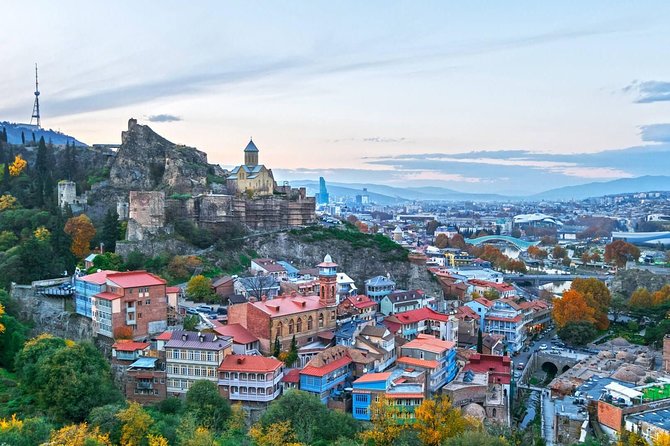
Then comes a jump forward in time, the Bridge of Peace, one of Tbilisi’s newest attractions opened in 2010 over the River Mtkvari, also called the Kura River. This is one of those stops where the city stops feeling purely historical and starts looking like it has momentum.
The bridge is especially good for first-timers because it naturally frames views. You get the sense of how Tbilisi threads together hills, neighborhoods, and river edges. It also helps you understand why later stops feel so dramatic once you know where the river cuts the city.
If you’re into photos, this is a high-return spot. If you’re not, it’s still worth the walk because it reorients you.
A few more Tbilisi days worth putting side by side
- Tbilisi: Day Trip to Kazbegi, Gudauri, Gergeti, and Ananuri
★ 4.9 · 3,203 reviews - Day Trip to Kakheti Wine Region Including 9 Wine Tastings
★ 5.0 · 2,774 reviews - Highlights of Caucasus Mountains-Jinvali,Ananuri,Gudauri,Kazbegi(Group tour)
★ 5.0 · 2,682 reviews - From Tbilisi: Kakheti Wine Region Tour with 9 Wine Tastings
★ 4.9 · 2,541 reviews
Sayat-Nova, Armenian culture, and St Kevork’s shadow
You’ll see the Monument of Sayat-Nova, devoted to the Armenian poet and musician and famous ashugh Sayat-Nova (Harutyun Sayadian). The details around the monument connect music, exile, and survival.
The sculpture is situated near the northern wall of St Kevork Armenian church. It’s also tied to a specific story: Sayat-Nova hid with other Christians during the shah Aga Mohamed Kadjar attack in 1795. He was killed on the doorstep of that church and is buried there.
This stop is where a good guide really matters, because the monument is more meaningful when you understand the human story behind it. If you like cultural context, this is a strong point in the walk.
Old Town Tbilisi and Shardeni Street, where the city slows down

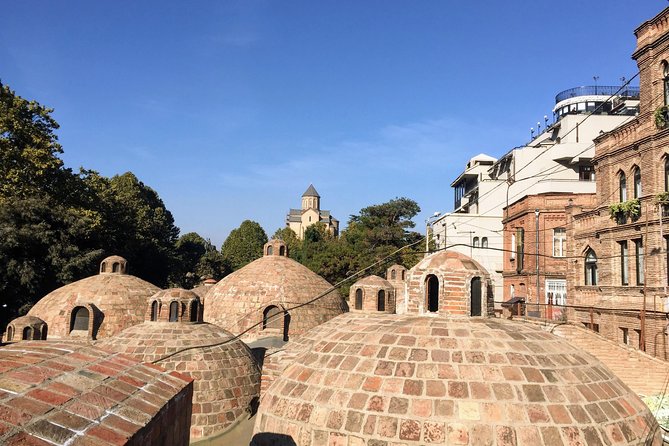
Next you hit Old Town Tbilisi, with about an hour set aside. Old Town is where Tbilisi feels most like itself: old buildings, small streets, theater energy, and plenty of places to eat. This is the segment where you can control your experience. If you want snacks and people-watching, you can. If you prefer quiet photo corners, you can still find them.
After that, you move to Jan Shardeni Street, a well-known pedestrian street that many visitors treat as a must. It’s one of the simplest ways to feel the local rhythm without needing a full schedule of separate attractions.
I like pairing Old Town with Shardeni Street because it balances texture and payoff. Old Town gives you the bigger atmosphere, then Shardeni Street gives you the classic, walkable highlight.
Puppet theater and cinema culture you can spot without trying
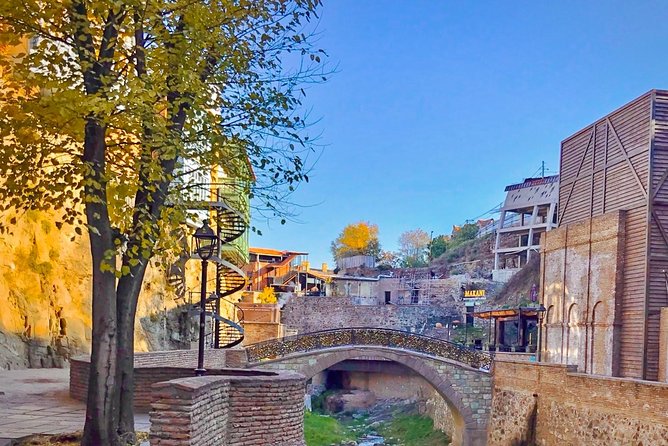
Two quick stops deepen the culture side of the walk.
First is Rezo Gabriadze Marionette Theater, opened in 1981. It’s loved enough that it keeps showing up in Tbilisi cultural talk, and your guide uses it as a gentle reminder that the city is not only churches and monuments.
Then you’ll see Sergey Paradzhanov’s monument. Sergey Paradjanov is linked to film masterpieces that brought him worldwide praise, including Shadows of Forgotten Ancestors, The Colour of Pomegranates (also associated with Sayat-Nova), The Legend of Suram Fortress, and Ashik-Kerib. The point here is not film trivia. It’s that his art shaped an identity for the region, and Tbilisi still honors him in public space.
If you enjoy arts, you’ll appreciate these stops as breathing room from the religious and architectural sites.
Cable car to Rike Park and the Narikala connection
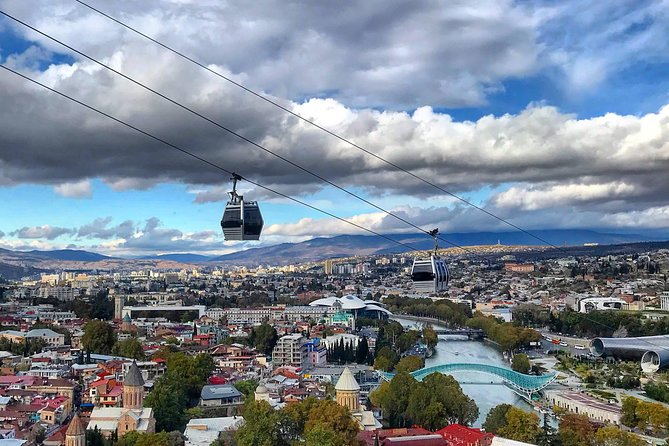
Later, you reach the area that sets up your included one-way cable car ride. The cable car moment matters because it changes your perspective in a hurry. You go from street-level to looking over the city, which helps you see how the hills and viewpoints work.
Right nearby is Rike Park, a public recreation space popular with families, tourists, and residents out for a stroll. It’s a good spot to take a short break, use the restroom if you need one, and watch the river and streets from a calmer zone.
You also see a quirky photo stop called Sculpture the Toaster, a man holding a horn modeled on an ancient Colchian statuette nicknamed tamada. It’s fun, and it gives the walk a lighter tone right before you head back toward more serious landmarks.
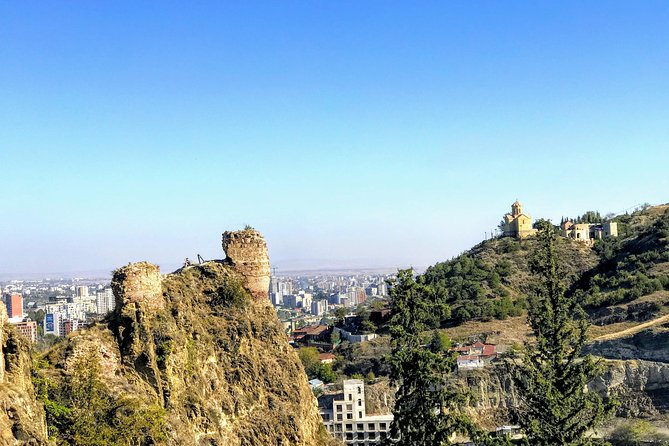
If you’re tempted by more ride options, there is an aerial tramway in Tbilisi on the route plan. It connects Rike Park with Narikala fortress, and it opened in 2012. Just know the aerial tramway ticket is not included.
Faith stops: Sioni Cathedral, Jumah Mosque, and Metekhi Cathedral
This tour includes multiple worship sites, and that’s a big part of why it feels like a real cultural orientation rather than just sightseeing.
You visit Sioni Cathedral Church, the Georgian Orthodox cathedral of the Dormition. It follows a tradition of naming churches after places in the Holy Land, so the church bears the name of Mount Zion at Jerusalem. For first-timers, this stop helps you connect Georgian Orthodox tradition to the wider Christian story.
Then comes Jumah Mosque, also known as the Friday Mosque. It is in the heart of Old Town, and you might not realize it is a mosque at first glance due to its architecture. It’s also noted for being one of the rare mosques where Shias and Sunnis pray together. The good part for visitors is that it is open to people of all religions or beliefs.
Finally, you reach Metekhi Cathedral, a 12th-century temple near the rocky bank of the Kura River. It’s a classic Tbilisi perch, and the setting is part of the experience.
For all of these, remember the dress code: no shorts or sleeveless tops, knees and shoulders must be covered. Even if the weather is hot, I’d rather be uncomfortable for ten minutes than risk losing access.
Kartlis Deda, monuments, and the legend behind the city fountain
Two more monument stops help you read Tbilisi at street level.
Kartlis Deda is a statue on top of Sololaki hill, erected in 1958 to mark Tbilisi’s 1500th anniversary. The sculptor listed here is Elguja Amashukeli. It’s a 20-meter aluminum figure of a woman in Georgian national dress. You’ll understand the city’s symbolism faster once you see it in place.
Then there is the Monument Fountain Falcon and Pheasant. It’s tied to a legend about how Tbilisi was established in the 5th century by King Vakhtang Gorgasal. Even if you treat the legend lightly, it’s a clever way to connect local storytelling to public space.
These are also great pauses when your legs are starting to argue with your schedule.
Souvenirs, the sulphur waterfall, and Meidan Bazaar shortcuts
Not every stop is a landmark. Some are practical.
You visit Meidan Bazaar, and it’s a smart choice if you want souvenirs without hunting for them for hours. This is the kind of stop that saves time, especially if your energy is already half spent on walking and photos.
Next is Dzveli Tbilisi Sulphur Waterfall, described as a real waterfall in the city center. It’s hard to explain why this feels so satisfying until you see it. Even if you’re not into geology, it’s a memorable sensory stop, and it adds variety when the rest of the route leans architectural.
Finally, you end back at the meeting point at Freedom Square. Having the route loop back matters because it reduces stress. You’re not wondering where you’ll be dropped.
What makes the guide factor so important here
I noticed a theme in the strongest feedback: the guide can make or break a walk like this because your time is limited.
Names like Gio and Jonah come up for keeping things personal and adjusting to you. Aleksi is praised for patience, especially with a toddler, which matters because it shows you can slow down without losing the tour spirit. Tamar is specifically linked to passion for the city and sharing food advice, which is useful because it helps you eat well after the walking ends. Sofi gets kudos for helping find souvenirs and answering questions, and that is exactly what first-timers need.
So when you book, treat this as an orientation tool. You’re not just buying access to monuments. You’re buying someone to help you connect the dots quickly.
Who should book this walking tour
This tour fits best if you:
- Are visiting Tbilisi for the first time and want a high-return walking overview
- Prefer a guided route that covers many key areas in under two hours
- Want a mix of culture, faith sites, markets, and viewpoint moments
- Like flexibility in pace, especially if your group includes kids or mixed walking speeds
It might not be ideal if you:
- Struggle to walk and climb at a moderate level, since the route is still a city walk
- Forget the dress code for churches and museums, because that can affect entry
Should you book Tbilisi Explorer?
Yes, if you want the essentials in a short window. The $41 price feels fair because it includes a guide and a one-way cable car, and many stops have free admission. That’s a rare combo in a tight timeline.
I’d book it early in your trip, not on your last day. You’ll get a mental map, then you can choose where to return for longer.
If you are ready to dress appropriately for worship sites and you want a guided walk that feels personal, this is one of the smarter uses of a few hours in Tbilisi.
FAQ
How long is the Tbilisi Explorer walking tour?
It runs about 1 hour 30 minutes to 2 hours.
Is this tour private?
Yes. It is private, so only your group participates.
What’s included in the price?
You get a local guide, a private tour, and a one-way cable car ride. A mobile ticket is also part of the experience.
What is not included?
Hotel pick-up is not included. The aerial tramway in Tbilisi is also not included.
Where is the meeting point?
You meet at 2 Freedom Square, Tbilisi, Georgia.
Does the tour require a specific language?
The tour is offered in English.
Are there admission fees for the stops?
The stops on the route are listed with free admission tickets. The aerial tramway is the one noted as not included.
What dress code should I follow?
A dress code is required for places of worship and selected museums. No shorts or sleeveless tops are allowed, and knees and shoulders must be covered.
Is the tour suitable for everyone physically?
It requires moderate physical fitness level.
What if the weather is poor, or I need to cancel?
The experience requires good weather. If it’s canceled due to poor weather, you will be offered a different date or a full refund. You can cancel for a full refund up to 24 hours before the experience starts.
Recently reviewed around Tbilisi
- Tbilisi City Tour★ 4.5 · 3 reviews
- Tbilisi City, Jvari Monastery, Uplistsikhe caves, Mtskheta city Private Day Trip★ 4.5 · 3 reviews
- Tbilisi City Tour with Street Photography★ 5.0 · 3 reviews
- Wild Georgia 4WD PACK Adventure through Kakheti and Kazbegi 2in1★ 5.0 · 3 reviews
- Private Trip to Tbilisi and Mtskheta – Cultural Capitals★ 5.0 · 3 reviews
- Tbilisi Airport to Gudauri, Bakuriani, Batumi, Tbilisi★ 5.0 · 3 reviews
- Private Adorable City Tour of Tbilisi★ 5.0 · 3 reviews
- Tbilisi and Mtskheta cities private, cultural tour★ 5.0 · 3 reviews
Walking Tours, compared.
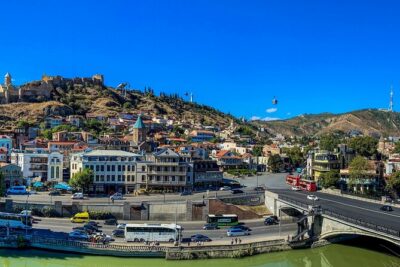
Tbilisi Walking Tour Including Cable Car and Traditional Bakery
Read our review →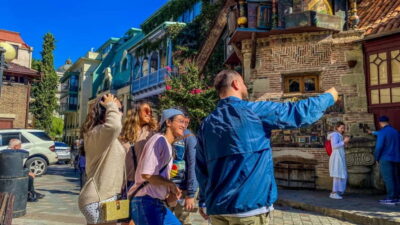
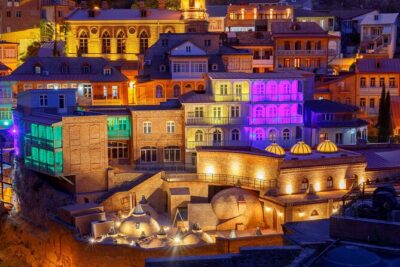
Evening Walking & Talking Tour with Wine & Boat Ride
Read our review →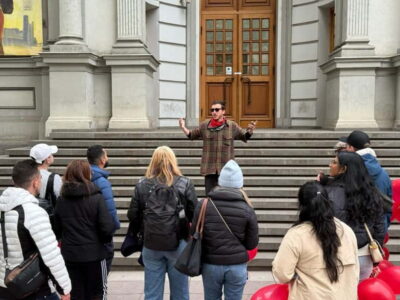
Evening Walking Tour with Wine & Boat Ride Options
Read our review →
Old Tbilisi Highlights walking tour with wine & 10 tastings
Read our review →
Old Tbilisi Tour: Private Walking Tour With Wine Tasting
Read our review →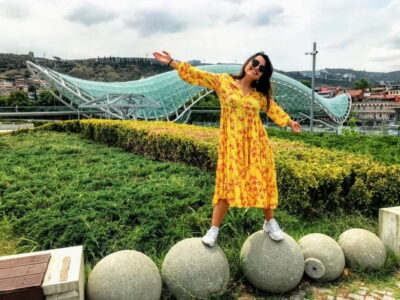

Private Tbilisi Food Tour: 9 Tastings Walk in Bohemian District
Read our review →Browse the lists this tour appears in