
Reviewed · WALKING TOURS
Revolutionary Tbilisi Walking Tour
What makes the Revolutionary Tbilisi Walking Tour interesting is how it turns major buildings into evidence of power, protest, and repression. I like the focus on the 1900 to 1921 revolutionary period and the Bolsheviks vs Mensheviks split. I also love that the tour gives you a real sense of cause and consequence, not just names on plaques. The one drawback to consider: the subject matter is political and it is not suitable for kids under 12 or for wheelchair users.
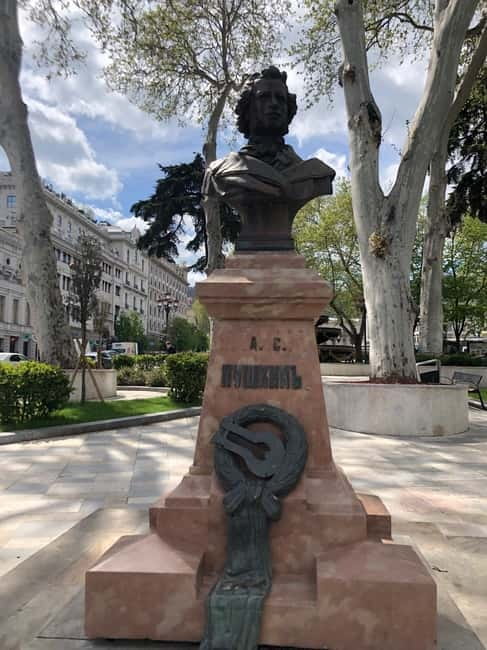
You start at Pushkin Square and finish at 9 April Park, which helps the walk feel efficient and purposeful. The main tour is listed at about 2 hours, in English, and then there is an optional add-on to go underground for the illegal printing press museum.
This is not a casual stroll. You are talking about State Duma history, harsh repressions, and symbolism of imperialism, so come ready to listen. Also, follow the simple rules: no alcohol or drugs, and bare feet are not allowed.
Key things I’d clock before you go
- Tiflis Spiritual Seminary tied to revolutionaries, not just a pretty facade
- State Duma and repressions explained through late Tsarist Caucasus context
- Viceroy’s Palace presented across Tsarist, Menshevik, and Soviet eras
- Imperialism symbolism you can actually spot on the buildings and monuments
- A stone memorial to the fallen heroes of the revolutions as a emotional stop
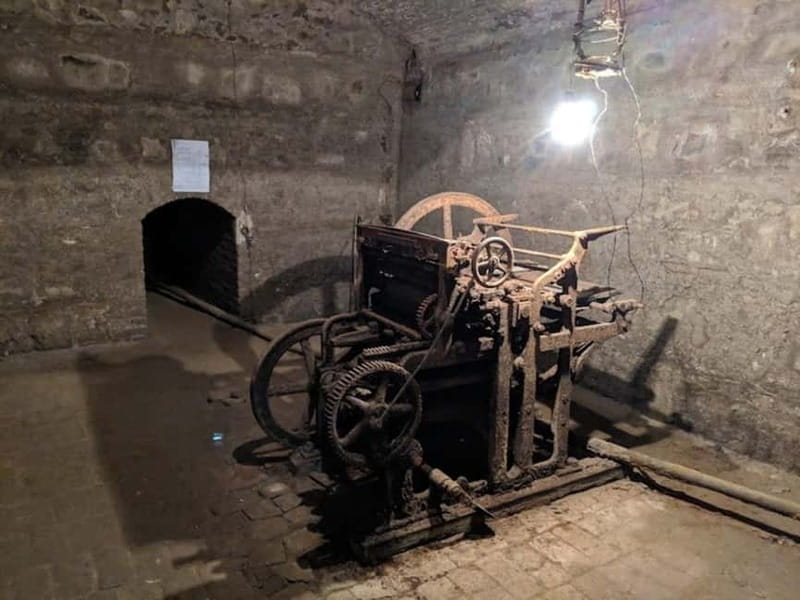
- The option to add the underground illegal printing press museum for extra cost
Revolutionary Tbilisi, the 1900 to 1921 story you don’t stumble into by accident

Tbilisi looks old in the best way, with layers stacked like stone. But this tour goes after a very specific slice of time, roughly 1900 to 1921, when the revolutionary movement in Georgia took a shape that felt different from other parts of the empire.
The big idea is straightforward. You get the socioeconomic pressures of the late Tsarist Caucasus, then you track how different revolutionary groups formed and split into two major factions, the Bolsheviks and the Mensheviks. You do not just memorize dates. You see how policies, priorities, and methods could change outcomes on the ground.
If you like history that explains how ordinary people got pulled into big events, you will probably enjoy this. If you want only comforting, patriotic storytelling, you might find it tense. The tour does not shy away from the ugly parts, including repressions and the illegal activities revolutionaries used to survive.
More walking tours in Tbilisi:
- Tbilisi Walking Tour Including Cable Car and Traditional Bakery
★ 5.0 · 1,310 reviews - Tbilisi: City Highlights Guided Walking Tour
★ 4.9 · 1,114 reviews - Tbilisi:Evening Walking & Talking Tour with Wine & Boat Ride
★ 5.0 · 572 reviews
Pushkin Square to 9 April Park, a route built for an efficient history lesson
Your walk begins at Tbilisi Pushkin Square. That’s a sensible start because you can find it easily and get oriented fast, even if you are still waking up your legs.
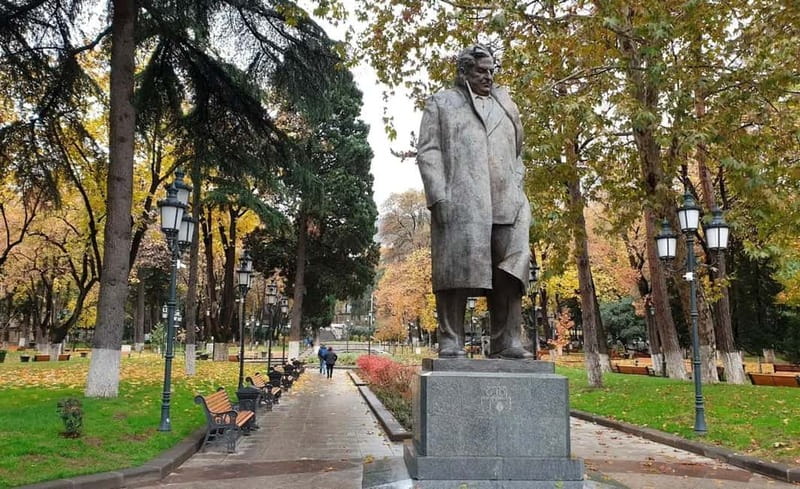
The tour ends at 9 April Park. Finishing at a park sounds pleasant, but here it is also about closure. The stop ties into the revolutionary memorial theme, so the last minutes do not feel like you were just dropped off.
Timing matters for this kind of topic. The experience is listed at about 2 hours, and the tour itself focuses on multiple major stops. If you choose the underground press add-on, expect extra time and extra logistics, because you will also use the metro for that portion.
Tiflis Spiritual Seminary, the school connection that changes how you read the city
One of the strongest hooks is the stop at the Tiflis Spiritual Seminary. The key point is simple: it is tied to the idea that famous revolutionaries graduated from this kind of institution. That fact matters because it breaks the stereotype that revolutionary thinking always came from the outside.
Instead, the seminary connection lets you ask better questions. What did people learn in formal settings? How did education shape their worldview? And how do empires sometimes train the very people who challenge them?
This is also where the tour’s approach shows. You are not just told that revolution happened. You get some of the social and institutional conditions that let revolutionary ideas spread, and how those conditions connected to broader patterns in the late Tsarist region.
City Hall stop, State Duma politics and the reality of repressions
From the seminary thread, the tour moves into the political machinery, including Tiflis City Hall and the history connected to the State Duma. This is where you start seeing how government and opposition interacted, including the harsh side of imperial rule.
The tour framework includes talk of “horrible repressions.” That wording is not an accident. The message is that repression was not background noise. It was part of the system, and it shaped what revolutionary groups could do, where they could organize, and how urgently they had to act.
If you are the type who likes policy and people together, this segment is good. You can usually tell when a historical tour is skipping details to keep things upbeat. This one keeps the focus on consequences, including what different approaches produced later.
A few more Tbilisi days worth putting side by side
- Tbilisi: Day Trip to Kazbegi, Gudauri, Gergeti, and Ananuri
★ 4.9 · 3,203 reviews - Day Trip to Kakheti Wine Region Including 9 Wine Tastings
★ 5.0 · 2,774 reviews - Highlights of Caucasus Mountains-Jinvali,Ananuri,Gudauri,Kazbegi(Group tour)
★ 5.0 · 2,682 reviews - From Tbilisi: Kakheti Wine Region Tour with 9 Wine Tastings
★ 4.9 · 2,541 reviews
Viceroy’s Palace across Tsarist, Menshevik, and Soviet eras
The Viceroy’s Palace stop is a turning point because it lets the same building tell multiple stories. You hear it discussed in relation to Tsarist rule, then later Menshevik and Soviet eras.
That is a powerful way to learn history because architecture holds onto power. Even when the official faces change, the structure stays. It helps you grasp how institutions evolved rather than resetting completely.
The tour also flags symbolism of imperialism, which makes the palace feel less like a postcard stop. You are encouraged to read the symbolism tied to dominance, authority, and how empires communicated status through monuments, buildings, and public space.
One practical note: palace stops usually involve standing and looking. If you want to take photos, plan to pause. If it’s hot or windy, keep your pace slow and let the guide’s narration land.
Alexander’s Park and the fallen-heroes stone, where the story gets human
At Alexander’s Park, the tour shifts into memorial mode with a stone dedicated to the fallen heroes of the revolutions. This is where the content stops being only political analysis and becomes something more personal.
Even if you do not share every ideology discussed, memorials create a different kind of attention. You start thinking about the cost, the lost lives, and how movements remember themselves after the fact.
In this segment, you also see how “public space as political space” works. Parks look neutral, but here it is a stage for meaning. The tour uses that to connect the earlier talk about repression and factional choices to what people ultimately paid.
I like that the tour does not pretend history is tidy. It treats the memorial as part of the argument, not an afterthought.
The optional underground illegal printing press museum, the best add-on for the curious
If you have any itch to understand how revolutions actually worked day to day, this add-on is where you scratch it.
The underground illegal printing press museum is not included in the main tour, and it comes with additional cost. You will also use the metro for this portion, and it includes guided time plus free time for you to explore on your own for about an hour.
Why does this matter? Because printing presses were not just equipment. They were infrastructure for ideas. The tour frames revolutionary groups as taking illegal activities to keep organizing and communicating, especially when legal pathways were blocked or dangerous.
This is also the stop that shows up again and again as a recommendation. If you skip it, you can still understand the main political story. If you add it, you get the behind-the-scenes side: the practical labor of propaganda, the secrecy, and the risk.
Practical tip: give yourself time. This add-on changes the feel of the day from “walk and learn” to “walk, learn, then spend time inside.”
How the Bolsheviks vs Mensheviks split changes what you notice at every stop
The tour is built around the idea that Georgia hosted a major social democratic movement within the Russian Empire, and that it did not march in one single line. Instead, revolutionary groups divided into Bolsheviks and Mensheviks, and their different policies led to different consequences.
This matters while you are walking because you start recognizing contrasts in how the tour explains events. When one faction is discussed, it is not just a name. You get the logic behind their approach and what that approach cost or enabled.
I find that this framework makes the city feel more readable. You start connecting the dots between institutions, public space, and what people were trying to achieve. Even if you have read other Russian Empire history, the Georgia angle is useful because it shows how local conditions shaped outcomes.
The guide factor, Giorgi’s storytelling and strong English
A walking tour lives or dies on the guide. This one has a clear strength: the guide Giorgi (often called Gio) is described as prepared, friendly, and strong in English.
What I like in the way the tour is set up is that the guide does not treat your questions like an interruption. The conversations are part of the experience, and you get answers that try to connect past events to what Georgia deals with today.
That does not mean the tour becomes propaganda. It stays rooted in the historical stops, but it gives context for why the topic still feels alive. If you enjoy asking follow-ups and getting straight answers, you will probably feel like the guide is playing on your level.
One more detail that shows the guide’s style: the narrative is described as immersive in the sense that it makes you see the city’s corners as evidence. You are not only hearing about the past, you are being trained to notice traces and meaning in places that might otherwise seem ordinary.
Price and value, $30 for the main route, plus the press add-on if you want the full picture
At $30 per person, the main tour is priced for what you get: a guided, English-language walk to multiple major revolutionary-era sites plus a coherent storyline about politics, factions, and repression.
Two things affect value for you. First, the tour does not include everything. The underground illegal printing press museum costs extra, and metro transportation is not included. Second, the tour is short enough that it stays focused, rather than turning into a long slog of stops.
So here’s my practical take. If you want the essentials and you are mainly after the public-architecture story, the main route is a solid value. If you want the nitty-gritty of how revolutionaries operated, the extra cost for the printing press is worth planning for.
Also, English matters here. A strong English guide for a specialized topic is not a small benefit. In this case, it is one of the tour’s most praised features.
Who this walking tour is for, and who should skip it
This tour is best for adults and older teens who enjoy history tied to politics and ideas. The focus on social democracy, the Bolshevik and Menshevik split, repression, and illegal organizing makes it ideal if you like learning how movements form and why they diverge.
It is also a good fit if you like a “read the city” approach. The tour encourages you to see buildings and monuments as documents of power, including the symbolism of imperialism.
What to watch: it is not suitable for children under 12, and it is not suitable for wheelchair users. If mobility is an issue for you, you should also think about standing and walking time since this is a walking tour with major outdoor stops.
Should you book Revolutionary Tbilisi Walking Tour?
Book it if you want a focused, English-guided walk that connects Georgia to a major revolutionary chapter from 1900 to 1921. I’d especially recommend it if you enjoy the contrast between ideology and lived reality, because the tour uses sites tied to education, government power, imperial symbolism, and memorial memory.
Consider skipping or rethinking the plan if political history makes you disengage fast, or if you need wheelchair-friendly accessibility. Also, if you know you will want the full story of how revolutionary messaging was spread, plan for the optional underground illegal printing press museum so you do not feel like you missed the most hands-on piece.
FAQ
Where does the Revolutionary Tbilisi Walking Tour start?
The tour starts at Tbilisi Pushkin Square.
Where does the tour end?
The tour ends at 9 April Park.
How long is the main walking tour?
The tour duration is listed as 2 hours.
How much does it cost?
The price is $30 per person.
Is the tour offered in English?
Yes, the live tour guide is available in English.
What sights are included in the tour price?
All of the sights are included except the Underground Illegal Printing Press.
What is not included?
The Underground Illegal Printing Press is not included, and transportation (metro) is also not included.
Can I extend the tour to the underground printing press?
Yes. For an additional cost, you can extend the tour to the Underground Illegal Printing Press.
Are there any rules for participants?
Alcohol and drugs are not allowed, and bare feet are not allowed.
Is it suitable for children or wheelchair users?
It is not suitable for children under 12, and it is not suitable for wheelchair users.
Recently reviewed around Tbilisi
- Tbilisi City Tour★ 4.5 · 3 reviews
- Tbilisi City Tour with Street Photography★ 5.0 · 3 reviews
- Tbilisi City, Jvari Monastery, Uplistsikhe caves, Mtskheta city Private Day Trip★ 4.5 · 3 reviews
- Private Trip to Tbilisi and Mtskheta – Cultural Capitals★ 5.0 · 3 reviews
- Wild Georgia 4WD PACK Adventure through Kakheti and Kazbegi 2in1★ 5.0 · 3 reviews
- Tbilisi Airport to Gudauri, Bakuriani, Batumi, Tbilisi★ 5.0 · 3 reviews
- Private Adorable City Tour of Tbilisi★ 5.0 · 3 reviews
- Tbilisi and Mtskheta cities private, cultural tour★ 5.0 · 3 reviews
Walking Tours, compared.
Tbilisi Walking Tour Including Cable Car and Traditional Bakery
Read our review →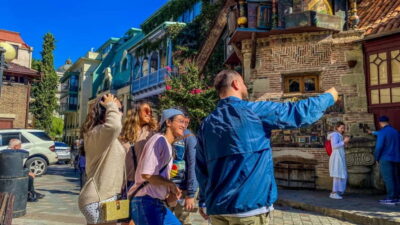
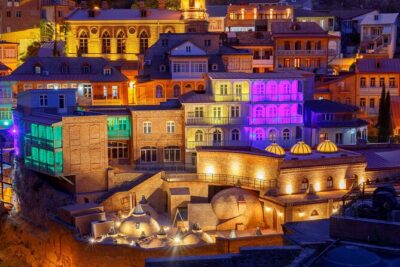
Evening Walking & Talking Tour with Wine & Boat Ride
Read our review →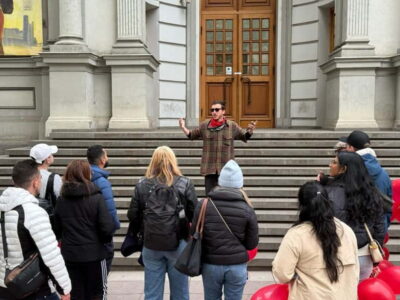
Evening Walking Tour with Wine & Boat Ride Options
Read our review →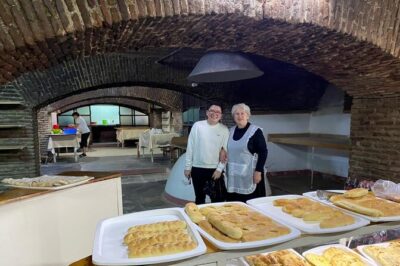
Old Tbilisi Highlights walking tour with wine & 10 tastings
Read our review →
Old Tbilisi Tour: Private Walking Tour With Wine Tasting
Read our review →

Private Tbilisi Food Tour: 9 Tastings Walk in Bohemian District
Read our review →Browse the lists this tour appears in