
Reviewed · MTSKHETA ANCIENT CAPITAL
Private Walking Tour in Tbilisi and Mtskheta Old Town
This tour is interesting because it strings together two places that feel like different chapters of Georgian life, Tbilisi’s old neighborhoods and then the ancient capital of Mtskheta. In just a half day, you move from major churches to city viewpoints, then finish with a hilltop perspective over the rivers. With your guide Giorgi, you’ll get clear context for what you’re seeing, not just a list of stops.
I especially love how efficiently the route hits standouts like Anchiskhati Basilica and the cable car ride, so you get both street-level walking and real “look at this” views. I also like the way the stops connect through themes, including the long shadow of King Vakhtang Gorgasali and Georgia’s layered religious landscape.
One consideration: the pacing is active. It’s a walking tour with viewpoint stops and a private car transfer to Mtskheta, so you’ll want comfortable shoes and a bit of stamina for uneven stone streets and hillside areas.
Key points to know before you go
- Oldest Tbilisi landmark first: Anchiskhati Basilica sets a strong opening tone.
- Religious history, side by side: Sioni Cathedral’s area connects multiple faith sites in a very real, walkable way.
- A named street with a story: Jan Shardeni Street links Tbilisi’s old and newer life under Chardin’s name.
- Cable car included: You get high Old Town views without having to plan extra ticket time.
- King Vakhtang Gorgasali thread: His influence shows up again at Metekhi and Narikala.
- Mtskheta from both river and hill: Jvari’s river confluence views plus Svetitskhoveli back in the city.
A half-day route that actually makes sense in 4 to 5 hours
If you’re short on time, this kind of focused route is gold. You’re not wandering randomly through Tbilisi and hoping you hit the right churches. Instead, you follow a path that builds momentum, starting with some of the city’s earliest Christian roots, then moving into the viewpoints that explain why Tbilisi and Mtskheta were built where they were.
The best part is that the day doesn’t feel like a checklist. The stops are short, but the stories connect. You’ll see how people lived next to one another, why certain sites matter for Georgia’s political and religious shifts, and why the landscape shapes the skyline.
You also get a practical rhythm: walk in the historic areas, then use a private ride to get to Mtskheta without wasting the middle of your day on transit.
More Mtskheta tours from Tbilisi:
- Tbilisi: Mtskheta, Jvari, Gori and Uplistsikhe Day Tour
★ 4.9 · 2,396 reviews - Day Trip to Mtskheta Gori and Uplistsikhe
★ 5.0 · 1,801 reviews - Tbilisi: Mtskheta Jvari Bazaar, Chronicles of Georgia & Wine
★ 5.0 · 1,088 reviews
Liberty Square start, private ride to Mtskheta, then back to Tbilisi
The tour starts around Liberty Square, and from there you work through key Tbilisi Old Town sites on foot. After that, your group transfers by private car to Mtskheta, which takes about 30 minutes. Once you finish the Mtskheta portion, the tour returns to Tbilisi by car.
That private-car transfer matters more than it sounds. It keeps the day efficient, and it also lets your guide maintain the flow of the story as you shift from Tbilisi’s city life to Mtskheta’s religious and historic gravity. You’re not stuck timing buses, and you’re not forced into long detours.
If you like having the day tailored to your pace, this is a private experience, meaning it’s only your group. Even on a busy sightseeing day, you won’t feel shuffled into the crowd.
Anchiskhati Basilica: oldest Tbilisi, and a strong “why here” opener
You start at Anchiskhati Basilica, widely known as the oldest building in Tbilisi. It’s a free stop and quick in duration, so don’t expect a long stay. Instead, think of it as orientation. You’re thrown into the idea that Tbilisi did not just spring up as a modern city. It has roots that reach back far enough to shape how people think about the present.
The value here is perspective. When you begin with a site like this, later stops stop feeling disconnected. The churches you see afterward fit into a bigger timeline rather than feeling like standalone photo spots.
Practical tip: start your day by mentally tagging what you notice in each place, setting up a comparison as you move through the rest of the route.
Sioni Cathedral and the multi-faith neighborhood you can actually walk
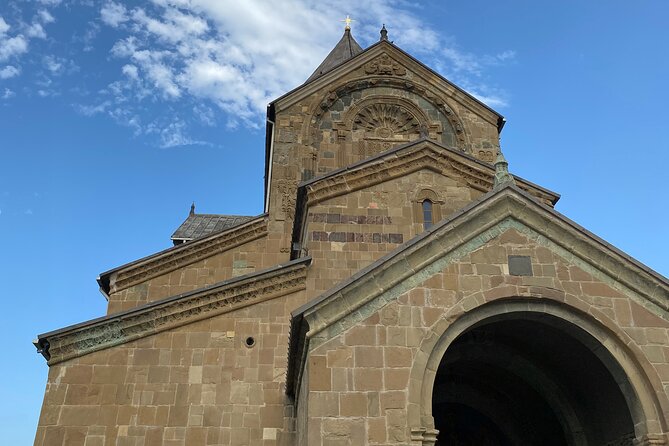
Next is Sioni Cathedral Church, another early cornerstone of Tbilisi’s religious landscape. What makes this stop more than a pretty church is the immediate surrounding context. Your walk includes seeing multiple nearby faith sites, all within the same area: a Muslim mosque, an Armenian church, a Jewish synagogue, and a Catholic church.
That’s the tour’s style at its best: you get to see religious history as part of city life, not as an abstract idea. Standing in this area, you can understand how places of worship can exist close together, and how geography and civic space influence what communities can build over time.
Admission is free, and the time here is short, so come ready to look up, notice details, and absorb the explanation quickly.
More walking tours in Tbilisi:
- Tbilisi Walking Tour Including Cable Car and Traditional Bakery
★ 5.0 · 1,310 reviews - Tbilisi: City Highlights Guided Walking Tour
★ 4.9 · 1,114 reviews - Tbilisi:Evening Walking & Talking Tour with Wine & Boat Ride
★ 5.0 · 572 reviews - Tbilisi: Evening Walking Tour with Wine & Boat Ride Options
★ 5.0 · 407 reviews
Jan Shardeni Street: where old and newer Tbilisi share the same sidewalk
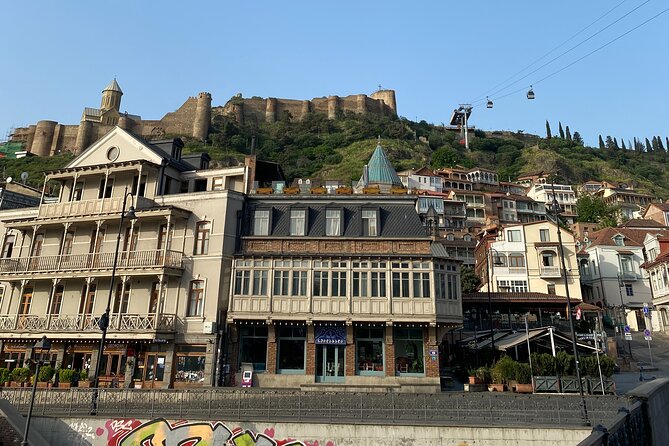
Then you head to Jan Shardeni Street, also known as the Jean-Baptiste Chardin street. This stop is brief, but it helps you connect the monuments to everyday life.
Here’s why I like it: it’s an easy way to understand that Old Town is not frozen. The tour frames the street as a place that shows a mix of old and newer lifestyles. So instead of treating Tbilisi as a museum, you see it as a living city with layers.
If you enjoy atmospheric street scenes, this is your “slow down for a minute” moment. It’s a good time to look around before you climb into the bigger viewpoint stops.
Metekhi Cathedral and King Vakhtang Gorgasali’s lasting footprint
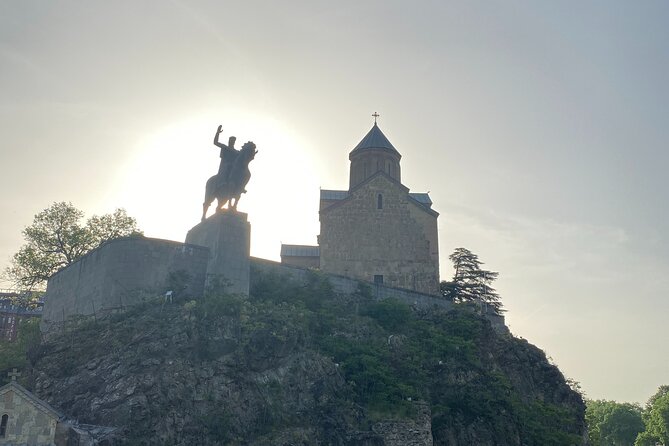
At Metekhi Cathedral, you’re on the left bank of the Mtkvari River. The setting matters because rivers are not background here, they are part of the logic of settlement.
In the cathedral yard, you’ll notice a statue of King Vakhtang Gorgasali, tied directly to key early building efforts in the region. The tour connects him to the strong castle and what’s described as the very first church there, linking Metekhi to the broader story you’ll see again later at Narikala.
This stop is useful because it shows you how rulers and symbolism can live on in public space, right where people walk every day.
Cable Car in Tbilisi: the included view break that feels worth it
You then ride the Tbilisi Cable Car, also called the Tbilisi aerial tramway. The ticket is included, and the main point is the view over Tbilisi Old Town.
This is the smart pacing move in the day. You get height and perspective without spending extra time negotiating stairs or searching for vantage points on your own. It also sets you up for Narikala, because once you’ve seen the city from above, the fortress makes more sense.
If you tend to skip cable cars because you worry they feel touristy, this one is still useful. It’s included, timed for sightseeing, and it helps you read the city’s shape as you continue.
Narikala Fortress: a skyline stop with deep historical links
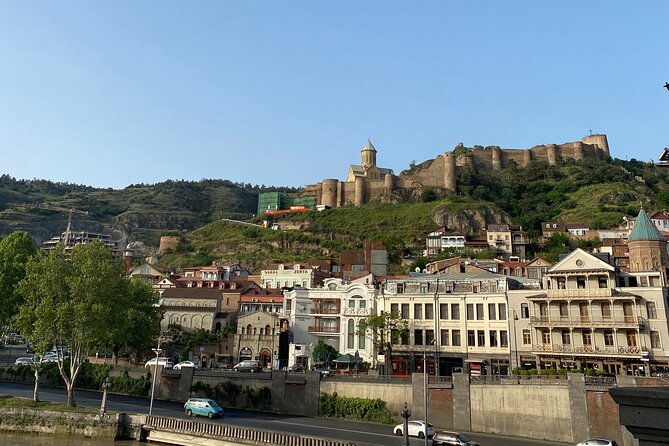
Next is Narikala Fortress, an ancient lookout over Tbilisi and the Mtkvari River. It’s a longer stop than the earlier church stops, giving you time to take in the surroundings and absorb why this place mattered.
What I like here is the connection to King Vakhtang Gorgasali again. The tour ties the first walls to his 5th-century work, which turns the fortress from a generic viewpoint into something anchored in early Georgian power and settlement.
Even if you’re not a “fortress person,” this part helps you understand Tbilisi’s defense logic and why high ground was valuable. You see the city’s layout, and you can start imagining how movement and control would have worked across the river.
Tip for your photos: plan to take a few wide shots early, then come back for details once you understand what you’re looking at from the angle you’re standing.
Jvari Church and the river meeting: the viewpoint that completes the story
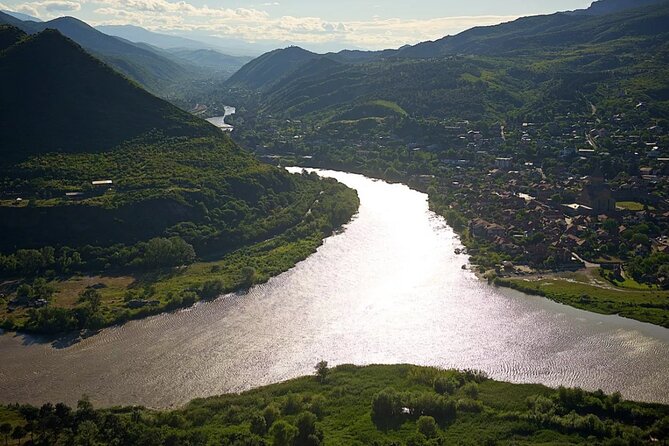
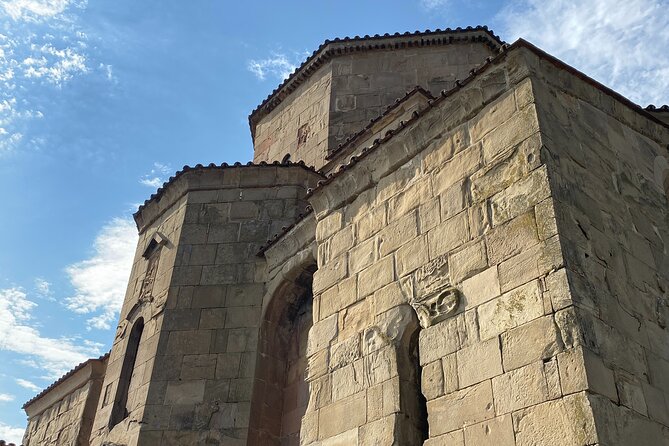
After the transfer to Mtskheta, the route climbs to Jvari Church. The building is described as 14th century, and it also includes ancient castle walls. What you really go for is the sightline: the meet of the Mtkvari and Aragvi rivers, plus a view of Mtskheta from above.
This stop is a lesson in why Georgia’s sacred sites were placed where they could “announce” the geography. From here, the landscape is part of the meaning, not just scenery.
Your time is about an hour. That’s enough to let the view sink in, and enough time for your guide to explain how Mtskheta fits into the bigger Georgian story without rushing you.
If you’re someone who likes quiet moments with context, this is one of the better stops for it. You’re not just taking photos. You’re learning how the view ties to history.
Svetitskhoveli Cathedral in Mtskheta: ancient capital energy and hilltop perspective
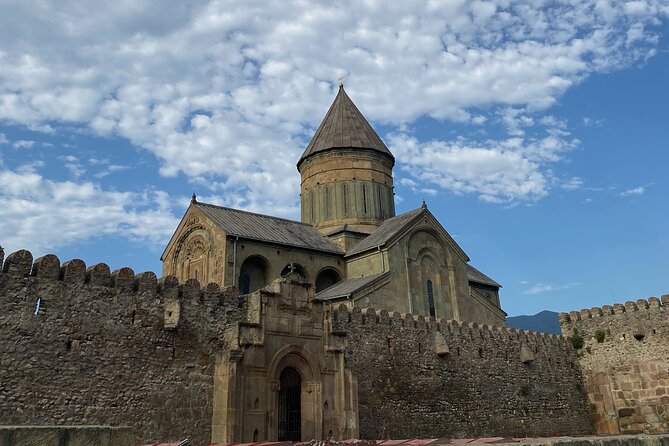
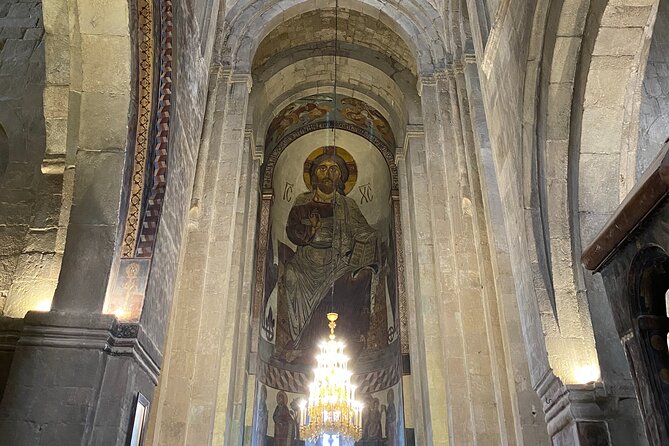
The tour finishes with Svetitskhoveli Cathedral. This part includes visiting what’s described as the most ancient capital of Georgia, then spending time at the cathedral itself. The stop also connects to sightseeing from the hills of Jvari Monastery.
What makes this ending satisfying is that it brings you back from the river viewpoint into a key civic and religious center. You’re not left with a final photo and a quick goodbye. You get to experience the place as a center of meaning, then look back outward again from a higher perspective.
Admission is free, and this combination of cathedral plus hill views is a strong final impression. It’s the kind of finish that helps you remember the day as a whole, rather than as separate points on a map.
Price and value: what $55 buys you, and what it doesn’t
At $55 per person for about 4 to 5 hours, the best value piece is the structure. You get a private tour, English language guidance, and pickup offered near Liberty Square. Then you get a private car transfer to Mtskheta.
On top of that, the route is packed with free admission stops, with one exception that’s specifically covered: the aerial tramway ticket is included. So you’re not paying add-ons just to get to the main viewpoints.
If you like traveling efficiently and you don’t want to spend your day figuring out tickets and timing, this price is reasonable for what you get. If you’re the type who prefers totally independent wandering and you’re comfortable using transit, you might find it less cost-effective. But if you want the “why” behind the “what,” the guide time is the part you’re paying for, and that’s usually where tours earn their keep.
Who this tour is best for (and who should skip it)
This works well if you:
- Want a guided framework for Tbilisi and Mtskheta without planning every detail
- Like history and politics in the background of everyday sites
- Prefer short stops with enough context to make photos and visits feel meaningful
- Enjoy viewpoint moments, especially when the tram ticket removes hassle
I’d skip it if you:
- Want a slow, long, open-ended day with lots of free time to explore on your own
- Dislike walking or hillside terrain, since the route includes churches and lookouts at elevation
- Expect a single long museum-style stop at each location
The route is built for people who like a tight itinerary that still feels human.
What it’s like with Giorgi, and what you’ll get out of the explanations
The guide’s impact is clear from the way the day connects themes. Giorgi helps you read the sites through history and the political background of Georgia, which matters because the overlap of churches, rulers, and city geography can be confusing if you’re seeing it cold.
You’ll also notice the tour doesn’t treat religion as a single lane. The Sioni area multi-faith setup is handled as a real part of the city’s story, and the connections to King Vakhtang Gorgasali repeat in different places so you start seeing patterns, not isolated landmarks.
That kind of teaching is especially helpful for first-time visitors. You’ll likely leave with a clearer sense of where power and belief shaped the city, then how Mtskheta became a focal point beyond Tbilisi itself.
Should you book this tour?
Book it if you want a smart, guided half day that links Tbilisi’s Old Town and Mtskheta’s viewpoints into one coherent story. The included cable car, the mostly free admission sites, and the private car transfer make this a practical choice for time-strapped travelers. You’ll also get a guide who connects the monuments to Georgia’s history and politics, not just architecture.
Don’t book it if you prefer to design your own route and you’re fine figuring things out without guidance. This tour wins because it saves time and adds meaning, especially at stops where context helps a lot.
If you’re making a first trip to Georgia and you want to see the main highlights without turning your day into logistics, this is a strong pick.
FAQ
How long is the private walking tour?
It lasts about 4 to 5 hours.
Where does the tour start?
It starts around Liberty Square, then you visit Tbilisi Old Town sites before going to Mtskheta.
Is pickup included?
Pickup is offered, with the start around Liberty Square.
Is the tour private?
Yes. It is a private tour, so only your group participates.
What language is the tour offered in?
The tour is offered in English.
Are admission tickets included?
Most admissions are free for the listed sites, and the aerial tramway ticket is included.
Can I cancel for a full refund?
Yes, you can cancel for free up to 24 hours in advance for a full refund.
Recently reviewed around Tbilisi
- Tbilisi City Tour★ 4.5 · 3 reviews
- Tbilisi City, Jvari Monastery, Uplistsikhe caves, Mtskheta city Private Day Trip★ 4.5 · 3 reviews
- Tbilisi City Tour with Street Photography★ 5.0 · 3 reviews
- Private Trip to Tbilisi and Mtskheta – Cultural Capitals★ 5.0 · 3 reviews
- Wild Georgia 4WD PACK Adventure through Kakheti and Kazbegi 2in1★ 5.0 · 3 reviews
- Tbilisi Airport to Gudauri, Bakuriani, Batumi, Tbilisi★ 5.0 · 3 reviews
- Private Adorable City Tour of Tbilisi★ 5.0 · 3 reviews
- Tbilisi and Mtskheta cities private, cultural tour★ 5.0 · 3 reviews
Mtskheta Ancient Capital, compared.
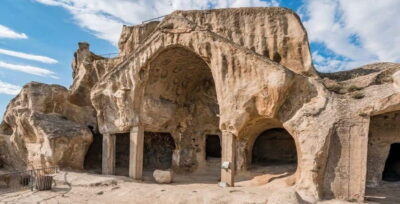
Mtskheta, Jvari, Gori and Uplistsikhe Day Tour
Read our review →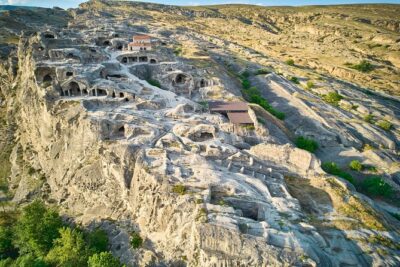
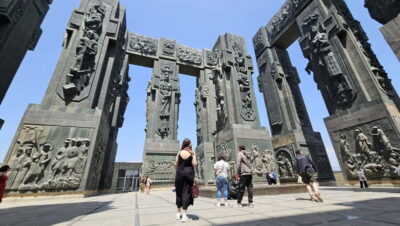
Mtskheta Jvari Bazaar, Chronicles of Georgia & Wine
Read our review →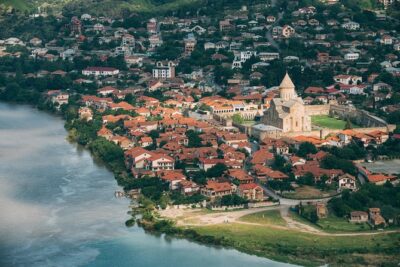
Mtskheta,Jvari,Bazaar,wine tasting,Chronicles of Georgia
Read our review →
The Chronicles of Georgia, Jvari & Mtskheta Tour
Read our review →
Browse the lists this tour appears in