

Reviewed · DAY TRIPS IN TBILISI
Private Walking Tbilisi City Tour (Day Trip)
Tbilisi is one of those capitals where religions, centuries, and styles overlap in a small area. This walking day trip is interesting because you get to move through that mix on foot, from Narikala down into Old Tbilisi, with stories that connect the city’s legends to real buildings. Multi-faith sights are part of the point, not a side detour.
I especially like two things. First, the route is built around the places that explain why Tbilisi looks the way it does, including the sulfur baths area and the Cathedral viewpoints. Second, you get bottled water and a professional guide, and the guides I’ve heard named, like Teimuraz and Temo, focus on details and keeping the group on track. One consideration: since it’s a walking city tour with no transportation included, plan for a full day on your feet, and know it can run a bit longer than the posted timing.
Key things you should know before you go
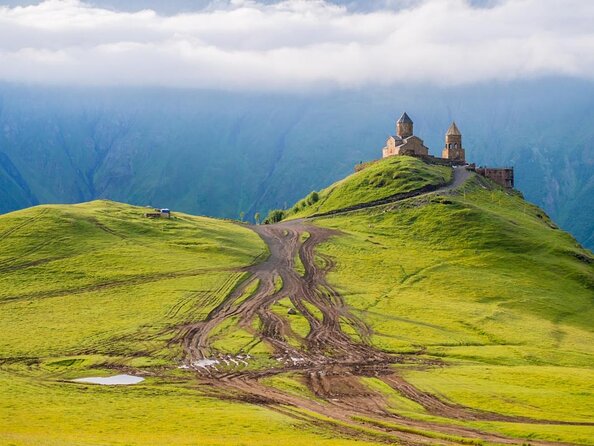
- A 6 to 7 hour walking route that connects hilltop views with Old Town streets and monuments
- Multi-faith stops that include a mosque area and the Great Synagogue of Tbilisi, plus several key churches
- Narikala fortress entry included, while other major sights listed are marked free
- Bottled water is included for each participant, which helps on a warm day
- English-language guiding and a group size capped at 100 travelers
- No transportation included, so bring comfortable shoes and expect walking between stops
A walking tour that shows Tbilisi in layers, not snapshots
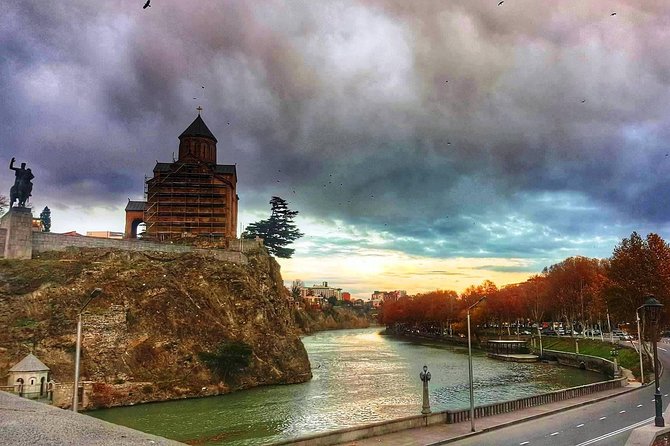
What makes this tour work is the pacing and the “why” behind the sights. You start high, with the old defensive logic of the city on display, then you gradually work your way down toward the hot springs legends, cathedrals, and everyday streets. It feels like you’re learning the city’s map by walking it, not by looking at it from one viewpoint.
At 59 USD per person, you’re paying mostly for two things: a professional guide and the time you save from figuring out what matters. The Narikala fortress ticket is included, which quietly adds value, because at least one stop won’t rely on you doing homework. Still, there’s no car or minibus included, so your comfort depends on your willingness to walk.
The tour also fits the way Tbilisi actually feels on the ground. You’ll go from church spaces to synagogue spaces to mosque-adjacent areas, then jump to modern architecture like the Bridge of Peace, and finish with a theater that locals and visitors both recognize. If you want a single day that ties together old legends and present-day city life, this is a strong format.
More Day Trips in Tbilisi
- Tbilisi: Day Trip to Kazbegi, Gudauri, Gergeti, and Ananuri
★ 4.9 · 3,203 reviews - Day Trip to Kakheti Wine Region Including 9 Wine Tastings
★ 5.0 · 2,774 reviews - Day Trip to Kazbegi and Gudauri
★ 5.0 · 2,009 reviews
Narikala Fortress and the hilltop churches, mosques, and viewpoints
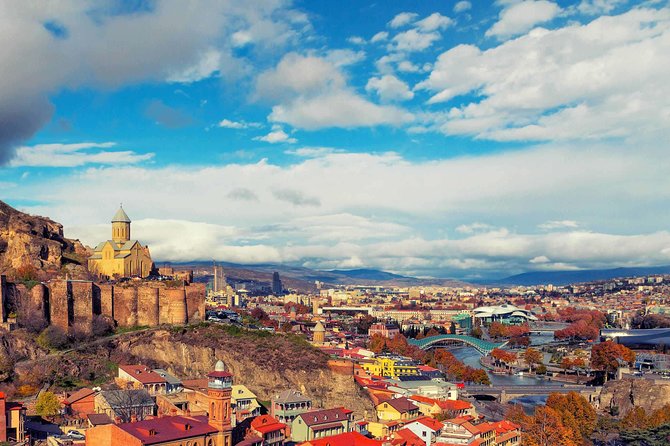
Your day starts in the Narikala area, the classic hilltop zone that gives you context fast. From here, you can see how Old Tbilisi wraps around the fortress area, and why so many landmarks cluster in that zone. The tour time here is about 50 minutes, and the admission ticket is included, so you’re not juggling costs or decisions.
This part is also where the city’s mixed heritage becomes obvious. The Narikala hill area is presented as a concentration point for several kinds of worship and architecture, including Orthodox churches plus a mosque and a synagogue in the broader area. You’ll also get Anchiskhati Church, a 6th-century church, as part of what you’re shown around the hill.
Practical tip: when your guide explains the relationship between the fortress, Old Tbilisi’s walls, and the surrounding buildings, pay attention. Once you understand the geography, the rest of the day feels less like a list of stops and more like one connected walk.
Sulfur Bath area and the Metekhi plateau: why Tbilisi is called warm
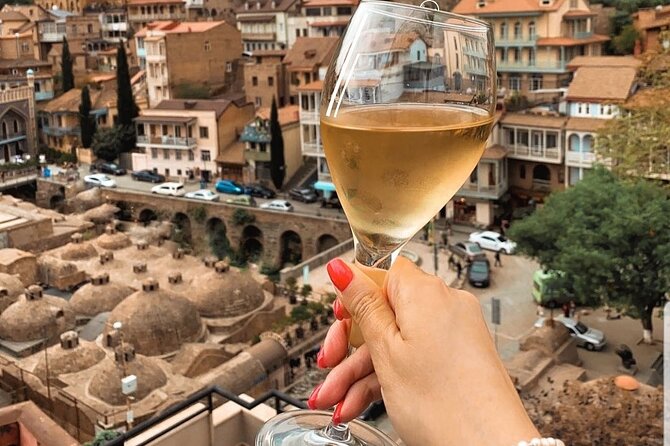
After Narikala, the route drops toward the sulfur bath zone, where the name Tbilisi comes from the idea of warmth. You’ll visit Sulfur Bath 5 for about 30 minutes, and the emphasis here is on the legend behind the city’s identity and the way the baths sit right inside Old Tbilisi.
Next, you move to the Metekhi Cathedral area, around 15 minutes. This stop ties King Vakhtang Gorgasali’s legacy to the way the city grew around power and residence. Even if you’ve never heard the story, the setting helps you grasp it quickly, because Metekhi sits above the hot springs zone in a way that makes the connection feel natural.
This pair of stops does something valuable: it explains how Tbilisi’s physical geography and its stories reinforce each other. The city isn’t just “historic.” It’s historic in the same locations people still use today, and the baths area is the clearest example.
Rustaveli Avenue’s theater boulevard and the XX-century city feel
Once you leave the Old Town gravity, you get a different side of Tbilisi on Rustaveli Avenue. This stretch is more about the modern city plan, with about 1 hour of time here. You’ll pass major cultural landmarks, including the Drama Theater named after Rustaveli and the Opera and Ballet theater named after Zakaria Paliashvili.
Even if you don’t go inside any building during this specific tour segment, the street is worth your attention. It’s where you see Tbilisi as a 20th-century capital with public institutions and art salons, not only as a medieval hillside town. Think of this as your reset moment, when you learn how the city expanded beyond the Old Town walls.
Practical tip: since you still have a full day ahead, use this time to adjust your pace. If you’re moving slower due to crowds or stairs, this kind of boulevard stop lets you catch your breath without losing the flow.
More walking tours in Tbilisi:
- Tbilisi Walking Tour Including Cable Car and Traditional Bakery
★ 5.0 · 1,310 reviews - Tbilisi: City Highlights Guided Walking Tour
★ 4.9 · 1,114 reviews - Tbilisi:Evening Walking & Talking Tour with Wine & Boat Ride
★ 5.0 · 572 reviews - Tbilisi: Evening Walking Tour with Wine & Boat Ride Options
★ 5.0 · 407 reviews
Abanotubani and the hot springs heart: where the city legend takes physical shape
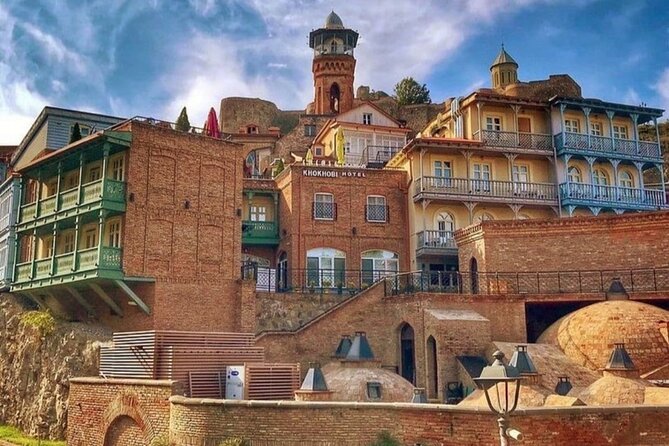
Abanotubani is one of the key Old Town districts, and this stop is brief, about 15 minutes. The big idea is the legend of Vakhtang Gorgasali’s falcon, which allegedly led to the discovery of hot springs and the founding of a new capital.
From a traveler standpoint, the value here is not just the legend itself. It’s that the district helps you understand why Old Tbilisi is built the way it is around warmth and water. You’re also positioned well for the next stops that show how Tbilisi’s identity includes multiple religious communities.
Because the time is short, don’t expect a long wander. Instead, use it to orient yourself: look at how the bath area sits in the street pattern, then connect that to what you’ll see at the later viewpoints and churches.
Great Synagogue of Tbilisi and Metekhi Cathedral: a multi-faith walk you can actually follow
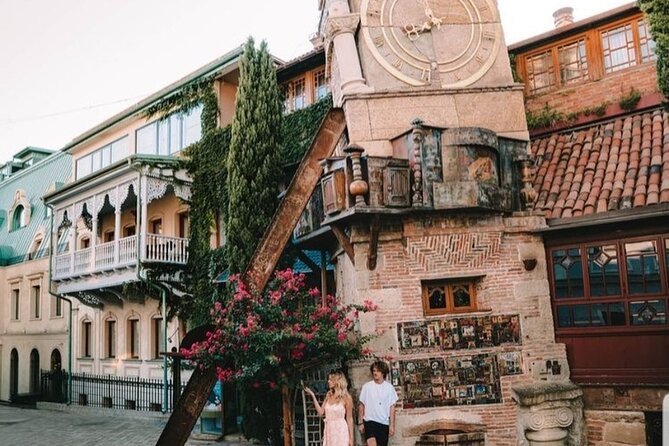
The Great Synagogue of Tbilisi is next, with about 15 minutes allocated. This synagogue is known as the Georgian Synagogue and was built from 1895 to 1903 in an eclectic style. The tour frames it through the migration story of Georgian Jews from Akhaltsikhe in the late 19th century, which is a helpful way to humanize the building rather than just date it.
Then you return to the Metekhi Cathedral area, again around 15 minutes. It’s a good pairing because it keeps you in the same bigger geography, but switches your focus between faith communities and architecture. You end up with a mental map that includes both religious sites without feeling like you’re constantly relocating.
This is one of the tour’s most praised directions because it teaches you Tbilisi as an interwoven city. If you like seeing how communities sit side by side over time, this portion delivers.
Bridge of Peace, Rike Park, and Kartlis Deda: modern symbols with old-city scale
After religious and heritage sites, the route shifts into modern Tbilisi storytelling. The Bridge of Peace is next, about 15 minutes, with a design timeline from 2009 to 2010 and details credited to an Italian architect. The lighting system is also part of what’s highlighted, with French involvement. Even if you don’t study design documents, the point is that Tbilisi’s modern identity is part of the same walk.
You then go to Rike Park for about 15 minutes, a space used for festivals like Tbilisoba. That matters because it connects the bridge and river area to a real calendar, not just architecture photos.
Right after that, you’ll see Kartlis Deda, the symbol of Georgia. The tour description focuses on her pose and meaning, meeting friends with wine and enemies with sword. It’s brief, but it’s memorable, because it gives you a way to interpret monuments beyond their silhouette.
For many visitors, this is where the city stops feeling like a museum. You start seeing Tbilisi as a place where people gather, celebrate, and symbolize identity in public spaces.
Anchiskhati Basilica and Sioni Cathedral: going back to 6th-century roots
Old Tbilisi is full of layers, and this tour keeps going backward. Anchiskhati Basilica is about 15 minutes and is described as the oldest of survived churches in Georgia, dating to the 6th century. A detail I found especially useful is the connection to sculptor Elguja Amashukeli and his work on the symbol of Georgia, Kartlis Deda. Even though that symbol is seen earlier on your walk, this stop explains the artistic roots behind it.
Next, you move to Sioni Cathedral Church for about 15 minutes. The tour frames it through its repeated destruction and reconstruction, and notes the current church as based on a 13th-century version with changes from the 17th to 19th centuries. It also tells you that Sioni served as the main Orthodox cathedral and seat of the Catholicos-Patriarch before the Holy Trinity Cathedral was consecrated.
This segment is valuable because it helps you understand why dates alone do not tell the full story. When you learn that the building has been rebuilt through centuries, you stop thinking of it as a fixed “ancient relic” and start seeing it as a living marker of faith and continuity.
Leselidze, Rezo Gabriadze Marionette Theater, and the Leghvtakhevi sulfur waterfall
Your final stretch shifts into street textures and memorable Tbilisi characters. Leselidze is next, about 15 minutes, and it’s described as a street that blends old and new parts of the city. This is a nice breather after cathedrals, because you get to see how Tbilisi handles change: it doesn’t erase the past, it stacks it near the present.
Then you reach the Rezo Gabriadze Marionette Theater for about 10 minutes. This is one of the most recognizable sights in Tbilisi, and the stop includes the fact that there is daily performance timing that attracts tourists. The tour also emphasizes that the show is known for depth and soul, which is the kind of description that makes you want to plan your evening around it.
Finally, you visit Dzveli Tbilisi Sulphur Waterfall, also called Leghvtakhevi, for about 20 minutes. The waterfall is described as 22 meters tall, and the name Leghvtakhevi comes from a Georgian word tied to fig trees that once grew there.
This ending works because it brings you back to water, warmth, and legend, the same core idea as the earlier sulfur bath stop. You finish with a visual that feels very Tbilisi, not just Georgian in general.
Price, walking time, and who this tour fits best
At $59 per person for 6 to 7 hours, you’re buying a guided route through key sights plus a Narikala fortress admission and bottled water. That’s fair value if you want structure. It’s also fair if you enjoy learning through context, because the stops are connected by stories about kings, legends, and community presence.
The one cost you should plan for is energy. Because transportation is not included, you need comfortable walking shoes and a realistic pace. The tour can also run longer than the stated timing, so if your schedule is tight, leave a buffer afterward.
This is a great match if:
- You want one day that covers Old Tbilisi plus modern landmarks
- You like multi-faith sites and historical context tied to place
- You prefer guided storytelling over independent wandering
It might not be the best match if you strongly dislike walking or you need a car between most stops.
If you’re traveling solo, couple, or with friends and you like meeting people at a group pace, the cap of 100 travelers keeps it from feeling like an airport shuttle. Still, it is a shared format, so bring a little flexibility.
Should you book this Tbilisi walking tour?
Book it if you want a guided day where the city makes sense as you walk it. The combination of multi-faith stops, the sulfur baths legend, and the mix of modern symbols like the Bridge of Peace with older cathedrals gives you a balanced picture without forcing you to bounce around on your own.
Skip or reconsider if your day is packed with strict timing or you do not handle long walking days well, since transportation isn’t provided and the schedule can stretch. If you’re coming with comfortable shoes and a curious mindset, you’ll likely love how Tbilisi’s warm legends, religious landmarks, and public monuments connect into one story.
FAQ
How long is the Private Walking Tbilisi City Tour?
The tour lasts about 6 to 7 hours.
What is included in the $59 price?
The price includes a professional guide service and bottled water. The Narikala Fortress stop also includes an admission ticket.
Is transportation provided during the tour?
No, transportation is not included.
What language is the tour offered in?
The tour is offered in English.
Do I get a mobile ticket and confirmation?
Yes, you receive a mobile ticket, and you get confirmation at the time of booking.
Are entrance fees included for every stop?
Not every stop. Narikala Fortress has an admission ticket included, while the other listed sights in the itinerary are marked as free.
Is bottled water provided?
Yes. Complimentary bottled water is included for each participant.
How large is the group?
The tour has a maximum of 100 travelers.
What happens if the weather is bad?
The tour requires good weather. If it is canceled due to poor weather, you will be offered a different date or a full refund.
Recently reviewed around Tbilisi
- Tbilisi City Tour★ 4.5 · 3 reviews
- Tbilisi City, Jvari Monastery, Uplistsikhe caves, Mtskheta city Private Day Trip★ 4.5 · 3 reviews
- Tbilisi City Tour with Street Photography★ 5.0 · 3 reviews
- Wild Georgia 4WD PACK Adventure through Kakheti and Kazbegi 2in1★ 5.0 · 3 reviews
- Private Trip to Tbilisi and Mtskheta – Cultural Capitals★ 5.0 · 3 reviews
- Tbilisi Airport to Gudauri, Bakuriani, Batumi, Tbilisi★ 5.0 · 3 reviews
- Private Adorable City Tour of Tbilisi★ 5.0 · 3 reviews
- Two Capitals in One Day: Tbilisi and Mtskheta Combo Tour★ 5.0 · 3 reviews
Day Trips in Tbilisi, compared.
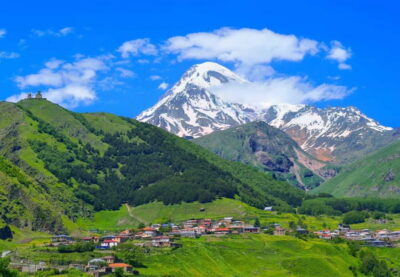
Day Trip to Kazbegi, Gudauri, Gergeti, and Ananuri
Read our review →
Day Trip to Kakheti Wine Region Including 9 Wine Tastings
Read our review →

KAZBEGI GUDAURI ANANURI One day group tour From Tbilisi!
Read our review →Browse the lists this tour appears in