
Reviewed · MTSKHETA ANCIENT CAPITAL
Gori-Uplistsikhe Mtskheta-Jvari one Day private Tour
This route is interesting because it mixes three very different Georgia moods in one day: carved stone history at Uplistsikhe, a highly unusual look at Stalin’s legacy in Gori, and two UNESCO churches in and around Mtskheta. You’re going from rock-hewn sites to monumental Christian architecture without needing extra planning.
I especially like the private format for up to four people, since it keeps the pace friendly and the conversations more natural. I also like that the guide may include David, who’s known for sharing Georgia history in Russian without getting pushy.
The main drawback is that it is a packed day. You will do a fair amount of walking at Uplistsikhe and there are lots of sights in a limited window, so plan for a moderate fitness level and wear solid shoes.
Key highlights worth getting excited about
- Uplistsikhe rock-cut city from the 2nd to 1st millennium B.C., with pagan and Christian remnants
- Stalin Museum in Gori, featuring recreated scenes plus items like furniture and personal-style artifacts
- Mtskheta UNESCO area where you can connect the story of early Christianity to dramatic river views
- Jvari Church on the hill opposite Mtskheta, built after the wooden cross era
- Svetitskhoveli Cathedral’s preserved relics, including Christ’s robe and Elijah’s mantle
- A smooth private day with AC transport and bottled water, so you spend less time on logistics
How this one-day Gori, Uplistsikhe, Mtskheta, and Jvari tour actually feels
This is built as a classic “see the essentials, but not at sprint speed” day. You start in the morning from Tbilisi (pickup is offered, and the tour is private for your group of up to four), and you end up with a set of major stops that each tells a different piece of Georgia’s story. The total time is about 7 to 8 hours, which is long enough to feel satisfying, but short enough that you are back in your evening plans without losing the whole day.
What makes this work for most people is the pairing. Uplistsikhe gives you a sense of deep time, then Gori and the Stalin Museum add a harsh 20th-century layer, and finally Mtskheta and Jvari anchor the day with early Christian architecture and UNESCO-level atmosphere. You do not just “check boxes.” You connect geography, religion, and politics across centuries.
The practical tradeoff is timing and movement. Even with private transport, you will spend time transferring between areas and you will walk around each site. If your idea of a perfect day is slow cafés and long rests, you might feel rushed. If you can handle a moderate pace, you will likely love it.
More Day Trips in Tbilisi
- Tbilisi: Day Trip to Kazbegi, Gudauri, Gergeti, and Ananuri
★ 4.9 · 3,203 reviews - Day Trip to Kakheti Wine Region Including 9 Wine Tastings
★ 5.0 · 2,774 reviews - Day Trip to Kazbegi and Gudauri
★ 5.0 · 2,009 reviews
Uplistsikhe rock-cut town, Fortress of the Lord
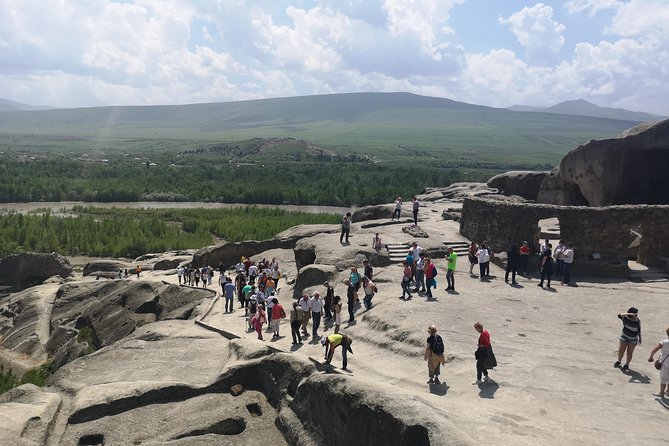
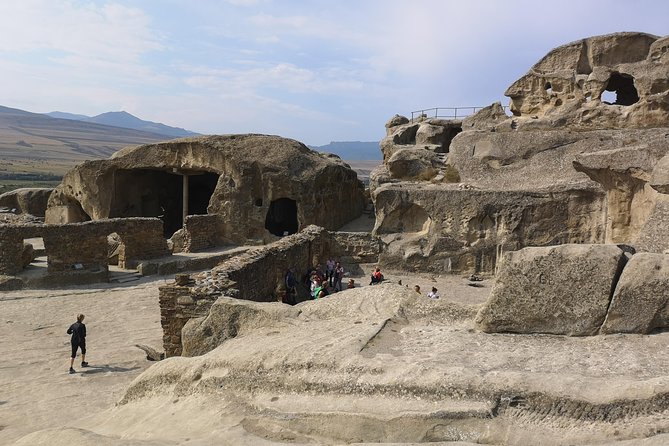
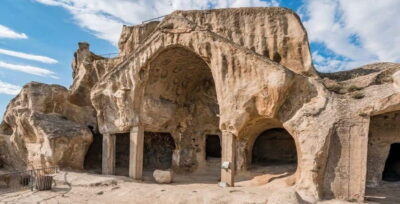
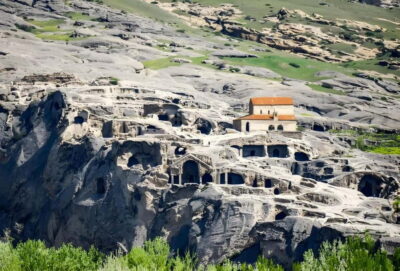
Uplistsikhe is the star if you like sites that feel real because they were carved, not built from scratch. The name gets translated as Fortress of the Lord, and the history stretches back to the 2nd to 1st millennium B.C. This was one of Kartli’s major centers, and in medieval times it sat on an important trade route linking Byzantium with farther-reaching trade worlds.
When you arrive, the layout is what grabs you first. It is a rock-hewn town on the left bank of the river Mtkvari, with structures that span early Iron Age roots through Middle Ages use. What I find especially compelling is the way you can see a blend of influences: rock-cut styles associated with Anatolia and Iran, plus the coexistence of pagan and Christian architecture.
You are typically given about 2 hours here. That is enough time to wander, spot key structures, and understand what you are looking at, without needing to rush. Still, treat this stop as “active.” There can be steps and uneven ground, and some areas are more exposed than you might expect. Good shoes matter.
If you want one simple tip, it is this: focus on a few features rather than trying to photograph everything. Once you recognize how the carved rooms and passageways relate, the whole town starts to click.
Gori lunch time, and what to budget for
After Uplistsikhe, you get a lunch break in Gori, with a planned time window of about 1 hour 30 minutes. The tour includes time for a restaurant lunch, but lunch itself is not listed as included in the cost. So go in ready to pay for your meal at the restaurant.
This stop is useful for two reasons. One, it breaks up the morning walking with a sit-down pause. Two, it lets you shift from “history facts” mode to “Georgia food mode,” which helps the rest of the day feel less like a checklist.
If you are the type who likes to plan, consider choosing something that is filling but not too heavy, since the afternoon includes museum time plus two major UNESCO stops. And if you are sensitive to long driving windows, ask the driver what the likely ride time feels like so you can pace your lunch accordingly.
Stalin Museum in Gori, what to expect and how to make it worthwhile
The Stalin Museum in Gori is not a gentle or sentimental experience. It is designed around recreated and surreal scenes from Stalin’s life, supported by items like unique photos, gifts, and furniture. It is the kind of museum where the presentation itself becomes part of the message.
One detail I think helps you get more out of the visit is that the house where Stalin was born is preserved nearby under a stone canopy. That nearby preservation makes it easier to connect “the person” to “the place,” instead of treating everything as purely exhibit-style storytelling.
Museum time is about 1 hour, and admission is included. That length is a good match for most people. You can look closely, read the main context, and still avoid museum fatigue before you climb into church and cathedral visits later in the day.
A balanced warning: because the museum is about a dictator, the tone may feel intense for some visitors. If you prefer lighter cultural stops, you might want to mentally adjust before you enter. For many people, though, it becomes one of the most memorable parts of the day because it anchors Georgia’s 20th-century story in a very specific way.
More day trips to Gori:
- Tbilisi: Mtskheta, Jvari, Gori and Uplistsikhe Day Tour
★ 4.9 · 2,396 reviews - Day Trip to Mtskheta Gori and Uplistsikhe
★ 5.0 · 1,801 reviews - From Tbilisi : Mtskheta, Jvari, Gori & Uplistsikhe Day Trip
★ 4.8 · 432 reviews - From Tbilisi: Mtskheta, Jvari, Gori, Uplistsikhe Guided Tour
★ 4.7 · 354 reviews
Jvari Church and the UNESCO view over Mtskheta
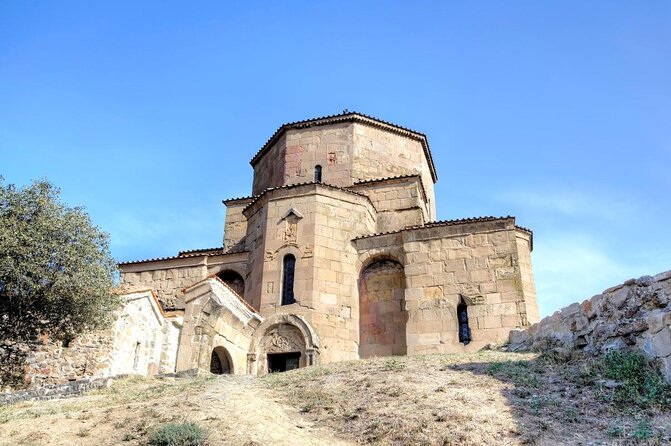
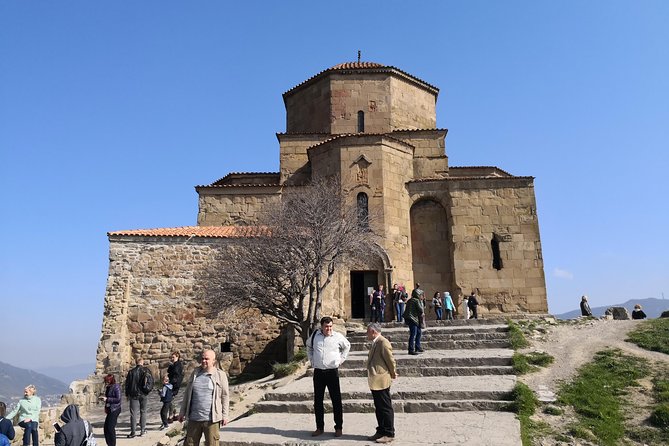
Jvari is where the day starts to feel more spiritual and visually open. The 6th-century Jvari monastery sits on a hill opposite Mtskheta at the confluence of the Aragvi and Mtkvari rivers. It is on the UNESCO World Heritage list, and it connects early Christianity to dramatic landscape.
The site has layered origins. After Christianity was adopted, King Mirian III erected an enormous wooden cross on this spot. Later, in the 2nd half of the 6th century, Guaram, ruler of Kartli, built a small church beside the Holy Cross. That mix of legend, early church memory, and architecture is part of why Jvari feels important.
You get about 1 hour here, and admission is free. What you should do with that hour is split it into two modes: first walk around and orient yourself with the hills and river meeting point, then spend time looking at the church structure itself. The views are not just scenery, they help you understand why this location mattered.
If you are visiting in a weather shift, dress accordingly. Elevated sites can feel colder or windier than the town areas. A light layer is a smart idea.
Svetitskhoveli Cathedral, relics and religious center energy
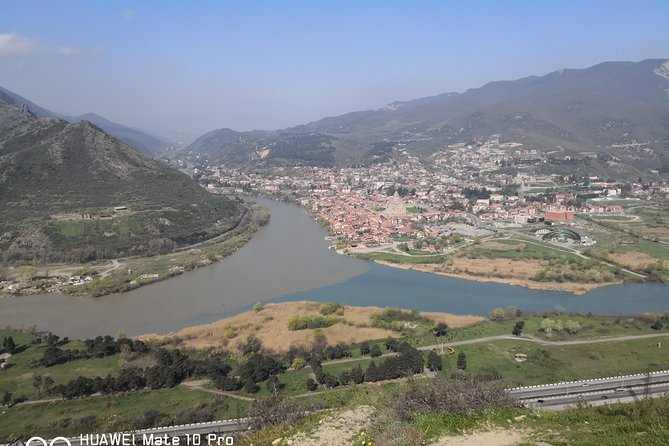
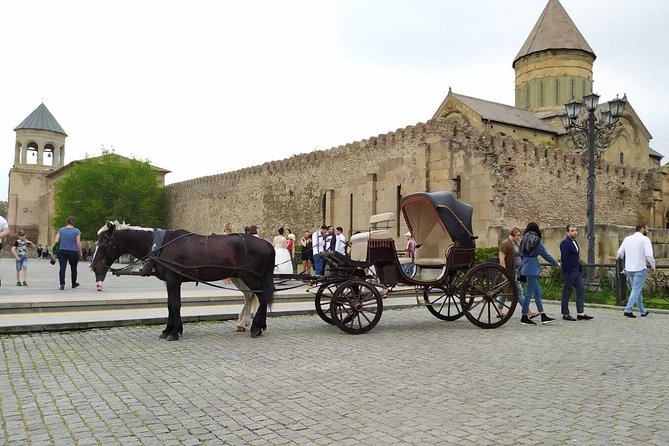
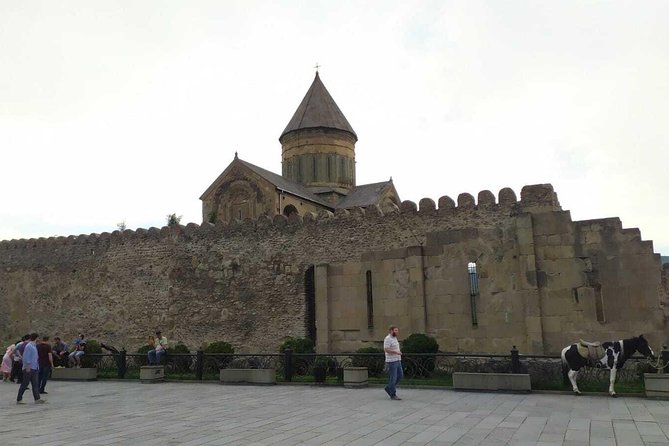
Next up is Svetitskhoveli Cathedral, an 11th-century architectural centerpiece and a UNESCO site. This complex has more than one structure, including the church, gate, bell tower, castles, and clerical residences. It has served as Georgia’s religious center for hundreds of years, which means you are walking into a living legacy rather than a “dead monument.”
Here is what makes it stand out beyond the big architecture shots: the cathedral preserves major Christian relics. You can find the mantles of Christ and of the Prophet Elijah preserved here. The complex also includes the tombs of King Vakhtang Gorgasali, who is associated with the founding stories of Tbilisi.
You get about 1 hour at Svetitskhoveli, and admission is free. Again, don’t try to do everything at once. Look at the overall layout first. Then focus on details connected to the relic story and the way the space is organized for religious life across centuries.
If you like understanding “why this place matters,” Svetitskhoveli is the stop that pays off. It helps you see how Georgia’s identity tied architecture, authority, and faith together.
Price and value for a private up-to-4 group from Tbilisi
At $185.49 per group for up to four people, the real question is not just the headline cost. It is what you get for that money: private transportation, an air-conditioned vehicle, bottled water, and fuel surcharge. You also get a mobile ticket, and the tour is structured as one day without you having to coordinate inter-city moves or admissions.
On the ticket side, the Stalin Museum admission is included, while admission to Jvari and Svetitskhoveli is free. That means your paid component is mostly tied to the museum and the guided logistics, which is a pretty fair split for a day trip like this.
Compared with buying separate tickets and trying to arrange transport on your own, the value is in time saved and reduced stress. You spend your energy on the sites, not on routes, waiting, and ticket lines.
Is it “cheap”? No. But for a private tour that layers multiple UNESCO stops plus a museum visit plus a rock-cut archaeological site, it is a solid value when you travel as a small group. If you are traveling solo, you might prefer a shared day tour to reduce cost, but the private format is the difference-maker here.
Getting ready: walking pace, what to wear, and simple time tips
The tour asks for moderate physical fitness. That does not mean you need to be an athlete, but it does mean you should expect uneven ground and some climbing or stepping at Uplistsikhe and possibly at elevated church areas like Jvari.
Pack like this:
- Wear comfortable shoes with grip for rock-hewn surfaces.
- Bring a light layer, since hilltop sites can feel cooler.
- Use the included bottled water, but if you run hot, plan to buy extra.
- For photos, charge your phone fully, and keep a quick “battery check” habit.
The day is structured, but you still have one personal choice: how much you linger. If you tend to rush, you will feel the schedule. If you slow down at each stop to absorb the main points, the day feels more balanced and you stop thinking of it as time pressure.
One small mindset trick: at Uplistsikhe and the cathedrals, pick two “must learn” facts and ignore the rest for the day. You will remember those two points longer than trying to collect everything.
Who this tour fits best (and who might prefer another style)
This tour suits you if you want a concentrated day that connects big historical themes: ancient rock-cut civilization, modern political history, and early Georgian Christianity. It is also a good pick if you like the comfort of a private group format with an air-conditioned ride.
It is less ideal if you hate museums or if you strongly dislike anything politically heavy. The Stalin Museum is a major centerpiece, and the tone may not be what everyone wants. It also might be too much if you prefer slow travel and only one or two sites per day.
If you are the kind of traveler who wants to feel like you learned something without getting exhausted, you are likely in the right place. And with a guide like David, the day can feel smoother because the storytelling stays clear without overpowering the experience.
Should you book the Gori, Uplistsikhe, Mtskheta, Jvari day tour?
Yes, you should book this tour if your goal is a well-paced, private day that hits UNESCO highlights plus Uplistsikhe’s rock-cut realism, and you are open to an intense museum stop. The value is strongest for small groups up to four, especially because transport and key logistics are handled.
Book if:
- You want Uplistsikhe plus Jvari plus Svetitskhoveli in one day.
- You appreciate a guide’s context, possibly with David’s low-key, history-focused approach in Russian.
- You can handle moderate walking and a packed schedule.
Skip it if:
- You want a relaxed half-day itinerary.
- You are not comfortable with politically charged museum content.
If you do book, treat the day like a story, not a checklist. Start with rock-cut ancient Georgia, add the harsh modern layer in Gori, then end with the religious and architectural meaning of Mtskheta and Jvari. That order makes the whole day feel connected.
FAQ
What is the duration of the Gori-Uplistsikhe Mtskheta-Jvari one day private tour?
The tour lasts about 7 to 8 hours.
How many people can join the private group?
The private tour is for up to 4 people.
Is pickup from Tbilisi included?
Pickup is offered, and the tour includes private transportation in an air-conditioned vehicle.
What time does the tour start?
The start time is 9:00 am.
Which stops are included during the day?
You visit Uplistsikhe, the Stalin Museum in Gori, Jvari Church, and Svetitskhoveli Cathedral.
Are any entrance fees included?
Stalin Museum admission is included. Admission for Jvari Church and Svetitskhoveli Cathedral is free.
Is lunch included?
Lunch is not included, even though the schedule includes a lunch stop in Gori.
What is included in the tour price?
The tour includes bottled water, air-conditioned vehicle, private transportation, and fuel surcharge.
What level of fitness do I need?
You should have a moderate physical fitness level.
What is the cancellation policy?
You can cancel for a full refund up to 24 hours in advance of the experience start time.
More Trips Taking in Jvari Monastery
- Tbilisi: Mtskheta Jvari Bazaar, Chronicles of Georgia & Wine
★ 5.0 · 1,088 reviews - Tbilisi:Mtskheta,Jvari,Bazaar,wine tasting,Chronicles of Georgia
★ 5.0 · 730 reviews - Tbilisi: The Chronicles of Georgia, Jvari & Mtskheta Tour
★ 5.0 · 307 reviews - Mtskheta-Jvari-Uplistsike-Chronicle of Georgia, PRIVATE Trip
★ 5.0 · 105 reviews
More Uplistsikhe Cave Town Visits
- From Tbilisi: Mtskheta, Jvari, Gori & Uplistsikhe Cave Tour
★ 4.7 · 296 reviews - From Tbilisi: Mtskheta, Jvari, Gori & Uplistsikhe Day Trip
★ 4.8 · 153 reviews - Mtskheta-Gori-Uplistsikhe
★ 5.0 · 112 reviews - Mtskheta, Jvari, gori, uflistsikhe, history and panorama (group tours)
★ 4.5 · 107 reviews
Recently reviewed around Tbilisi
- Tbilisi City Tour★ 4.5 · 3 reviews
- Tbilisi City Tour with Street Photography★ 5.0 · 3 reviews
- Tbilisi City, Jvari Monastery, Uplistsikhe caves, Mtskheta city Private Day Trip★ 4.5 · 3 reviews
- Private Trip to Tbilisi and Mtskheta – Cultural Capitals★ 5.0 · 3 reviews
- Wild Georgia 4WD PACK Adventure through Kakheti and Kazbegi 2in1★ 5.0 · 3 reviews
- Tbilisi Airport to Gudauri, Bakuriani, Batumi, Tbilisi★ 5.0 · 3 reviews
- Private Adorable City Tour of Tbilisi★ 5.0 · 3 reviews
- Tbilisi and Mtskheta cities private, cultural tour★ 5.0 · 3 reviews
Mtskheta Ancient Capital, compared.
Mtskheta, Jvari, Gori and Uplistsikhe Day Tour
Read our review →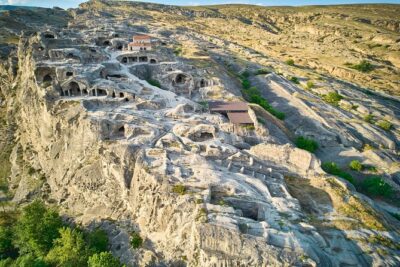
Mtskheta Jvari Bazaar, Chronicles of Georgia & Wine
Read our review →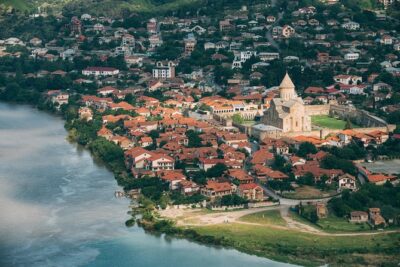
Mtskheta,Jvari,Bazaar,wine tasting,Chronicles of Georgia
Read our review →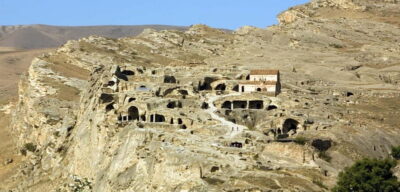
The Chronicles of Georgia, Jvari & Mtskheta Tour
Read our review →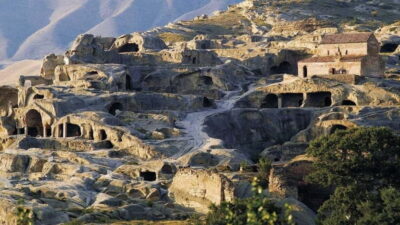
Browse the lists this tour appears in