
Reviewed · MTSKHETA ANCIENT CAPITAL
From Tbilisi: Mtskheta, Gori, and Uplistsikhe Day Trip
What makes this trip interesting is the stop-for-stop contrast: UNESCO sites in Mtskheta, a hard-hitting Stalin Museum in Gori, and the rock-hewn cave city of Uplistsikhe. In one long day, you see Georgia’s early Christian power centers, the Soviet-era story, and the ancient sandstone city carved into cliffs.
I like how the itinerary builds in view moments. The Jvari Monastery stop is timed for that wide panorama look over Mtskheta and the river, and Uplistsikhe gives you walking routes plus viewpoints from the valley side. I also like the variety of what you learn, from church architecture and pilgrimage tradition to the objects and childhood background shown in Gori.
One thing to watch: the day can get messy with timing and language mix. Some departures are run more toward Russian-speaking guests, and late-arriving bus moments can affect whether you get enough time at specific church entry points.
Key takeaways before you go
- Three big themes in one day: Christian pilgrimage sites, Soviet history in Gori, and an ancient cave city at Uplistsikhe.
- View-first stop in Mtskheta: Jvari Monastery is a smart photo and orientation moment.
- A museum that hits hard: the Stalin Museum can feel intense, even when the guide keeps things factual.
- Plan for paid entries: some stops can include admission fees, including examples of 15 Gel at two sites.
- Bring your walking shoes: you’ll do moderate walking and some uneven terrain.
- Ask about timing early: if the schedule slips, you may have less flexibility at later church stops.
Why This Tbilisi Day Trip Works: Mtskheta, Gori, and Uplistsikhe in One Line
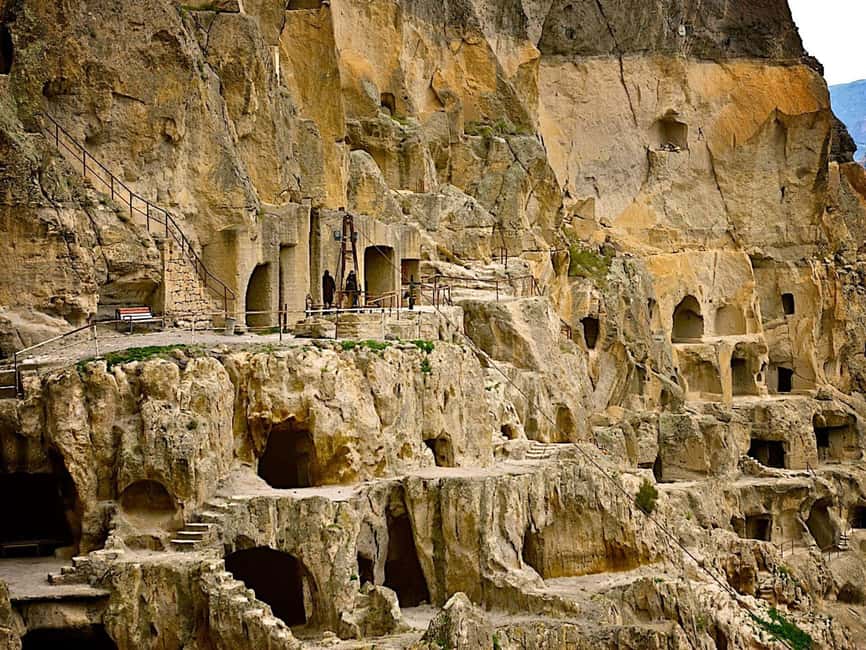
This is a good “history in layers” day. Mtskheta shows Georgia’s early Christian identity in stone and ceremony. Gori shifts the story to the 20th century, where Joseph Stalin looms over the region. Uplistsikhe then takes you way back again, to a city carved into rock with pagan temples, early Christian spaces, and a surprising theater cut right into the cliff face.
For you, that means you are not just collecting photos. You’re seeing how different eras used the same land and water routes, built power in different ways, and left behind structures you can still walk through. It also means the day moves, so you get variety without needing a multi-day base change.
A practical note: you’ll be outdoors more than you expect, especially at the viewpoint stops and at the rock-hewn city walk. If you’re the kind of traveler who gets cranky after long bus rides, this one still works, but go in prepared for a full day rather than a relaxed outing.
More Day Trips in Tbilisi
- Tbilisi: Day Trip to Kazbegi, Gudauri, Gergeti, and Ananuri
★ 4.9 · 3,203 reviews - Day Trip to Kakheti Wine Region Including 9 Wine Tastings
★ 5.0 · 2,774 reviews - Day Trip to Kazbegi and Gudauri
★ 5.0 · 2,009 reviews
Meeting at 2 Abano St and Getting Comfortable for a 9-Hour Day
Your tour meets in Tbilisi’s sulfur baths district, at 2 Abano St (Sulfur baths district coordinates: 41.68839645385742, 44.8110237121582). The big tip here is timing. Arrive 15 minutes early so you don’t get stuck in a last-minute crowd shuffle at the pickup point.
Expect a bus ride that can feel packed. At least one review mentions a fully packed vehicle and tight legroom. That matters because the day is long, and you’ll want to arrive at the first stop with energy, not already stiff.
What to bring is straightforward, but don’t treat it as a suggestion list. Wear comfortable shoes, bring water, and add sunscreen and a hat. You’ll also want a camera, because both Jvari and Uplistsikhe are built for photos from heights and viewpoints.
This trip is also not suitable for wheelchair users and it’s not the best fit for people with mobility impairments, and it’s not for children under 6. The walking is described as moderate, but the terrain includes historic sites where steps and uneven surfaces are common.
Jvari Monastery: The Panoramic Welcome to Mtskheta
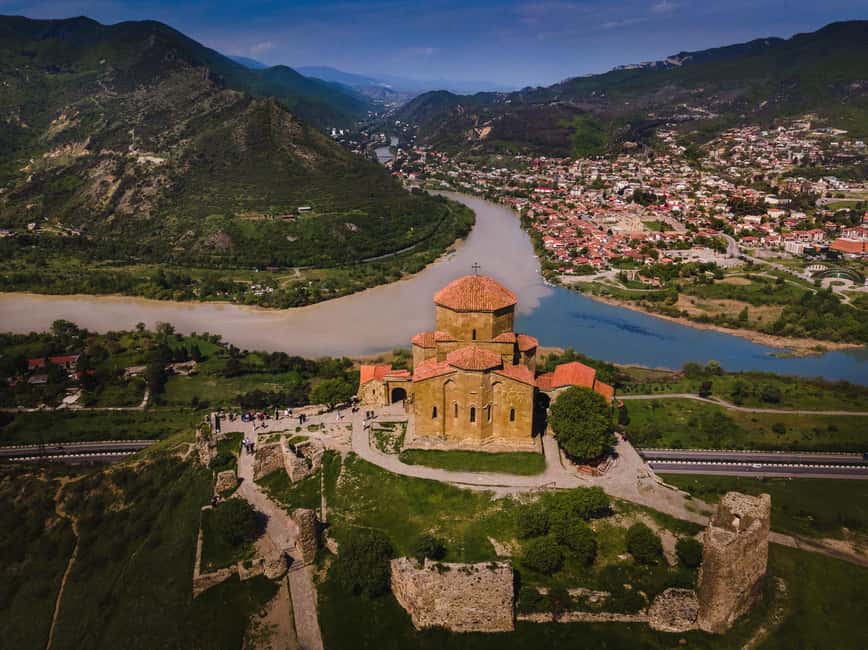
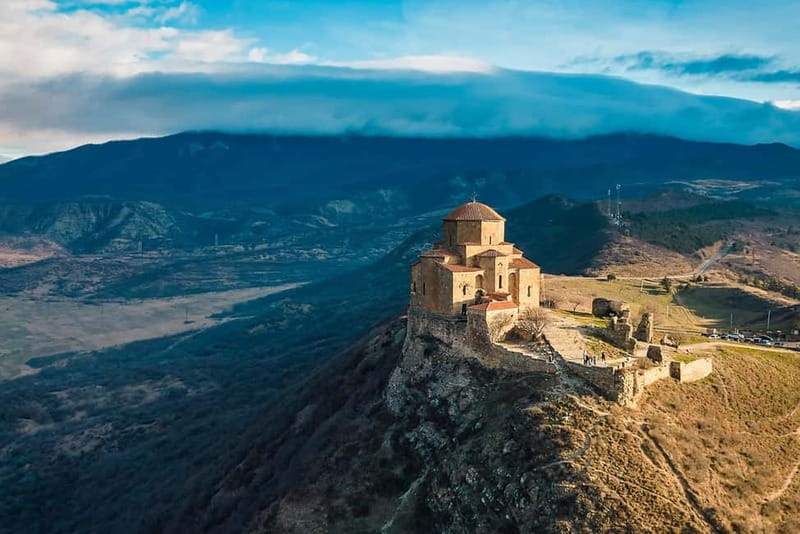
Jvari Monastery is your first real “wow” stop. It’s a 6th-century church, and it’s famous for its wide views over Mtskheta and the surrounding countryside. The timing of this stop is smart, because it gives you a mental map of what you’re about to see next.
In practice, you’re doing a photo stop and then a visit, plus some guided walking time (about 40 minutes). You’ll want to pause and actually look, not just take the picture and rush. The monastery is a classic viewpoint because it sits high enough to show you the layout of the city and the river area that shaped trade and settlement.
Religiously, Jvari is tied to the Georgian Orthodox Church and works as a strong introduction to the country’s Christian heritage. If you’re not sure what you’re looking at, this first stop helps you connect the later cathedral you’ll visit with the bigger story.
One practical caution: the monastery stop is efficient, but it’s outdoors and exposed. If it’s hot, plan for it. If it’s windy, expect cooler air on the hill.
Svetitskhoveli Cathedral: UNESCO Grandeur and a Pilgrimage Detail
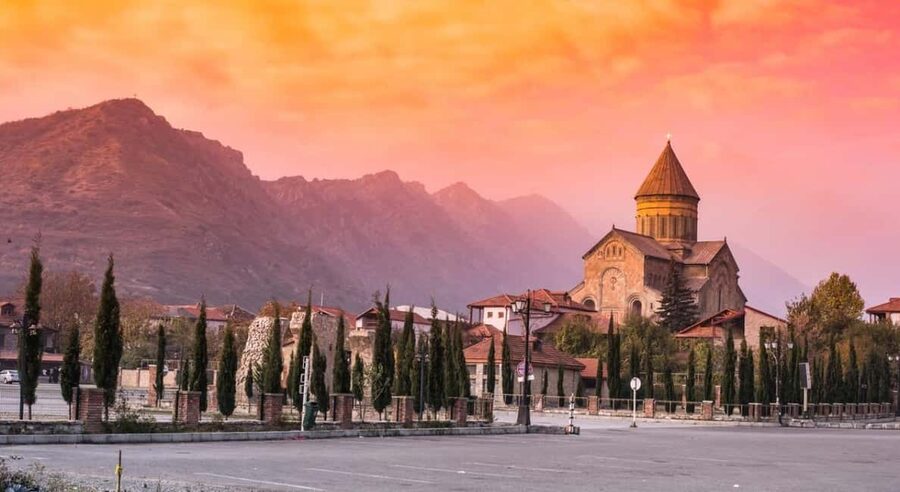
Svetitskhoveli Cathedral is another UNESCO-listed site, and it’s famous for its spiritual significance. It’s traditionally associated with the belief that it houses the robe of Christ, which is why it remains a major pilgrimage stop for Orthodox Christians.
You get a photo stop, a guided visit, and sightseeing walking time of about 40 minutes. That’s enough time to appreciate the architecture, but it’s not a long linger. Treat this as your “see it clearly, then move” church stop.
Here’s the important part for your planning: if your day runs late, this is the stop most likely to feel compressed. One account noted that arriving later in the day can make entry impossible or limited. So, keep an eye on timing and be ready to move quickly when you arrive.
If you enjoy churches for more than decoration, pay attention to what the guide emphasizes about Georgian Orthodox symbolism and the role of this cathedral in pilgrimage tradition. Even if you’re not deeply religious, the cultural logic makes sense fast once you understand why the site matters to believers across centuries.
More day trips to Gori:
- Tbilisi: Mtskheta, Jvari, Gori and Uplistsikhe Day Tour
★ 4.9 · 2,396 reviews - Day Trip to Mtskheta Gori and Uplistsikhe
★ 5.0 · 1,801 reviews - From Tbilisi : Mtskheta, Jvari, Gori & Uplistsikhe Day Trip
★ 4.8 · 432 reviews - From Tbilisi: Mtskheta, Jvari, Gori, Uplistsikhe Guided Tour
★ 4.7 · 354 reviews
Gori: Stalin Museum and the Feeling of Soviet History in a Small Town
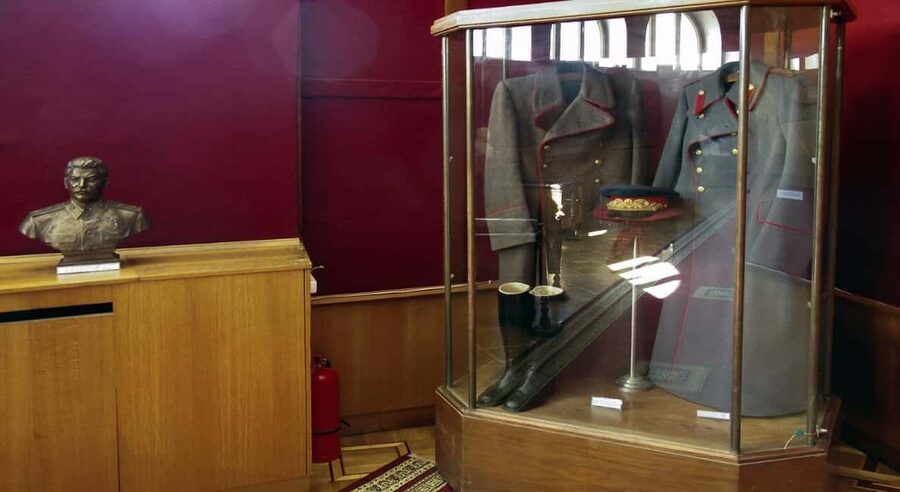
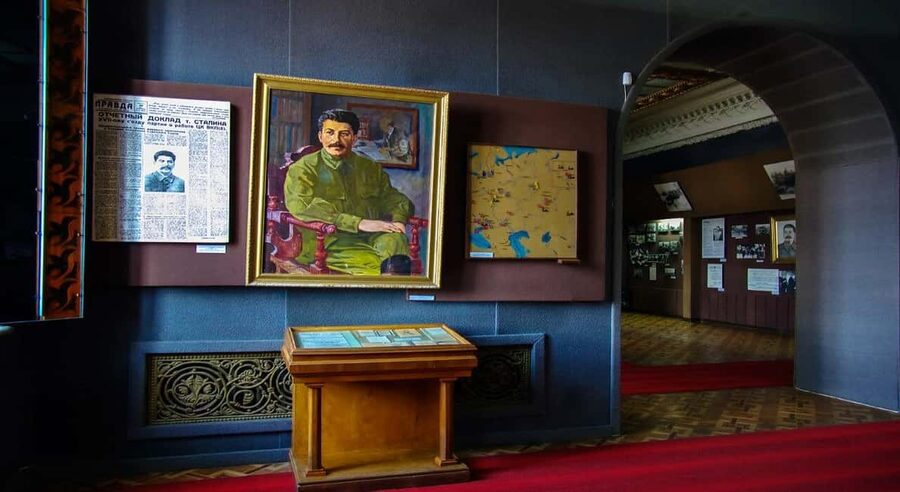
Gori is where the story turns sharp. The tour takes you to the Stalin Museum, tied to Stalin’s birthplace and presented through exhibits that include items from his childhood and personal memorabilia from the Soviet era.
The museum gives a perspective on Stalin’s legacy that can be unsettling. One review called it scary, and I think that’s a fair warning: you are not just reading about a historical figure. You’re walking through curated objects tied to power, propaganda, and the human cost of the system.
The tour includes about one hour here, with guided time and sightseeing. That duration is useful. It keeps you from skimming, but it also avoids the trap of turning the museum into a two-hour slog where fatigue takes over and you stop absorbing details.
Gori also includes time at Gori Fortress based on the tour description, a medieval hilltop fortress dating back to the 12th century. Even if the fortress part feels shorter than you’d like, the fortress angle is worth it. It offers town views and a sense of how the hilltop position would help defense and surveillance.
If you’re sensitive to intense political history, you can still enjoy the museum as history. Just go in knowing it is meant to provoke emotion and interpretation.
Uplistsikhe: Walking the Rock-Hewn City Like You’re Inside the Cliff
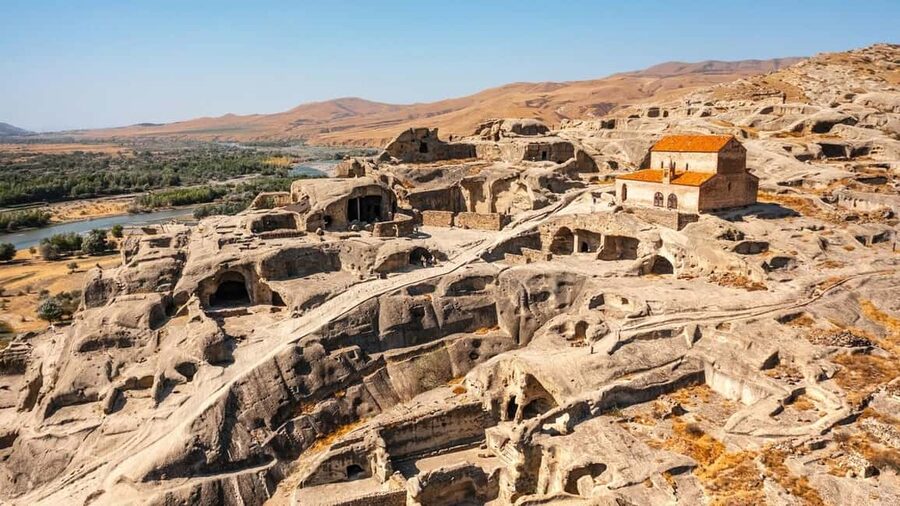
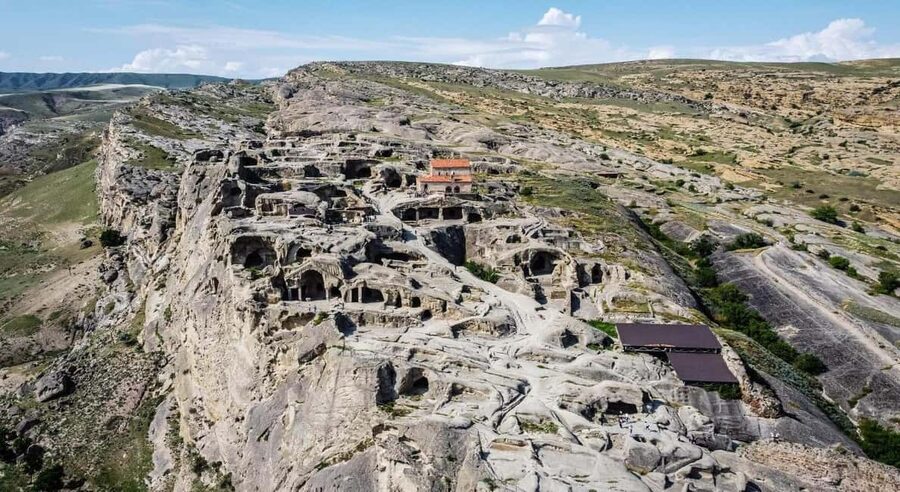
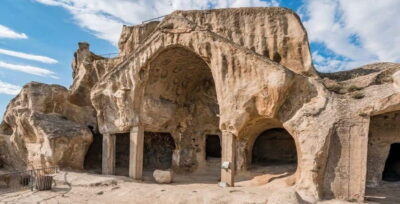
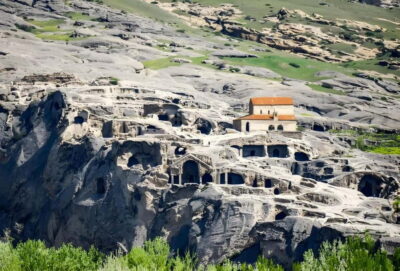
Uplistsikhe is the last big payoff. This is an ancient rock-hewn city dating back to the early Iron Age, carved into sandstone cliffs. The result feels unlike most archaeological sites because you’re not just looking at ruins. You’re moving through cutspaces and imagining daily life in a city literally shaped by stone.
You’ll get a photo stop and then a visit with guided sightseeing walking time of about one hour, plus an additional one hour for lunch on site. The lunch stop matters here, because Uplistsikhe is not near anything you’d want to walk to for a quick replacement meal. Having time set aside helps you avoid the end-of-day hunger spiral.
What I’d focus on inside Uplistsikhe:
- the rock-carved caves and tunnels
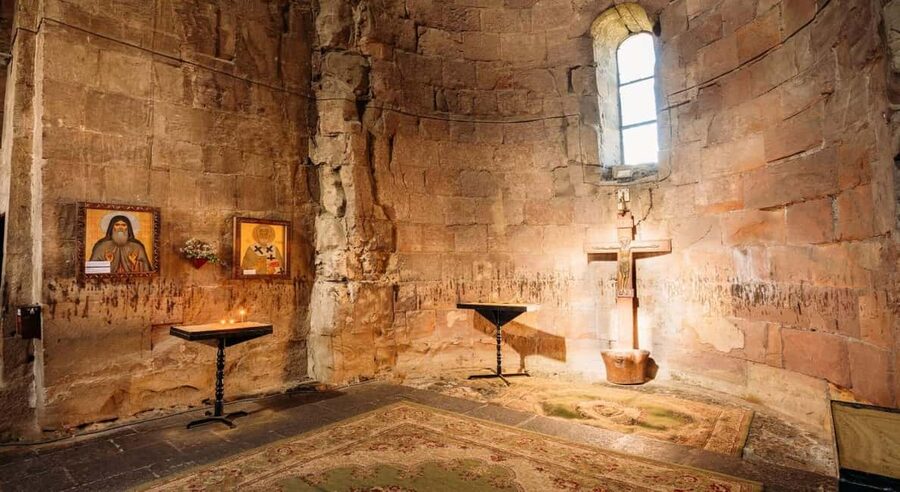
- early religious spaces, including pagan temples and early Christian basilicas
- and a rock-hewn theater, which is one of the more surprising features you’ll hear about
This place also gives you views over the valley and the Mtkvari River area. That view component changes the feeling of the site, because you stop thinking of it only as an indoor cave world. You remember it was a living city with sightlines, travel routes, and a landscape advantage.
Given that the city is carved into rock, you’ll want shoes with solid grip. Even if the walking is described as moderate, the surface can be uneven, and it’s easy to misstep when you’re taking photos.
Timing, Guide Flow, and Why Your Day Might Feel Different Than Expected
Two things can shape your experience beyond the sites themselves: language balance and schedule consistency.
This is a guided tour in English and Russian. Some reviews indicated bilingual tours that leaned more toward Russian-speaking guests. If English narration matters most to you, I’d treat that as a reason to ask early how narration will be handled on your day.
Guide delivery also varies. One review described boring narrative during the historic locations, while another said the guide was highly knowledgeable and that the itinerary ran perfectly on schedule. That spread tells me one thing for you: the itinerary is strong on paper, but the real feel depends on guide energy and how the group moves.
Timing is the bigger variable. One account mentioned the day getting late, and that caused an issue with entering a church. If you want the best shot at a calm visit at Svetitskhoveli, stay flexible and keep your own buffer energy up. When the group is moving, don’t lag behind thinking you can take one more photo, because the group flow can be strict at sacred sites.
A small practical habit that helps: when you’re on the bus, make one point to confirm the plan for the next stop. If you don’t hear the details in a clear way, ask directly. You lose time if you wait for vague answers.
Price and Value: How to Think About Fees and What You Might Pay Extra
The tour duration is 9 hours, and it offers guided access to multiple major sites, including UNESCO locations and a rock-hewn complex. That can be excellent value because you’re paying for transportation plus structured time in places that would otherwise eat up your day planning on your own.
But you should also budget for admissions. One review mentioned there were two 15 Gel admissions at two stops. That doesn’t mean every trip will charge the exact same thing at the exact same stops, but it is a real example of how the day can include small paid entries that add up.
My advice for value-minded travelers: treat the headline tour price as a base. Bring some extra cash or card flexibility for site tickets and any on-site purchases, including lunch if your day’s lunch arrangement isn’t fully covered as part of the schedule.
Still, even with extra Gel costs, this can come out as a good deal if you want the convenience of a single-day route. Doing Mtskheta and Gori and Uplistsikhe separately would take more coordination and probably more time than you have.
Who This Tour Fits, and Who Might Want a Different Plan
This trip fits best if you like:
- structured day touring with a guide
- switching between time periods, from ancient caves to Soviet-era history
- walking short segments between viewpoints and key church spots
It may not fit if you need mobility-friendly access. The trip is explicitly not suitable for wheelchair users and not suitable for people with mobility impairments, and it’s not recommended for children under 6. Even for able-bodied travelers, the day includes multiple historic sites where stairs and uneven ground are common.
If you hate feeling rushed, you’ll want to know that time at each key site is limited. You get around 40 minutes at the Mtskheta church stop and about an hour at the major museum and the cave city. That’s enough for a meaningful visit, but it’s not enough to wander slowly for hours.
If you are a politics-history fan, Gori will satisfy you. If you’re cautious about intense topics, go in mentally prepared for the museum’s tone.
Should You Book This Mtskheta, Gori, and Uplistsikhe Day Trip?
Yes, you should consider booking if you want a high-value day with a lot of iconic stops and you don’t mind a full schedule. The combination of Jvari’s viewpoint, Svetitskhoveli’s pilgrimage significance, the Stalin Museum’s emotionally heavy exhibits, and the Uplistsikhe cave city walk is a compelling mix you can’t easily replicate in one compact day without help.
But book with eyes open. Bring comfortable shoes, water, sunscreen, and a bit of extra cash for possible entry fees. Also, plan for the fact that language balance and punctuality can vary, and that can squeeze the time you get at later stops.
If you want maximum control, you might prefer doing parts of this route independently. If you want the simplest way to cover all three regions in one day, this tour is a solid option.
FAQ
Where is the meeting point for the tour?
The tour meets in Tbilisi at 2 Abano St, in the sulfur baths district.
How long is the day trip from Tbilisi?
The duration is listed as 9 hours.
What languages is the live guide available in?
The live tour guide offers English and Russian.
How much walking should I expect?
The tour includes a moderate amount of walking at the different sites, so you should wear comfortable shoes.
What should I bring with me?
Bring comfortable shoes, a hat, a camera, sunscreen, and water.
Is the tour suitable for children or mobility impairments?
It is not suitable for children under 6 years, wheelchair users, or people with mobility impairments.
Can I cancel for a full refund?
Yes. Free cancellation is available up to 24 hours in advance for a full refund.
More Mtskheta Tours from Tbilisi
- Tbilisi: Mtskheta Jvari Bazaar, Chronicles of Georgia & Wine
★ 5.0 · 1,088 reviews - Tbilisi:Mtskheta,Jvari,Bazaar,wine tasting,Chronicles of Georgia
★ 5.0 · 730 reviews - Tbilisi: The Chronicles of Georgia, Jvari & Mtskheta Tour
★ 5.0 · 307 reviews - Mtskheta-Jvari-Uplistsike-Chronicle of Georgia, PRIVATE Trip
★ 5.0 · 105 reviews
More Uplistsikhe Cave Town Visits
- From Tbilisi: Mtskheta, Jvari, Gori & Uplistsikhe Cave Tour
★ 4.7 · 296 reviews - From Tbilisi: Mtskheta, Jvari, Gori & Uplistsikhe Day Trip
★ 4.8 · 153 reviews - Mtskheta-Gori-Uplistsikhe
★ 5.0 · 112 reviews - Mtskheta, Jvari, gori, uflistsikhe, history and panorama (group tours)
★ 4.5 · 107 reviews
Recently reviewed around Tbilisi
- Tbilisi City Tour★ 4.5 · 3 reviews
- Tbilisi City Tour with Street Photography★ 5.0 · 3 reviews
- Tbilisi City, Jvari Monastery, Uplistsikhe caves, Mtskheta city Private Day Trip★ 4.5 · 3 reviews
- Private Trip to Tbilisi and Mtskheta – Cultural Capitals★ 5.0 · 3 reviews
- Wild Georgia 4WD PACK Adventure through Kakheti and Kazbegi 2in1★ 5.0 · 3 reviews
- Tbilisi Airport to Gudauri, Bakuriani, Batumi, Tbilisi★ 5.0 · 3 reviews
- Private Adorable City Tour of Tbilisi★ 5.0 · 3 reviews
- Private Wine Tour In Kakheti Region with 7 Wines and Lunch★ 5.0 · 3 reviews
Mtskheta Ancient Capital, compared.
Mtskheta, Jvari, Gori and Uplistsikhe Day Tour
Read our review →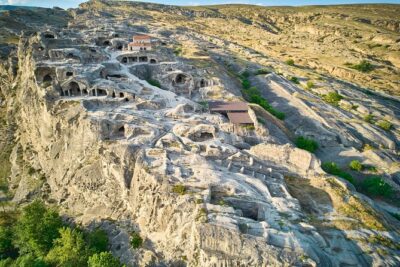
Mtskheta Jvari Bazaar, Chronicles of Georgia & Wine
Read our review →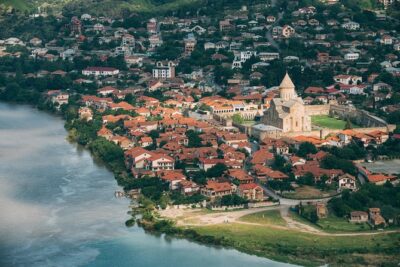
Mtskheta,Jvari,Bazaar,wine tasting,Chronicles of Georgia
Read our review →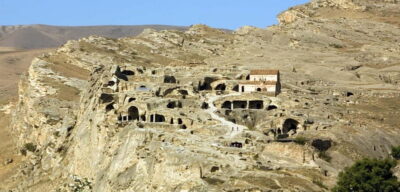
The Chronicles of Georgia, Jvari & Mtskheta Tour
Read our review →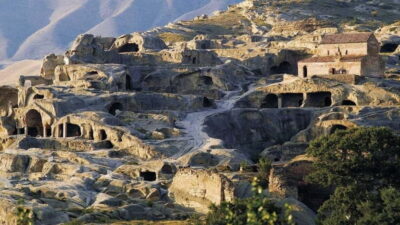
Browse the lists this tour appears in