Reviewed · TOURS
Amazing 10 Days tour Around Georgia from Tbilisi All inclusive
A 10-day loop through Georgia is interesting because you get big scenery and big sites without having to plan every turn. I love that this tour is set up as all-inclusive day-to-day travel, with air-conditioned transport, entrance tickets, and fees handled. I also love how often Georgian cuisine and wine show up by region, so you taste the country as you go. The one drawback to consider is that the days can feel full, so you should expect a lot of movement and some long drives.
I like the balance here: you get modern Tbilisi views and hilltop churches one day, then fortress walls, cave towns, and canyon walks the next. If your idea of a vacation is checking off highlights while learning quick context from the guide, this fits well. If you prefer slow, do-nothing time, you might find the pace intense.
A lot of guests call out the guide experience, and one name that comes up is David, described as professional and very good at making history feel real. You’ll start in Old Tbilisi and end right back there, which helps you keep your bearings from day one.
Key highlights worth planning for
- All-inclusive logistics: transport, tickets, and fees are covered, plus WiFi on board
- Food and wine by region: meals included, and the tour leans into tasting local specialties
- Signature Georgian landscapes: mountains near Kazbegi, limestone cave monasteries, and canyon walks
- A strong lineup of churches and fortresses: from Gergeti Trinity to Svetitskhoveli
- Western Georgia nature days: Prometheus Cave, Martvili Canyon boat ride, and Okatse’s hanging trail
- Svaneti highland wow-factor: Ushguli, glacier views, and Svaneti museum stops
Is $850 for 10 days around Georgia good value?
At $850 per person for about 10 days, the value depends on what you would otherwise pay to DIY. Here, you’re not just paying for a guide, you’re paying for the hard parts: private transportation, entrance tickets and fees, and a 3-star hotel for 9 nights. That matters in Georgia because many of the best sights involve tickets, drives, and coordinating multiple stops in a day.
The meals are another big piece. You get breakfast every day (10) and lunch every day (10), plus dinner for 6 days. Dinner for 4 days is not included, and alcohol drinks are not included. In plain terms, you’ll still want a budget mindset for evenings, but the core day meals and sightseeing costs are handled.
The result is a trip that is easier on your time and planning stress. You can focus on enjoying the country instead of mapping out routes, finding ticket windows, and timing your own day. Several people rate the experience as one of their most memorable Georgia trips, often linking that to how smoothly the days ran.
A few more Tbilisi days worth putting side by side
- Tbilisi: Day Trip to Kazbegi, Gudauri, Gergeti, and Ananuri
★ 4.9 · 3,203 reviews - Day Trip to Kakheti Wine Region Including 9 Wine Tastings
★ 5.0 · 2,774 reviews - Highlights of Caucasus Mountains-Jinvali,Ananuri,Gudauri,Kazbegi(Group tour)
★ 5.0 · 2,682 reviews
How the tour really feels: transport, timing, and the walking reality
This tour uses an air-conditioned vehicle and includes WiFi on board. That’s not just comfort, it changes your day because you can handle longer drives more easily when you’re not drained before you even arrive.
The walking level varies by stop. You can do an easy stroll in some city areas like Abanotubani or Signagi walls from short access sections, while other days involve more physical “I’m glad I wore good shoes” time, like canyon trails and cave complexes.
Also, you’ll be crossing regions quickly. Kazbegi day puts you up at Gergeti Trinity Church (2170 meters), and the Svaneti day includes high-elevation terrain around Ushguli and Chalaadi Glacier (1850 meters). Bring layers and be ready for weather shifts, especially in mountains.
Finally, this is a private tour/activity, meaning only your group participates. That tends to make the day feel less chaotic than big mixed tours, and the guide can pace things for your group.
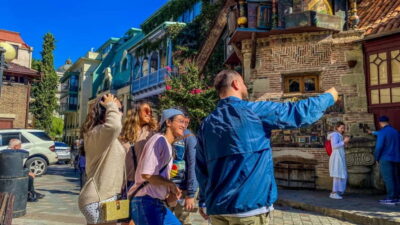
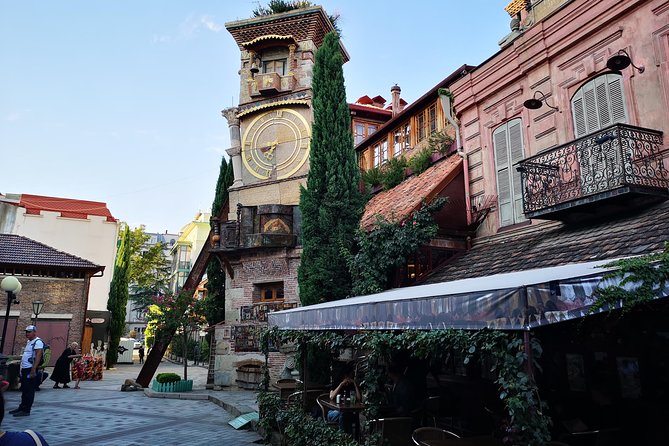
Day 1 in Tbilisi: Rike Park, Narikala Fortress, Abanotubani, Mtatsminda
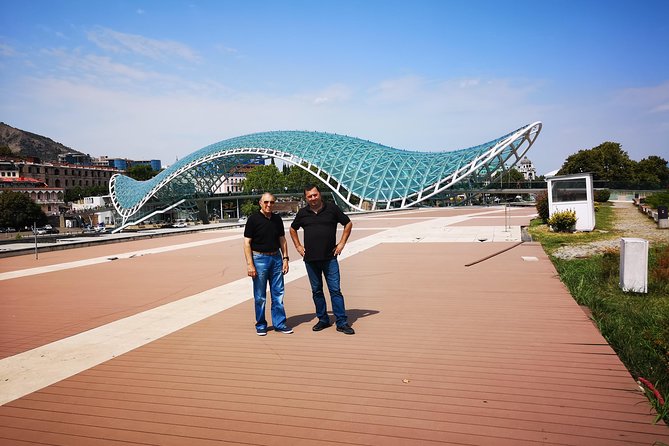
Day one works as a strong introduction because it mixes viewpoints with city soul. You start at Rike Park, a newer, artistically designed park on the left bank of the Kura River. The cool detail is that the park layout, seen from above, forms a large-scale map of Georgia, with pathways meant to suggest different regions.
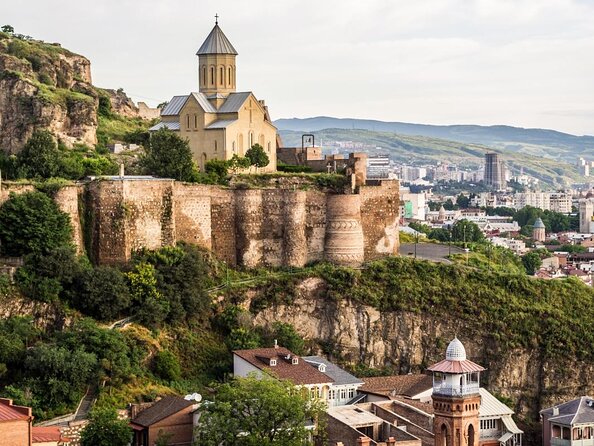
Next is Narikala Fortress, the must-see hilltop that you can spot from almost anywhere in Tbilisi. It’s also a great night option, and the setting above the Mtkvari River gives you that “whole city at once” feeling. The fortress has walls from different eras, starting as early as the 4th century.
Then comes Abanotubani, the historic sulfur baths district where you find a surprisingly concentrated set of religious sites, including Georgian and Armenian churches, a mosque, a synagogue, and the Ateshga fire temple. This stop is less about one monument and more about wandering a small, meaningful neighborhood.
To close the day, you head up to Mtatsminda Amusement Park on Mount Mtatsminda at the highest point in Tbilisi. Even if you skip rides, the altitude gives big city views, and the funicular adds a practical, scenic transport option.
Practical note: this day stacks “viewpoints plus walking.” If your legs are fresh, you’ll enjoy it more. If they’re not, pace your climbs and save energy for night photos around Narikala.
Day 2 toward Kazbegi: Zhinvali, Ananuri, Gudauri panorama, Gergeti, Gveleti
This is your mountain day, starting from Tbilisi in the Kazbegi direction. You pause at Zhinvali Reservoir and the dam area first, which is a quick way to shift from city life into the big Georgian outdoors.
Then you stop at Ananuri Fortified Castle Ensemble, along the Georgian Military Highway on the Aragvi River. This site is a classic fortress-and-church combination, with a circuit wall, multiple churches including the Church of Virgin, and richly decorated facades. If you like architecture that tells you who lived there and what mattered, this stop delivers.
Next is the Russian Georgian Friendship Monument at Gudauri Panorama. It’s brightly decorated with Soviet-style mosaics, and it’s a very “of its time” roadside stop that adds variety to all the medieval structures.
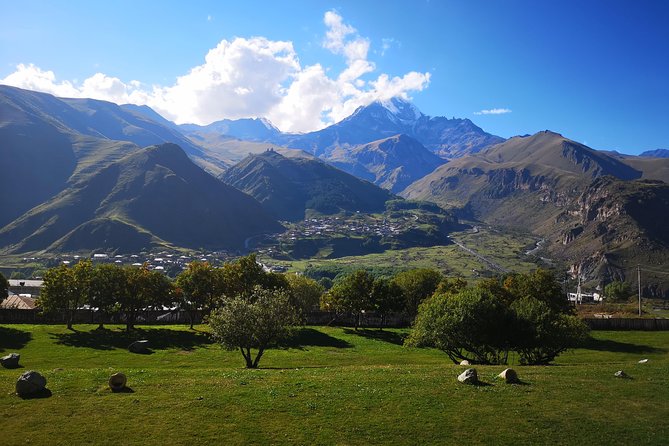
The big moment is Gergeti Trinity Church near Stepantsminda. The church sits at 2170 meters under Mount Mkinvartsveri (often called Kazbegi), with dramatic river and valley views. You’ll understand why this one is consistently photographed.
After the church, you go to Gveleti Waterfall in Gveleti. It’s a lighter, more nature-focused end to the day.
Consideration: altitude and weather matter. Bring a wind layer even if the morning starts mild.
A different sort of day out of Tbilisi:
- From Tbilisi: Kakheti Wine Region Tour with 9 Wine Tastings
★ 4.9 · 2,541 reviews - Tbilisi: Mtskheta, Jvari, Gori and Uplistsikhe Day Tour
★ 4.9 · 2,396 reviews - From Tbilisi to Kazbegi, Ananuri, Gudauri & Gergeti
★ 4.9 · 2,278 reviews - Tbilisi: Kakheti Wine Region Tour with 10 Wine Tastings
★ 5.0 · 2,160 reviews
Day 3 into Kakheti flavors: Ujarma, Gombori Pass tea stop, Alaverdi, qvevri wine, fortresses, Tsinandali
Day three is a mix of old stones and wine culture, with a steady theme: Kakheti does history through food and land.
You begin at Ujarma Fortress, described as a mysterious 5th-century fortress and tied to Kakheti’s early power. Even with a shorter visit, it’s the kind of stop where the setting helps you feel the age of the place.
At Gombori Pass, you make a sightseeing stop and you get the chance to try Gios Herbal tea. That kind of small local tasting is exactly the sort of detail that makes a tour feel personal instead of generic.
Then you visit Alaverdi St. George Cathedral, a major site near Telavi in the Alazani valley. It’s tied to monastery structures reaching back earlier centuries, and the cathedral is noted as one of the highest in Georgia, up to about 50 meters.
After that, the tour turns into a wine story at Twins Wine Cellar, a museum about qvevri and qvevri wine. It includes details about traditional clay vessels used for wine production, and the complex features large pitcher forms and a collection tied to the winemaking process. It’s the kind of stop where you walk away understanding what makes Georgian wine different beyond taste.
Next is Batonis-Tsikhe Fortress, the Master’s Fortress, once a residence of Kakhetian kings. You see old churches, ruins connected to royal life, and the story of how defenses protected the city.
To finish, you visit Tsinandali Palace, linked to Prince Alexander Chavchavadze and the cultural life of the estate. The complex includes a garden, winery elements, a wine cellar, and a chance to sample wines connected to the Chavchavadze name.
This day is also where the “tiredness vs enjoyment” balance matters. It’s packed, but the stops change often enough that you won’t feel bored.
Day 4 Kakheti to UNESCO Georgia: Bodbe, Signagi walls, plus Jvari and Svetitskhoveli, Uplistsiche
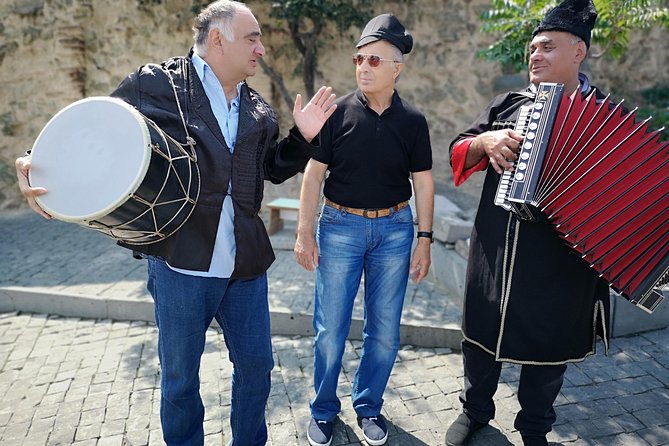
Day four begins again with Kakheti, but it adds the feel of pilgrimage sites and then pivots to central Georgia UNESCO treasures.
You start at Bodbe Monastery of St. Nino, near Sighnaghi. The legend links it to the burial place of Saint Nino, and the site has been restored multiple times across centuries. It’s also a good place for slower photos because the monastery setting gives you breathing room.
Then you head into Sighnaghi, with a stop at the city walls. The wall has more than 20 towers, and even if only a portion is accessible to walk, the payoff is the view over the Alazani Valley. You also visit the Sighnaghi Museum, which includes artifacts from archaeological excavations and artwork connected to Georgian painter Pirosmani.
Later in the day, you reach Jvari Church, a 6th-century site opposite Mtskheta at the confluence of the Aragvi and Mtkvari rivers. It’s tied to the famous cross tradition, and it’s included on the UNESCO World Heritage list.
Next comes Svetitskhoveli Cathedral, an 11th-century architectural centerpiece in Mtskheta. The tour notes it as a religious center for centuries and highlights that important relics are preserved there, plus the cathedral is also UNESCO-listed.
Finally, you visit Uplistsiche Cave Town near Gori. This one is special because it’s rock-hewn and extremely old, with references reaching into early settlement periods. It’s a different kind of history, carved into stone rather than built on top of it.
Consideration: this is a “many sacred sites in one day” schedule. If you’re sensitive to fatigue in churches, break your photos into short bursts.
Day 5 cave monasteries to Borjomi reset: Vardzia, Rabati Castle, Borjomi Central Park
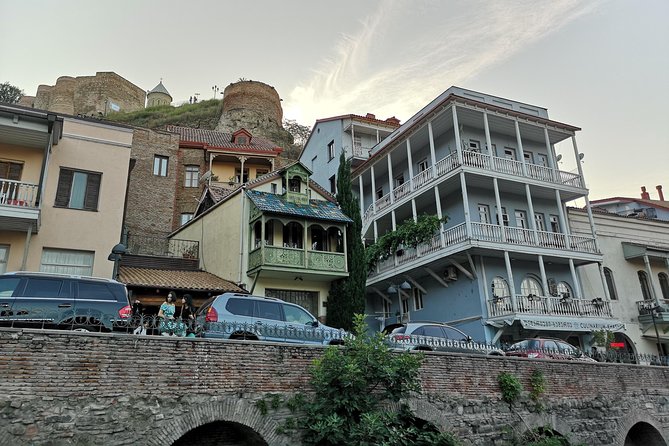
This day is designed to feel like a dramatic shift, from medieval cave life to fortress towns and then into a resort break.
You start with Vardzia, the cave monastery complex built during the reign of King George III and Queen Tamar. The visit includes the famous story about how the name connects to Tamara calling out when she hid in the cave maze. Even when you only explore a portion, the sheer scale tells you why this is one of Georgia’s top medieval sites.
Next is Akhaltsikhe (Rabati) Castle. It’s an ensemble with different layers, including a fortress church, a 14th-century castle, and palace and church elements. It’s useful because it helps you see Georgia as a crossroads of styles and eras rather than one single period.
Then you wind down in Borjomi Central Park, a resort area linked to mineral waters. You can see the Romanov Palace features, and the park connects you with trails near Borjomi-Kharagauli National Park. The stop also mentions Mtsvane Monastery (Green Monastery), built of stones with a green-tinged look.
Practical note: Borjomi is a good day for drinking water and cooling off, especially after Vardzia’s intense walking.
Day 6 in Imereti: Prometheus Cave, Tskaltubo, Gelati Monastery, Kutaisi’s Royal District
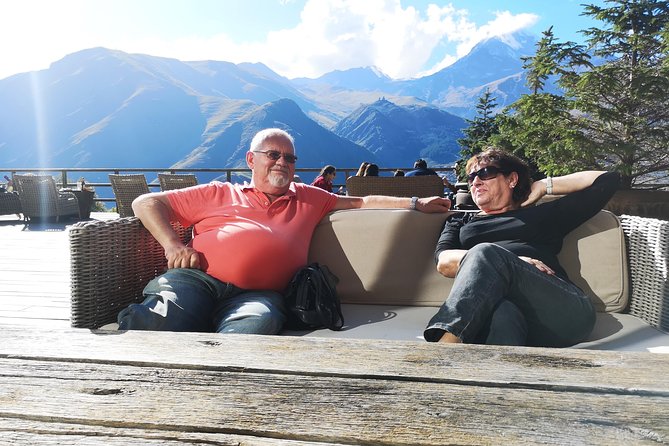
Day six brings you underground and then back up to major cultural landmarks.
First is Prometheus Cave, near Kutaisi and Tskaltubo. The tour describes multiple types of formations, including stalactites, stalagmites, petrified waterfalls, and underground rivers and lakes. A standout detail is the chance to take a boat tour through an underground lake, which gives the cave a more active, memorable feel.
After that, you visit Tskaltubo for the mineral water context. It’s framed as a place tied to older mineral water formation in geological terms, and the stop also explains the water’s composition in a very scientific way. For most people, this becomes a “wait, Georgia has serious geology” moment, even if you mainly focus on the town atmosphere.
Then comes Gelati Monastery, near Kutaisi. It’s UNESCO-listed and known for mosaics and frescoes, with King David the Builder associated with the burial yard of the monastery.
Finally, you get Kutaisi, focusing on the historical part called the Royal District, including the area around the White Bridge and nearby streets.
Consideration: cave time can be cool even in summer. If you run hot, you’ll still want a light layer.
Day 7 canyon country: Okatse hanging trail, Kinchkha waterfalls, Martvili Canyon boat ride
If you like fresh air and big scale nature, this is one of the most fun days.
You start with Okatse Canyon. The highlight is a hanging trail that stretches 780 meters, giving you that walking-above-the-canyon feeling. The last destination is a panoramic view zone where you can take photos.
Then you move to Kinchkha Waterfall, described as a canyon with two waterfalls and an altitude around 1000 meters. The tour notes that you can swim in the canyon and even make tents on the riverbank, so it can feel like a mini outdoor escape if conditions allow.
Next is Martvili Canyon, with a boat trip along the Abasha River. The tour notes a 300-meter one-way boat section, plus the opportunity to explore views that are often best from the water.
There is one repeated Martvili Canyon stop listed, but the core idea is the same: this day is built around canyon experience plus water views.
Practical tip: these can be wet and slippery areas. Wear shoes you trust.
Day 8 Svaneti highlights: Ushguli, Lamaria church, Hatsvali views, Svaneti museum, Chalaadi Glacier
This is the “high mountains, real remoteness” day. It’s also where Georgia feels most different from the rest of your trip.
You visit Ushguli, in the Mestia municipality, at the bottom of Mount Shkhara. The community includes four villages, and heights range from 2060 to 2200 meters. The center of the community, Chazhashi, is declared a museum and is listed as a UNESCO World Heritage site, which explains why the area matters beyond scenery.
You also stop at Lamaria Church, known as the Mother of God church of Ushguli. It’s a medieval Georgian Orthodox church in Upper Svaneti, and it adds a spiritual and architectural layer to the landscape.
Then you go to Hatsvali Ski Resort for views toward Ushba Mountain and Mestia. Even if you are not skiing, this is a great way to see the region as a whole.
Next is the Svaneti Museum of History and Ethnography, founded in 1936. The museum includes artifacts like unique icons, manuscripts, medieval weaponry, metal ornaments, and textiles connected to Svaneti life. This stop helps you understand what you are seeing outside, because highland culture is more than buildings and mountains.
To finish, you head to Chalaadi Glacier. It’s described as a glacier fed by mountain streams and noted as the only one extending into the forest zone. The stop includes a longer walk time because it’s a true glacier viewpoint experience.
Consideration: Svaneti days often involve weather changes. Layers and wind protection matter.
Day 9 Batumi nature and Roman bones: Shekvetili, Batumi Boulevard, Gonio Fortress
Now the trip moves toward the Black Sea and shows a different side of Georgia.
First is Shekvetili Dendrological Park, with a broad collection of local and exotic plants. It’s a 60-hectare garden and it’s easy to appreciate even if you do not know botany. This stop gives you nature time that is less rugged than mountain days.
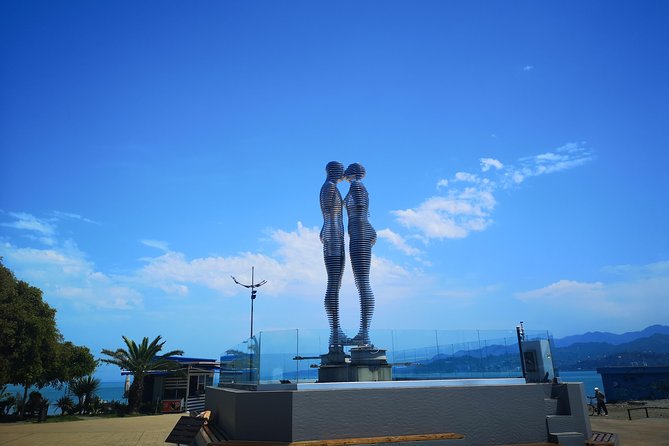
Then you head to Batumi Boulevard. It follows the seaside, and the tour describes it as a place full of cafes, beach bars, sculptures, and colorful fountains. The boulevard has a history starting in 1881, so you get a modern strolling experience with older roots.
After that, you visit Gonio Fortress, one of the oldest in Georgia. It’s Roman-Byzantine in military design, built by the Romans in the 1st century AD, later occupied by Byzantines and then Ottomans. The site includes high stone walls and many towers and is spread over a large rectangle area.
This day works because it blends strolling in the city with a serious historical stop.
Practical note: keep one evening flexible. Even if the schedule is full, Batumi’s waterfront is the kind of place you might want extra time walking.
Day 10 Batumi Botanical Gardens: the final green finish
Your final day is lighter, focused on Batumi Botanical Gardens. It’s described as covering about 108.7 hectares along a coastal strip and rising from sea level up toward higher points along the coastline.
The garden is known for plant introduction work that began in the late 1800s and for its mix of native and exotic species. The main value of this last day is recovery time after mountain and canyon intensity, plus a chance to see Georgia’s environment through the lens of cultivation and biodiversity.
If you want a clean ending, this works well because it’s calm, scenic, and easy to enjoy at a slower pace.
Should you book this Georgia tour from Tbilisi?
Book it if you want a high-coverage, low-planning way to see Georgia’s top regions: Tbilisi, Kazbegi mountains, Kakheti wine and churches, cave monasteries, western canyons, and Svaneti highlands, then finish in Batumi. This tour is also a smart pick if you care about having entrance fees and tickets handled, and if you like the idea of guided learning from stops rather than reading maps all day.
Think twice if you want lots of downtime or if you dislike fast movement between regions. The day-to-day schedule is packed enough that you should plan to treat this like an adventure with breaks, not like a slow café vacation.
If you do book, pack for temperature swings (especially in the mountains), bring good walking shoes, and plan for drinks and dinners on the days when meals are not included. If you’re excited by the idea of seeing fortresses, UNESCO churches, and real canyon scenery with food and wine along the way, this is a very satisfying way to do it.
FAQ
What is the price for this 10-day tour?
The price is $850.00 per person.
What is included in the tour price?
The package includes a 3-star hotel for 9 nights, air-conditioned vehicle and private transportation, WiFi on board, entrance tickets for museums and attractions, all fees and taxes, airport transfers, breakfast for 10 days, lunch for 10 days, and dinner for 6 days. It also includes a Batumi boat trip.
What is not included?
Alcohol drinks are not included, and dinner is not included for 4 days.
Where does the tour start and end?
The tour starts at Old Tbilisi, Tbilisi, Georgia, and ends back at the meeting point.
Is this tour private?
Yes. It is a private tour/activity, and only your group participates.
Can I cancel for a full refund?
You can cancel up to 3 days in advance for a full refund. If you cancel less than 3 days before the experience’s start time, the amount paid will not be refunded.
Recently reviewed around Tbilisi
- Tbilisi City Tour★ 4.5 · 3 reviews
- Tbilisi City, Jvari Monastery, Uplistsikhe caves, Mtskheta city Private Day Trip★ 4.5 · 3 reviews
- Tbilisi City Tour with Street Photography★ 5.0 · 3 reviews
- Private Trip to Tbilisi and Mtskheta – Cultural Capitals★ 5.0 · 3 reviews
- Wild Georgia 4WD PACK Adventure through Kakheti and Kazbegi 2in1★ 5.0 · 3 reviews
- Tbilisi Airport to Gudauri, Bakuriani, Batumi, Tbilisi★ 5.0 · 3 reviews
- Private Adorable City Tour of Tbilisi★ 5.0 · 3 reviews
- Tbilisi and Mtskheta cities private, cultural tour★ 5.0 · 3 reviews
Tours, compared.

Highlights of Caucasus Mountains-Jinvali,Ananuri,Gudauri,Kazbegi(Group tour)
Read our review →
Kakheti Wine Region Tour with 9 Wine Tastings
Read our review →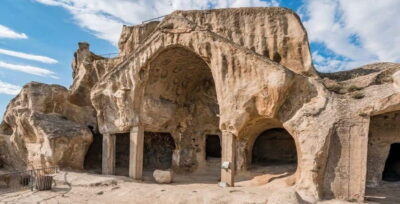
Mtskheta, Jvari, Gori and Uplistsikhe Day Tour
Read our review →
Kakheti Wine Region Tour with 10 Wine Tastings
Read our review →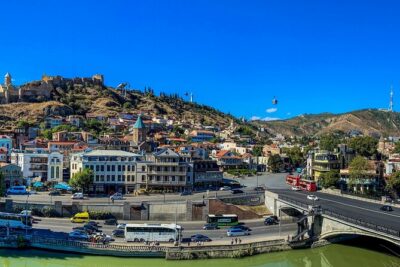
Tbilisi Walking Tour Including Cable Car and Traditional Bakery
Read our review →