Reviewed · GUIDED
8-Day All About Georgia Tbilisi Guided Tour with Accommodation
Georgia is at its best when you mix city walking with real day trips. This tour does that in a tight loop around Tbilisi and then out into Kakheti and the mountains, with a 15-person cap and big-name sights like Gergeti Trinity Church by off-road Jeep. You get a private-group guide who ties the places together with stories, so it feels less like checklists and more like you’re learning how Georgia thinks and prays.
Two things I especially like: you get daily structure with pickup and transfers, which keeps you from wrestling with logistics, and you still get moments to wander, snack, and breathe during longer stops. The main drawback to plan for is the pace, a lot of days are long drives, and there’s one extra cost for the final jeep ride up to Gergeti.
Key Highlights You Will Actually Feel Day to Day
- A small-group tour (max 15), so you get real time with your guide instead of shouting across a bus.
- VIP, air-conditioned car transfers for the longer regional days outside Tbilisi.
- Gergeti Trinity Church viewpoint by Jeep in a classic postcard spot, with an added jeep expense.
- Breakfast included for 7 mornings, so you start each day with one less decision.
- Guided context built into the route, from Christian legends to fortress details and local food logic.
- Multiple UNESCO-level stops on one schedule, without you organizing tickets and connections.
A 15-Person Georgia Road Trip With Air-Conditioned VIP Cars
This is a guided, English-language tour built around comfort and clarity. Your group is capped at 15 travelers, and that matters, because it keeps schedules workable and makes questions feel normal. You’ll ride in air-conditioned cars for the day-trip distances, which is the difference between enjoying the scenery and just getting car-sick.
Ushba Travel handles guide service, and you get a mobile ticket. Airport transfers are included on both ends, and you’re staying 7 nights in 3-star hotels with breakfast included each morning.
It starts at Shota Rustaveli Tbilisi International Airport, with a 9:00 am start time. You end back at the same meeting point. If you like the idea of being picked up, dropped off, and not thinking about timing every day, this format fits well.
A few more Tbilisi days worth putting side by side
- Tbilisi: Day Trip to Kazbegi, Gudauri, Gergeti, and Ananuri
★ 4.9 · 3,203 reviews - Day Trip to Kakheti Wine Region Including 9 Wine Tastings
★ 5.0 · 2,774 reviews - Highlights of Caucasus Mountains-Jinvali,Ananuri,Gudauri,Kazbegi(Group tour)
★ 5.0 · 2,682 reviews
Day 1 in Tbilisi: Tram Views and a Free Evening to Catch Your Rhythm
On arrival day, you’re transferred from the airport to your Tbilisi hotel. The included “first wow” is the aerial tramway, with admission included. That’s a smart move right away, because you get a high-level view of Tbilisi early, and then the city makes more sense when you start walking later.
After that, the evening is yours. That free time is valuable in Georgia, because you can adjust to jet lag, grab a late dinner, or just wander the Old Town lanes at a slower pace than the next few days will demand. This is the kind of day that keeps the trip from feeling like a nonstop sprint.
Kakheti in a Day: Sighnaghi, Bodbe Monastery, Telavi Palace, and Wine Tasting
Day 2 is all about eastern Georgia, and it moves. After breakfast, you head into Kakheti territory with multiple stops stacked in one day, including Signagi (Sighnaghi), Bodbe Monastery, Telavi, and a wine cellar visit.
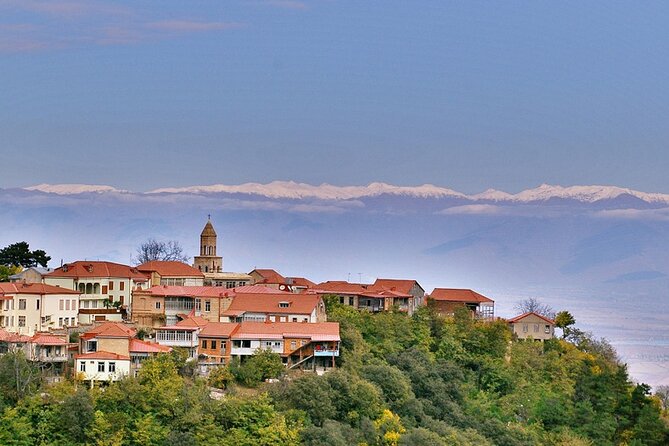
Sighnaghi is described as a city on a slope above the Alazani Valley, with small winding streets and colorful tiled roofs. You’ll also get a sense of why locals call it the city of love, including the romantic wedding culture. Even if you’re not in “couples trip” mode, the view over the valley is worth the climb and the winding roads.
You also visit Bodbe Monastery of St. Nino, where Georgia’s Christian story is tied directly to the tomb of St. Nino. There’s time here for the atmosphere and the holy spring waters. This stop helps you understand why Georgian Orthodox sites feel like both religion and living national identity.
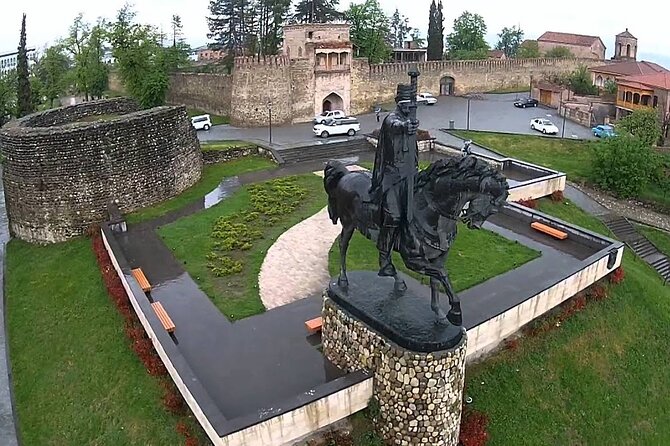
Telavi adds royal context. You visit the palace of King Erekle II and the Telavi History Museum, plus a stop linked to a symbol tree mentioned in the program, the 900-year-old chador tree. Then you go to a wine cellar near the Gombori road. Wine tasting is free, and the setting includes mountain views. If you like your wine stops with actual scenery instead of just a tasting room, you’ll enjoy this.
The practical catch: this is a long day, around 10 hours. Wear shoes that don’t punish you by hour three, and plan to treat lunch as your own choice since lunch isn’t included.
Mtskheta and Uplistsikhe: Jvari Views, Svetitskhoveli, and Rock-Cut Cave Life
Day 3 is Georgia’s spiritual and ancient-history day. You’re in the Mtskheta area for a full route that includes Jvari Monastery, Svetitskhoveli Cathedral, and the cave city of Uplistsikhe.
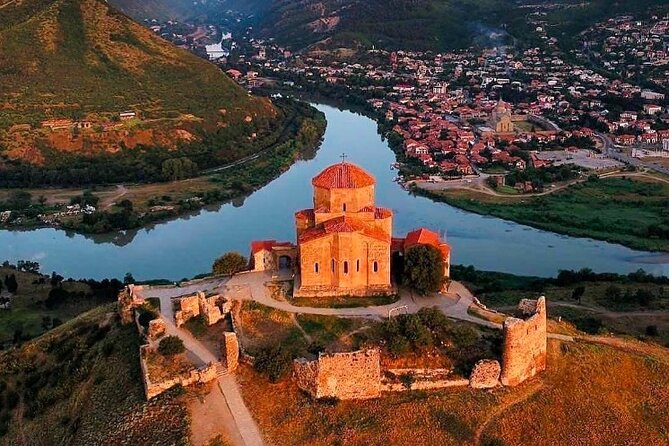
The day starts with Jvari Monastery, a VI-century Orthodox monastery with dramatic views over Mtskheta. The included walk to the Jvari temple is timed at about 40 minutes, and it’s guided with cultural references, including places connected to Russian literature and the poem Mtsyri. Even if you don’t know those references, the message lands fast: this is a viewpoint people keep returning to.
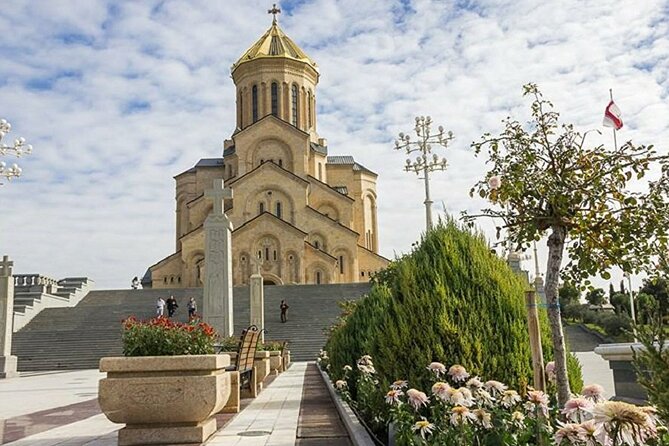
Then you visit Svetitskhoveli Cathedral, described as one of the most revered places in Georgia and tied to the early Christian king Mirian. The program also highlights relic traditions connected to the tunic of Jesus Christ and the mantle of Elijah the Prophet, plus St. Andrew the First-Called. This is one of those stops where the building details matter less than the sense of weight, time, and belief.
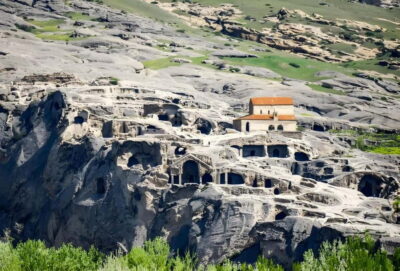
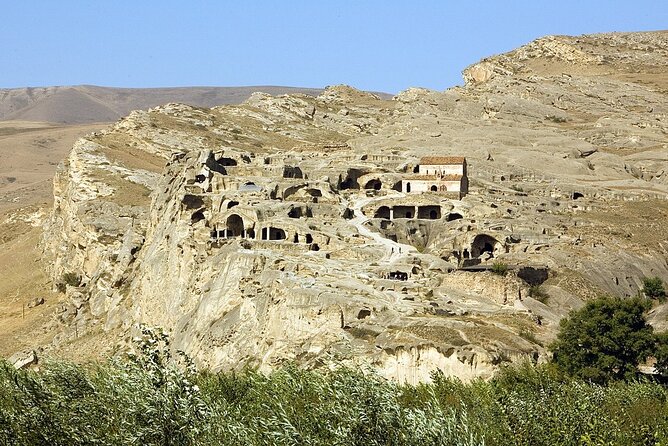
After the churches, you go to Uplistsikhe, a cave city carved directly into rock. The program dates it to the end of the II and the beginning of the first millennium BC, and you explore stone labyrinths of living and utility spaces. Even if you’re not a hardcore archaeology person, the idea is easy to grasp: people built and lived inside a rock system for centuries, then watched it decline.
There’s also an optional add-on related to Stalin, visited in the hometown of Gori, but it’s based on group request. If that subject is uncomfortable for you, you can treat it as skip-friendly since it’s not presented as mandatory.
Day 3 runs about 9 hours, so again, it’s a full day. The upside is that you’ll feel like you understand the “why” behind Georgia’s spiritual landmarks and ancient settlements.
A different sort of day out of Tbilisi:
- From Tbilisi: Kakheti Wine Region Tour with 9 Wine Tastings
★ 4.9 · 2,541 reviews - Tbilisi: Mtskheta, Jvari, Gori and Uplistsikhe Day Tour
★ 4.9 · 2,396 reviews - From Tbilisi to Kazbegi, Ananuri, Gudauri & Gergeti
★ 4.9 · 2,278 reviews - Tbilisi: Kakheti Wine Region Tour with 10 Wine Tastings
★ 5.0 · 2,160 reviews
Old Tbilisi by Foot: Sulfur Baths, Narikala Fortress, and a 17th-Century Wine Cellar
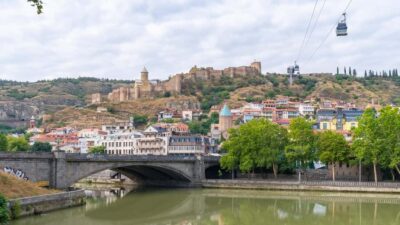
Day 4 feels like the Georgia most people picture, but grounded in actual local details. You start on the Metekhi Plateau for views of the Old Town and Narikala Fortress, then move toward Meidan Bazaar and Meydan Square. Your guide connects the walk to the Great Silk Road era and the underground bazaar concept, which helps you understand why Tbilisi’s core layout has layers.
You’ll also visit the sulfur baths area. The program points to the Marco Polo legend, and it also mentions a specific detail that you hear about from the guide: why 15 baths remain from 65, and why the bath names match different styles and eras. That kind of detail is exactly why guided walking beats wandering alone. You notice what you’d otherwise miss.
Then you go through areas linked to Inzhira Gorge and a real waterfall. The walk includes stops for the balconies and explanations of why patterns differ across eras, and how those balconies were used in daily life.
Narikala Fortress rounds out the Old Town part, with a broader tour that also touches the Peace Bridge and Rike Park and compares modern structures with local opinions. You also visit multiple religious buildings, including Metekhi church, Sioni Cathedral, Anchiskhati Church, and the juma mosque accessed by a spiral staircase and narrow alleys. That sequence matters because it shows how Tbilisi stacks faiths and eras in a compact space.
Later, you shift from architecture to taste and culture. The program includes a wine tasting in a cellar of the 17th century, with a winemaker’s commentary for about an hour. It’s described as being without restrictions during the tasting time, and it’s linked to exclusive wines stored there. You’ll also hear stories about the Tamada monument, Georgian feast culture, the Tbilisoba festival, and jokes written on the turret of Rezo Gabriadze theater.
One note: lunch is not included, so treat Day 4 as a day where you might want to budget for food on your own between stops.
Kazbegi Day Trip: Ananuri Fortresses, Gudauri Views, Friendship Arch, and the Jeep to Gergeti
Day 5 is a long mountain day, about 11 hours. It’s packed, but it follows a logical route up toward Stepantsminda and Kazbegi territory.
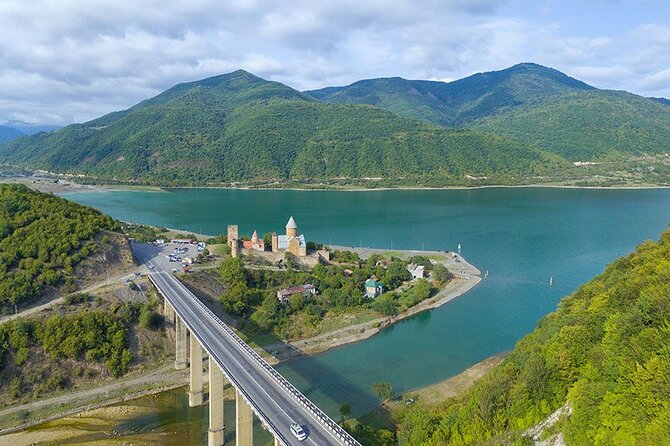
You start with Stepantsminda and then pass through the Zhinvali reservoir, with a timed stop. From there you visit the Ananuri fortified castle ensemble on the Aragvi river. The program focuses on the fortress reaching us in its original form and points out the Assumption Church with bas-reliefs whose elements have hidden meaning. That’s a good example of what this guide format is good at. You’re not just looking at stones, you’re getting a decoder ring for what the carvings might represent.
Pasanauri is a scenic break with the confluence of the White and Black Aragvi and a mineral spring described as looking like a golden river. The arch of friendship is also part of this section, and there are restaurants around, with meals paid separately.
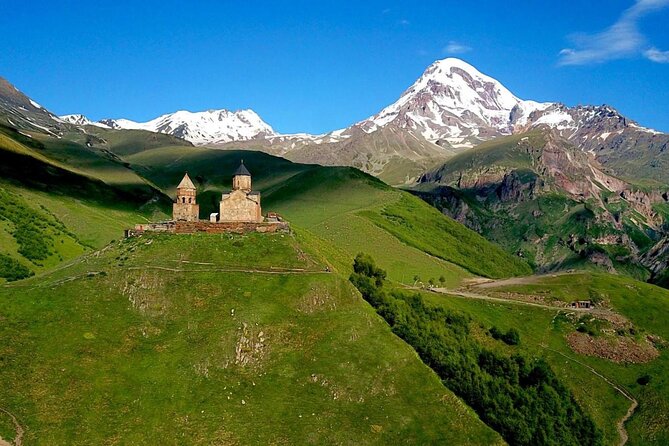
Then you reach Gudauri, including the Russian-Georgian Friendship Monument, which is described as being near the highest point of the pass. After that, you finally go to Gergeti Trinity Church, visiting the village transfer point and then switching to jeeps for the climb. The program calls out an additional expense for the jeep ride to the temple. That’s worth factoring into your budget so there are no surprises at the end of a long day.
The payoff is the classic sight of the church perched on a hill with snow-capped mountains in the background. You’ll likely get that “postcard moment” here in real time, not filtered through a phone screen.
You return to Tbilisi late, with a stop back at Meidan Bazaar around 8:00 or 9:00 pm. Plan for a low-energy night after this.
Day 6 in Tbilisi: A Real Free Day (No Forced Stops)
Day 6 is a breather. You get breakfast at your hotel and then you have a free day and night in Tbilisi.
The program also mentions optional excursions you can book if you want to extend the trip into other regions, including routes that combine Borjomi with Rabati and Vardzia, Martvili Canyon and Prometheus Cave, plus a Kutaisi tour. What’s important is that these options are presented as optional, not mandatory.
I like this kind of day because it resets the brain. After church-to-cave-to-mountain momentum, you can do a normal-day Tbilisi routine, like sitting in a café, visiting a museum that you pick, or just returning to a spot from earlier that you want to revisit.
Borjomi and Vardzia: Mineral Water, Rabat Castle, and a Cave Fortress With 13 Levels
Day 7 runs about 14 hours, and it’s a big one. You head toward Borjomi first.
In Borjomi, you get a walk around the city center, a park stop connected to Emperor Nicholas II and his family, plus a monument to Prometheus and a waterfall. There’s also a cable car ride to a plateau for views. The guide connects this area to mineral water and even mentions archaeological excavations related to the history of the water. You can taste the mineral water at the source, which is a nice tangible end to all that background.
Next is Rabat Castle, described as a medieval fortress and a strong cultural meeting point between Christian and Muslim worlds. You’ll tour palace halls decorated in old Georgian style and then take in the size and decoration of the fortress itself. Akhaltsikhe’s historical significance is part of the explanation.
Then you get Vardzia, the cave fortress monastery complex from the 12th century. The program emphasizes that it’s not a single cave, it’s a rock-carved complex with 13 levels and more than 500 rooms, including churches, chapels, residential cells, pantries, baths, refectories, treasuries, and libraries. You explore the area and learn what the rock city was built for and how it functioned over time. The program also mentions secret passages and remaining water supply and irrigation systems, plus a panorama of Khertvisi fortress on the way.
This is the kind of day where you’ll be tired at the end, but you’ll also feel like you saw something rare. If your legs are holding up, you’ll likely want to spend extra time soaking in the cave-room scale once you’re inside.
Day 8: Breakfast and the Airport Transfer Back Out of Tbilisi
On the final day, you eat breakfast and then get a transfer back to Tbilisi Airport. The end is simple, about 30 minutes for the ride, and the tour ends back at the meeting point.
If you want to squeeze in one last souvenir stop, do it the night before. Day 8 is designed to be stress-free.
Value for $499: What Is Included, What Costs Extra, and What It Means for Your Budget
At $499 per person for an 8-day, guided, small-group tour, you’re paying for three big things: transportation across distances, guided interpretation, and a lot of entry fees plus breakfast.
Here’s what’s covered:
- 7 nights in 3-star hotels
- Two-way airport transfers
- VIP class air-conditioned cars
- Guide service
- Entrance ticket fees
- Breakfast for 7 days
Lunch is not included. On top of that, the one extra cost that stands out in the program is the jeep ride to the Gergeti temple.
For many first-time visitors, that package deal is the value. You’re not paying separately for each connection, and you don’t have to plan your own routes for Kakheti, Kazbegi, and the Borjomi-Vardzia day. The long days are the trade-off. If you hate spending hours in cars, you might feel the squeeze. If you’re okay with day trips that run late, you’ll get a lot of Georgia per dollar.
Who Should Book This, and Who Might Want Something Different
This tour is a great fit if:
- You want a high-coverage highlight plan without doing logistics
- You like guided context, not just photos
- You prefer a small group for smoother pacing and more questions
- You’re happy to handle lunch on your own and take one additional jeep expense into account
You might want a different style of trip if you:
- Want lots of free time on most days
- Get cranky with long driving days
- Need very early nights after early mornings, because mountain and cave days run late
Should You Book It?
Yes, if you want a structured Georgia experience that still feels personal. The small group, the guide storytelling, and the mix of Tbilisi walking with real mountain and cave days is a strong combo.
Book it if you’re the type who enjoys knowing what you’re looking at, and you don’t mind that some days are long. Add a budget line for lunch and the Gergeti jeep, and you’ll be set.
FAQ
How many travelers are in the group?
The tour has a maximum of 15 travelers, and it’s described as an exclusive small group.
Where do you start and end the tour?
It starts at Shota Rustaveli Tbilisi International Airport in Tbilisi, Georgia (meeting point). It ends back at the same meeting point.
What time does the tour start?
The start time listed is 9:00 am.
Are airport transfers included?
Yes, two-way airport transfers are included.
Is breakfast included?
Yes, breakfast is included for 7 days.
Are entrance tickets included?
Yes, entrance ticket fees are included as part of the tour package.
Is lunch included?
No, lunch is not included.
Does the tour use a Jeep for Gergeti Trinity Church?
The program includes a transfer to jeeps to reach the Gergeti Trinity Church area, and it notes an additional expense for the jeep to the temple.
Is there a free day?
Yes, Day 6 is a free day and night in Tbilisi, after breakfast.
Can I cancel and get a full refund?
Free cancellation is offered, and you must cancel at least 24 hours in advance of the experience start time for a full refund.
If you want, tell me your travel month and your walking comfort level, and I’ll suggest how to pace yourself on the long mountain days.
Recently reviewed around Tbilisi
- Tbilisi City Tour★ 4.5 · 3 reviews
- Tbilisi City, Jvari Monastery, Uplistsikhe caves, Mtskheta city Private Day Trip★ 4.5 · 3 reviews
- Tbilisi City Tour with Street Photography★ 5.0 · 3 reviews
- Private Trip to Tbilisi and Mtskheta – Cultural Capitals★ 5.0 · 3 reviews
- Wild Georgia 4WD PACK Adventure through Kakheti and Kazbegi 2in1★ 5.0 · 3 reviews
- Tbilisi Airport to Gudauri, Bakuriani, Batumi, Tbilisi★ 5.0 · 3 reviews
- Private Adorable City Tour of Tbilisi★ 5.0 · 3 reviews
- Tbilisi and Mtskheta cities private, cultural tour★ 5.0 · 3 reviews
Guided, compared.
Borjomi, Rabati & Vardzia Adventure Guided Tour
Read our review →